Iran vows to retaliate against countries that cooperate with fresh US sanctions

Table of Contents
Secondary Sanctions Put Global Trade Networks to the Test as Tehran Threatens “Earthquake-Like” Retaliation
Wanderstayfinder.com – The question now facing New Delhi, Beijing, and Moscow is deceptively simple: will continued commercial engagement with Iran trigger credible American economic reprisals? That question sits at the heart of a sweeping new sanctions package announced by Washington, one that Treasury Secretary Scott Bessent has characterized as
“the single greatest financial offensive ever marshalled against an adversary.”
The mechanism is familiar in name but aggressive in scope. The United States has declared it will impose so-called secondary sanctions on any foreign country or entity that trades with Iran. Unlike primary sanctions, which bind only American actors, secondary measures reach into the domestic economies of third parties, effectively compelling them to choose between Iranian commerce and access to the US financial system. Whether the threat carries real teeth depends entirely on whether major trading partners believe Washington will follow through with enforcement against their own banks, insurers, and shipping lines.
Beijing’s Calculus and the Statute Play
China, which has served as the principal destination for Iranian crude oil for decades, has already fielded this question once before. In May, Washington threatened to sanction Chinese petroleum refiners and the banks financing their purchases. The Chinese commerce ministry responded by instructing domestic firms to disregard American warnings over Iranian oil imports, declaring the threats illegitimate. For the first time, Beijing invoked a government statute specifically designed to neutralize the extraterritorial reach of US sanctions within Chinese legal jurisdictions.
The episode had a precursor in April, when the US placed sanctions on Hengli Petrochemical (Dalian) Refinery Co. Washington subsequently retreated from that measure, as Donald Trump concluded that escalating the confrontation risked igniting a broader trade and tariff war with China — a conflict the US was unlikely to win. Foreign ministry spokesperson Lin Jian reiterated on Monday that China opposes unilateral sanctions lacking a basis in international law and maintains that military force, sanctions, and pressure tactics do not constitute solutions.
The Blockade’s Grip on Iranian Exports
Unlike the May standoff, the current environment is materially different. A sustained US naval blockade of Iranian ports has effectively severed the country’s oil shipments to Asian buyers, pushing freight costs for remaining cargoes to multi-year highs. Last week, Abdolnaser Hemmati, governor of Iran’s central bank, conceded that the nation’s crude exports had
“virtually stopped”
due to the blockade. The White House assesses that the Iranian economy now stands once again on the edge of collapse, driven by hyperinflation and the near-total absence of foreign-exchange earnings from oil sales. On the unregulated currency market Monday, the rial traded at 1.992 million per dollar, a 4.5% depreciation since the US president announced what he termed a “crushing economic operation” against Tehran the previous week.
“Iran is completely collapsing!!!”
Trump posted the declaration in capital letters on social media on Monday. Yet the broader historical record complicates that framing: Iran has endured some form of American economic maximum-pressure campaign for more than two decades and has, so far, persisted.
Tehran’s Retaliation Doctrine
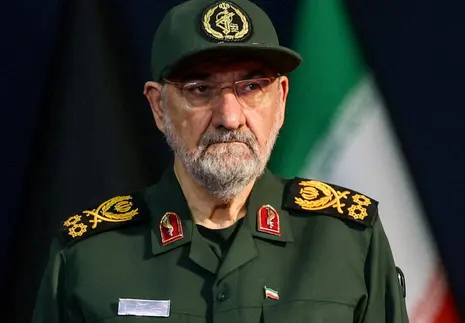
Mohsen Rezaei, Iran’s security chief, warned that Tehran would answer the proposed measures with an “earthquake-like” retaliation. He directed a pointed message at Iran’s Gulf neighbours, cautioning them against joining the American sanctions architecture:
“If the countries surrounding Iran join the Americans in their economic war, not a drop of oil will leave the Persian Gulf and the strait of Hormuz.”
Rezaei added that Iran would also target alternative oil-export routes out of the Gulf. Shipping transits through the strait remained severely disrupted over the weekend, injecting additional volatility into already strained global energy markets and raising the cost of insurance for tankers navigating the waterway.
Diplomatic Rebuttals and Legal Framing
Abbas Araghchi, Iran’s foreign minister, dismissed the anticipated sanctions as evidence of American desperation, arguing the measures would fail to compel Tehran. He characterized the shift from military operations to economic coercion as a return to
“the same old plans.”
Reza Nasri, an international lawyer with ties to the Iranian foreign ministry, offered a sharper structural critique:
“The announcement is not a measure against Iran. It is a claim of jurisdiction over the world, and every sovereign state on Earth is its real addressee. Iran is merely the occasion. The demand that no country allow its own banks, businesses, airports or ship registries to engage in lawful trade with another country is aimed at everyone else. Sovereignty itself is the target.”
Esmail Baghaei, the foreign ministry’s spokesperson, echoed the theme of repetition without consequence:
“Repeating methods that have previously proven to fail will not produce any different results, except that it shows the extent to which America is hostile and spiteful towards each and every Iranian, because it knows very well that the effects of these sanctions will affect ordinary Iranian citizens.”
He went on to argue that compelling or intimidating other nations to curtail trade relations with a third country constitutes a violation of the most fundamental principles of international economic law.
The UAE Factor
Before Washington made its announcement public, the United Arab Emirates — Iran’s single largest trading partner in the Middle East — declared it was terminating all commercial exchanges with Tehran. The move, which Tehran regards as pre-coordinated between Washington and Abu Dhabi, narrows an already constrained set of trade channels and signals that the Gulf states are willing to align with American pressure at least rhetorically. Whether that alignment translates into sustained economic separation, particularly given the UAE’s own dependence on regional energy logistics, remains an open question.
For India, Russia, and other mid-tier economies that maintain significant energy or commodity links with Iran, the coming weeks will reveal whether secondary sanctions function as a credible deterrent or remain, as Nasri frames them, an assertion of jurisdiction that most of the world simply declines to accept.
Related Reading
Frequently Asked Questions
What is Iran vows to retaliate against countries?
Iran vows to retaliate against countries is the main topic of this guide. The article explains the context, practical details, and next steps readers should understand.
Why does Iran vows to retaliate against countries matter?
Iran vows to retaliate against countries matters because readers are looking for a useful answer, not just a short summary. Good content should match search intent and help them decide what to do next.