French police accused of rising use of violence to stop Channel crossings

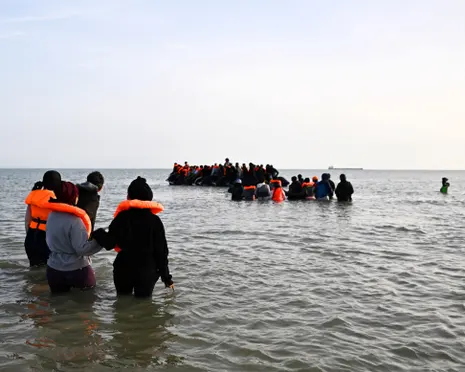
Table of Contents
As Channel crossings shrink, the human toll on French beaches grows
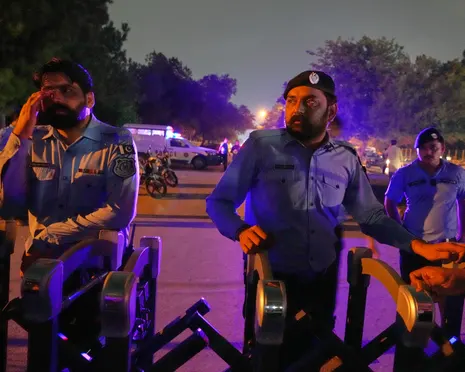
Wanderstayfinder.com – Twenty-one people have lost their lives attempting to reach Britain across the English Channel so far this year. At least ten families have been torn apart on the sand by enforcement operations. On 27 July, a French gendarmerie buggy tore across a beach at speed, running over a woman’s leg as officers chased a group of migrants trying to launch a dinghy. These are not isolated incidents. They are, according to a new briefing from the French NGO Utopia 56, the predictable outcome of a security strategy that prioritises stopping boats above all else.
The organisation, which maintains a presence on the beaches of northern France where migrants gather before attempting the roughly 35-mile stretch of water separating Calais from Dover, has compiled what it describes as a catalogue of police violence. Its findings land at a moment when British and French officials are celebrating declining crossing numbers as evidence that their joint crackdown is succeeding.
The numbers both sides cite
Utopia 56’s data shows that 2,720 people have reported being victims of French police violence this year, up sharply from 1,954 over the equivalent period last year. The contrast is striking because overall crossing volumes were considerably higher in the prior year. In other words, fewer people are attempting the journey, yet more of those who do encounter force on the beach.
The Home Office, by contrast, points to a different set of figures. Between 27 April and 2 August, French officers stopped 185 boats and prevented more than 4,300 people from making the crossing. Crossings overall have fallen by over 40 percent compared with the same window last year, and July recorded the lowest monthly total since 2020. A large quantity of equipment — boats, outboard engines, lifejackets — has been seized in the process.
What remains unknown is how many of those 4,300 intercepted individuals subsequently found another way across. The Home Office has not disclosed that figure.
Escalation in the sand
The violence documented by Utopia 56 ranges from beatings to the deployment of teargas canisters. During the recent European heatwave, officers fired teargas into sand dunes where migrants were sheltering, creating a fire hazard in dry, wind-swept terrain. Families have been separated when officers scatter groups to prevent boat launches. The gendarmerie buggy incident of late July — in which a woman’s leg was crushed under the vehicle’s wheels — illustrates how speed and force have become standard tools of the operation.
The NGO argues that the increased enforcement activity on French beaches, funded in part by the United Kingdom, has made crossings more dangerous and less organised. Smugglers, facing tighter interception, have been forced into riskier timing and less prepared launches, putting more lives at stake with every attempt.
The political machinery behind the beaches
Underpinning the operation is a £660 million agreement struck earlier this year between London and Paris. Under its terms, France has deployed a dedicated riot squad to the coast specifically to stop boats before they leave the shore. The deal includes a payment-by-results mechanism, meaning French authorities receive additional funding tied to measurable reductions in crossing numbers. The Home Office has described the arrangement as putting “40% more boots on the ground on French beaches.”
The political incentive structure is clear: fewer crossings translate into lower costs for the UK and higher payments to France. The human consequences of interception — injury, family separation, drowning risk from confiscated lifejackets — sit outside the metrics that drive the deal.
Utopia 56’s counter-narrative
The briefing, titled “Behind the figures: violent practices, the human cost of repression on the French coast,” was produced in direct response to a Home Office announcement widely reported on Friday that framed the enforcement surge as a success story. The NGO’s authors push back on the premise that intercepted migrants simply disappear from the record.
“People do not simply vanish after being intercepted, contrary to what one might believe upon reading the British government statement.”
The report also challenges the logic of seizing lifejackets. Utopia 56 contends that removing flotation devices does not deter smugglers from organising crossings; it merely raises the probability that anyone who does get into a boat will drown if conditions turn.
“This is a policy driven by statistics, we implemented with a single goal, stopping the boats, without any regard for the suffering it causes.”
“These figures may appear to prove that the crackdown is working, but they fail to account for the consequences: women, men and children abandoned on beaches – and, above all, many falling victim to the excesses of the security operation and, consequently, to police violence.”
The organisation calls for a fundamental overhaul of the European asylum system and the opening of safe, legal routes into Europe. In its view, reliable pathways would remove the economic incentive for smugglers and render the beach crackdown unnecessary.
Government response
A Home Office spokesperson defended the operation, framing it as part of a broader effort to restore order at Britain’s maritime border.
“This government is bearing down on dangerous small boat crossings and restoring control at our border. Joint efforts have seen over 48,000 crossing attempts prevented and 1,100 boats and engines seized since the election.”
“We are making progress, with the number of small boat crossings down this year and the lowest number recorded for the month of July since 2020. But we must go further, which is why we have signed a payment-by-results deal with the French to put 40% more boots on the ground on French beaches.”
France’s interior ministry was contacted for comment ahead of publication and had not responded by the time of writing.
The tension at the heart of the dispute is straightforward: one side measures success in boats stopped and crossings averted; the other measures it in legs crushed, families scattered, and lives lost in waters that grow more treacherous with every tightened net. Until both sets of numbers are placed side by side in public debate, the beaches of northern France will continue to serve as the site where Europe’s asylum policy is enforced — and where its human cost accumulates, one intercepted dinghy at a time.
Related Reading
Frequently Asked Questions
What is French police accused of rising use?
French police accused of rising use is the main topic of this guide. The article explains the context, practical details, and next steps readers should understand.
Why does French police accused of rising use matter?
French police accused of rising use matters because readers are looking for a useful answer, not just a short summary. Good content should match search intent and help them decide what to do next.