Landslide at waste mound in Guinea capital kills 30, government says

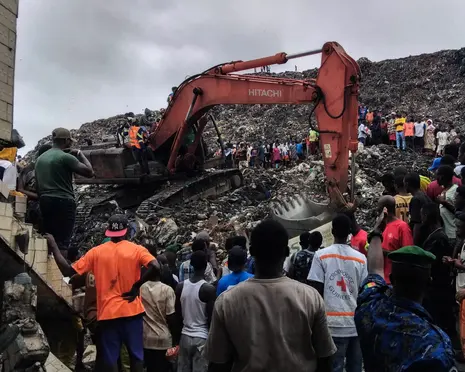
Table of Contents
Conakry’s Waste Mountain Collapses Days After Closure Order, Killing 30
Wanderstayfinder.com – Heavy overnight rainfall turned a looming urban hazard into a fatal catastrophe in Conakry, Guinea, when a towering mound of accumulated refuse gave way in the early hours of Sunday, burying makeshift shelters and killing at least 30 residents. The collapse struck less than seven days after the government publicly declared its intention to shut down the dump and move the waste elsewhere — a decision officials had framed as urgent given the recurring danger the site posed during the wet season.
The Collapse and Its Immediate Aftermath
The slide occurred at approximately 2 a.m. local time (3 a.m. UK time) within the Gbessia commune, a densely populated district on the capital’s outskirts. Witnesses described a mass of debris large enough to swallow an entire apartment block, let alone the flimsier tents and corrugated-iron shacks that lined the base of the mound. By the time daylight arrived, rescue crews were deploying excavators and hand tools to dig through the rubble, searching for survivors trapped beneath tons of compacted garbage and displaced earth.
The official tally stood at 30 dead, six people with serious injuries, and 16 more sustaining lighter wounds. Families gathered at the perimeter of the site waited for news of missing relatives, while emergency workers continued clearing operations through the morning.
A Mother’s Loss
Among the grieving survivors was Cire Diallo, a woman whose five children were killed in the slide. Standing at the edge of the debris field, she addressed reporters with a composure that belied the enormity of what had happened.
“I have lost all my children. All I can do is put my trust in God.”
Her words captured the raw personal devastation behind the statistics — a reminder that each figure in the death toll represents a household upended in a single night.
A Closure Order That Came Too Late
The timing of the disaster sharpened public scrutiny of how quickly the government moved to act on known risks. On Thursday, minister of territorial administration Djénabou Touré Camara had announced that the landfill would be closed because it was deemed unsafe, and that the accumulated waste would be relocated to a site outside Conakry. Within days, the very hazard that prompted the announcement claimed dozens of lives.
Prime minister Amadou Oury Bah traveled to the collapsed site on Sunday to inspect the damage and oversee the rescue and recovery operation. In a statement issued alongside his visit, the government urged residents to “remain calm, show solidarity, and strictly follow the instructions of rescue services and the competent authorities,” while pledging continued support for affected families.
Mineral Wealth, Human Vulnerability
The tragedy unfolds against a backdrop of stark economic contrast. Guinea possesses the largest bauxite reserves on Earth and hosts the Simandou iron-ore deposit, widely regarded as the richest untapped iron-ore body in the world. A massive mining project at Simandou was launched in November, drawing international investment and attention to the country’s extractive potential.
Yet the benefits of that wealth have not translated into basic urban infrastructure. A World Bank report published in April found that 3.7 million of Guinea’s 15.1 million residents live on less than $4.20 a day. In neighborhoods like Gbessia, where formal housing stock is scarce, families build shelters from whatever materials are at hand — often at the foot of the very waste piles that accumulate because municipal collection and disposal systems remain underfunded and underdeveloped.
A Pattern Across West Africa
Conakry’s disaster is not an isolated event. Across the West African region, the rainy season — typically stretching from May through October — triggers recurring landslides on unstable slopes and flash floods in low-lying urban areas where drainage infrastructure is minimal or nonexistent. Informal settlements that grow along riverbanks, hillside edges, and the perimeters of open dumps face compounded risk: the waste itself adds weight and water-retention to already fragile ground, while the residents living at its base lack the means to relocate before a storm arrives.
The closure announced Thursday, now rendered moot by Sunday’s collapse, underscores a recurring governance challenge in rapidly urbanizing West African capitals: identifying hazards is one step; executing remediation before the next downpour is another, and the gap between the two is where lives are lost. For the families of the 30 killed in Gbessia, the question now shifts from whether the site was dangerous to whether the next closure order will be implemented swiftly enough to outpace the next storm season.
Related Reading
Frequently Asked Questions
What is Landslide at waste mound in Guinea?
Landslide at waste mound in Guinea is the main topic of this guide. The article explains the context, practical details, and next steps readers should understand.
Why does Landslide at waste mound in Guinea matter?
Landslide at waste mound in Guinea matters because readers are looking for a useful answer, not just a short summary. Good content should match search intent and help them decide what to do next.