Iran’s new security chief says neighbours who join US economic war will be considered ‘enemies’

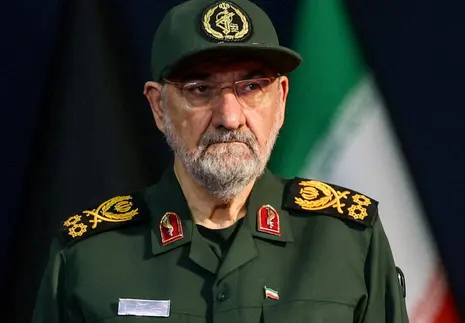
Table of Contents
Iran’s New Security Chief Warns Neighbours Aligned With US
Wanderstayfinder.com – Iran’s new security chief, Mohsen Rezaei, delivered his most forceful public warning since taking office, telling neighbouring states that any alignment with Washington’s economic pressure campaign against Tehran will be treated as an act of hostility. Speaking on state broadcaster IRIB in an interview aired Saturday, the veteran of the eight-year Iran-Iraq war — who commanded the Islamic Revolutionary Guard Corps for most of that conflict — drew a hard line: neighbours who side with what he called the American “economic war” will be classified as enemies, and their commercial interests in the region will become targets.
“Those neighbours would be considered an enemy and we will target their interests.”
Rezaei framed the threat specifically around oil-shipping corridors that exit the Gulf through routes other than the Strait of Hormuz. His remarks mark the most detailed statement from Iran’s new security chief since his elevation to the supreme national security council chairmanship earlier this month, an appointment analysts read as part of a broader hardening of Tehran’s political and military posture across several senior posts.
A Six-Month Conflict Without De-escalation
The backdrop is a war that has now dragged toward its six-month mark with no meaningful movement toward peace. Donald Trump launched the conflict on 28 February in coordination with Israel; a ceasefire reached in June has since collapsed, leaving Iran in effective control of the Strait of Hormuz. Before the fighting began, that narrow waterway carried roughly one-fifth of global oil supplies, so its disruption has immediate consequences for energy markets worldwide.
Trump has intensified pressure on Tehran’s economy through a newly announced campaign designed to isolate the Iranian financial system. Last week he threatened “tremendous economic consequences” for any nation that continues to trade with or assist Tehran. Washington has pressed allies and partners — most prominently China, one of Iran’s principal strategic relationships — to join the isolation effort. Beijing has pushed back, arguing that unilateral American sanctions will not resolve the broader Middle East conflict and may deepen it.
Operation Economic Fury and the Naval Blockade
Behind the rhetoric, the US Treasury has spent months executing what it calls Operation Economic Fury, a programme of targeted sanctions aimed at severing Iran’s access to foreign funding. In parallel, a naval blockade in the Strait of Hormuz has sought to prevent Iranian ports from exporting the crude oil on which the country’s economy depends. The combined effect has tightened the noose around Tehran’s fiscal position while simultaneously raising energy costs for the rest of the world.
One of Iran’s largest regional trading partners, the United Arab Emirates, announced Tuesday of last week that it was suspending all trade and financial transactions with Tehran until further notice — a move underscoring how quickly the economic pressure campaign is reshaping commercial relationships across the Gulf.
Trump’s Territory Gambit
Adding unpredictability to an already volatile situation, the US president has repeatedly floated the notion of formally declaring the Strait of Hormuz a piece of American territory. Speaking to reporters on Monday, he said:
“We control it with the blockade, and I like the idea of declaring it a territory.”
On Friday, addressing a crowd in South Carolina, he went further: “We don’t even know if we won, because I view the Strait of Hormuz as an American territory right now.” By Saturday evening, Trump had posted a map graphic on his personal social media platform depicting the Gulf and labelling the strait a “new US territory.” The remarks drew sharp criticism from regional states and raised questions about the legal and diplomatic implications of such a claim under international maritime law.
Iran’s Remaining Leverage
Rezaei used his interview to signal that Tehran retains options it has not yet deployed. He stated that Iran had so far limited its strikes to military installations and had deliberately refrained from touching American commercial assets in the region, implying that economic targets remain on the table should sanctions intensify further.
FAQ
Who is Iran’s new security chief? Mohsen Rezaei, a former IRGC commander during the Iran-Iraq war, was elevated to chair the supreme national security council earlier this month.
What exactly did he threaten? He warned that any neighbouring state joining the US economic pressure campaign against Iran will be classified as an enemy and that its commercial interests in the region will be targeted.
What is Operation Economic Fury? It is the US Treasury’s programme of targeted sanctions designed to cut off Iran’s access to foreign funding, paired with a naval blockade of the Strait of Hormuz.
How is the conflict affecting global energy markets? The Strait of Hormuz previously carried roughly one-fifth of global oil supplies. Its disruption, combined with the blockade, has raised energy costs worldwide and prompted trading partners such as the UAE to suspend commercial ties with Tehran.