Japan’s defence minister heads to Australia to meet Marles in wake of melon-gate controversy

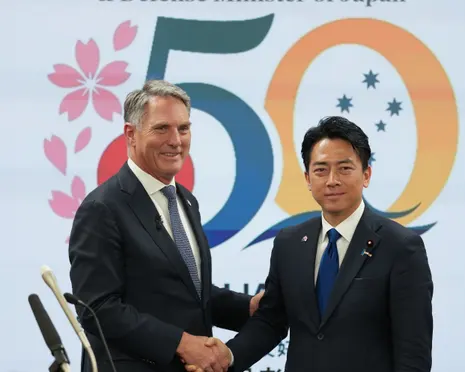
Table of Contents
Japan Sends Senior Defence Chief to Canberra as Tokyo–Canberra Ties Face Post-Scandal Reset
Wanderstayfinder.com – Shinjiro Koizumi, Japan’s defence minister and a figure widely tipped for the premiership in coming years, is set to land in Canberra this week for what will be the most senior bilateral engagement between the two governments since a viral podcast clip sent shockwaves through diplomatic circles. His Tuesday sitting with Australia’s deputy prime minister and defence minister Richard Marles arrives at a moment when both capitals are keen to demonstrate that their strategic partnership remains intact despite an awkward fortnight of public embarrassment.
The agenda is squarely military. Negotiations will centre on Australia’s planned purchase of three Mogami-class frigates from Japanese shipyards, alongside broader measures to deepen joint training, intelligence sharing, and co-production of advanced weapons systems. The talks build directly on a joint statement issued by the two prime ministers in May, which outlined a shared commitment to regional security architecture in the Indo-Pacific.
“Our relationship with Japan continues to go from strength to strength, and I look forward to welcoming my good friend, minister Koizumi back to Australia this week,” Marles said. “Together we will progress efforts to enhance defence cooperation and support our shared commitment to regional security, building on the joint statement announced by our prime ministers in May.”
“This includes in the areas of co-developing and co-producing defence capabilities, advanced weapons testing, enhanced training and exercises, and increased information and intelligence cooperation,” he added.
The Frigates Deal: A Decade-Long Commitment
In August of last year, the Labor government formally agreed to acquire three Mogami-class vessels for the Royal Australian Navy. The programme will cost approximately $10 billion spread across ten years, with the first hull expected to arrive in December 2029. For Canberra, the acquisition represents a significant step toward integrating Japanese industrial capacity into its own naval replenishment cycle — a move that also deepens supply-chain interdependence at a time when both nations are recalibrating their postures against an assertive People’s Liberation Navy.
Melon-Gate: How a Podcast Moment Became a Diplomatic Flashpoint
The visit follows a turbulent week in which Prime Minister Anthony Albanese spent considerable political capital defending remarks made on the Bush Deep podcast, released last month. During the interview he was recounting how Japanese prime minister Sanae Takaichi had presented him with a pair of ornamental melons during her earlier Canberra trip this year. While making hand gestures at chest height, he quipped that she “brought two, as you do.” Host Nikki Osborne seized on the moment, quipping: “She came in looking like Pamela Anderson.”
Within hours the clip had been dissected across Australian media and opposition backbenches. Albanese responded by insisting his body language and phrasing had been misread and were never intended as commentary on female anatomy. He maintained that no diplomatic offence was meant, though days of sustained criticism from the Liberal–National coalition accused him of needlessly straining relations with one of Australia’s most consequential partners in Asia.
Takaichi herself had visited Canberra in May — weeks before the podcast interview aired — and was hosted to dinner by Albanese. Japan’s current ambassador to Australia, Kazuhiro Suzuki, issued a statement on Wednesday describing that evening as taking place “in a very relaxed atmosphere,” adding that Tokyo believed it “helped build a personal trust relationship between the two leaders.” The statement stopped short of raising any further complaint about Albanese’s conduct, signalling a deliberate choice to let the episode fade rather than escalate.
A Japanese diplomatic cable dispatched in July and subsequently leaked into public view attributed the uproar largely to “sensationalised reporting in the Australian media” and asserted that Tokyo perceived no “ill intention” behind the prime minister’s gestures. The cable’s tone — measured, non-confrontational — mirrored Suzuki’s Wednesday remarks and underscored a shared preference on both sides to contain the episode without formal protest.
Koizumi: Heir to a Political Dynasty
The choice of envoy carries its own weight. Koizumi is regarded within Japanese politics as a leading candidate for the next premiership. His father, Junichiro Koizumi, held the post from 2001 through 2006 and remains one of the most recognisable names in modern Japanese governance. Sending a figure of that stature to Canberra signals that Tokyo treats the bilateral relationship as a priority track, not a routine diplomatic circuit.
The trip spans five days and includes a stop in India, reinforcing the trilateral security architecture that links New Delhi, Tokyo, and Canberra within what both capitals describe as a free-and-open Indo-Pacific framework.
Takaichi’s Domestic Pressures and the Yasukuni Question
Back home, Takaichi is navigating intensifying political headwinds. Opinion polls have shown her approval ratings sliding over recent months amid public frustration over cost-of-living measures she has championed. Separately, Koizumi drew criticism from Beijing at the weekend for visiting the Yasukuni Shrine, which enshrines Japan’s war dead including figures associated with imperial-era aggression. Neighbouring states — China and South Korea in particular — routinely interpret such visits as evidence of insufficient remorse over wartime conduct, and the episode is likely to feed into broader diplomatic friction that both Tokyo and Canberra would prefer not to see spill into their own bilateral channel.
Albanese had also apologised earlier for remarks about Australian singer Kylie Minogue made during the same podcast appearance, compounding the week’s awkwardness. Yet the overarching message from this week’s meetings is clear: both governments intend to compartmentalise the melon episode and press ahead with substantive defence integration, treating the frigate programme and joint exercises as the true measure of the partnership rather than a single ill-judged joke on a late-night show.
Related Reading
Frequently Asked Questions
What is Japan s defence minister heads to Australia?
Japan s defence minister heads to Australia is the main topic of this guide. The article explains the context, practical details, and next steps readers should understand.
Why does Japan s defence minister heads to Australia matter?
Japan s defence minister heads to Australia matters because readers are looking for a useful answer, not just a short summary. Good content should match search intent and help them decide what to do next.