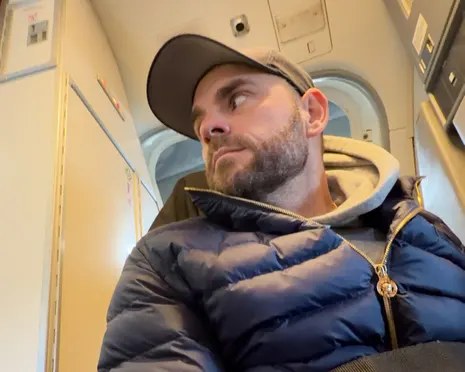
Ukrainian diver arrested in Croatia over Nord Stream pipeline bombings


Table of Contents
Ukrainian Diver Detained in Croatia in Latest Chapter of Nord Stream Pipeline Investigation
Wanderstayfinder.com – A trained scuba diver from Ukraine was taken into custody in the Adriatic coastal town of Pula on Wednesday, bringing a long-running European pursuit over the 2022 destruction of the Nord Stream undersea gas pipelines to its most recent turning point. The detention marks the second time German prosecutors have sought to bring this particular suspect before a courtroom, and it lands amid a web of diplomatic sensitivities between Berlin, Warsaw, and Kyiv.
What Happened to the Pipelines
The Nord Stream system consisted of four parallel pipelines laid beneath the Baltic Sea, engineered to move Russian fossil gas directly into Germany’s domestic grid. In September 2022 — roughly four months after Moscow launched its full-scale military invasion of Ukraine — a series of underwater explosions tore through three of the four lines. The ruptures sent gas billowing into the sea, severed a major energy artery that had supplied a substantial share of Germany’s imported Russian gas, and triggered a prolonged scramble across European markets for alternative fuel sources. Questions about who ordered the blasts, and under what legal or political authority, have lingered unresolved ever since.
The Suspect and the Prosecution’s Case
German authorities identified the man only as Vladimir Z, though he is widely understood to be the same individual previously named in Polish court records as Volodymyr Zhuravlev. Prosecutors allege he was directly involved in placing explosives near the island of Bornholm. In a statement, the German prosecutor’s office explained that the suspect
“belonged to a group of people, including the separately prosecuted Serhiy K, who planted explosives near the island of Bornholm in September 2022 on the Nord Stream 1 and Nord Stream 2 gas pipelines.”
The office added that
“The accused participated in the necessary dives.”
Under the current plan, Berlin intends to request Croatia’s cooperation in extraditing the detainee to face trial at the federal court in Karlsruhe, Germany’s principal venue for major criminal matters.
A Polish Court Said Germany Had No Jurisdiction
The Croatian arrest is not the first attempt to hold this man accountable. Last year, Polish law-enforcement officers detained him after Germany issued a European arrest warrant. A Polish court, however, subsequently ordered his release, concluding that Germany lacked jurisdiction over the incident. The judges went a step further, reasoning that the destruction of the pipelines could be interpreted as a justified act by Ukraine undertaken in the course of a defensive war.
That ruling generated considerable friction between the two governments. It also resonated with Poland’s deep-seated opposition to the Nord Stream project itself, which many in Warsaw had long viewed as a physical symbol of Berlin’s close economic entanglement with Moscow. Prime Minister Donald Tusk made his position unmistakable in public remarks:
“The problem with Nord Stream 2 is not that it was blown up; the problem is that it was built.”
How the Suspect Evaded Polish Custody
Following his release, the man reportedly made his way back to Ukraine in 2024. Polish officials attributed the failure to administrative errors on the German side when the suspect was entered into the international wanted database; those errors, they said, allowed him to cross the border even though an active arrest warrant remained in force. The German magazine Der Spiegel went further, alleging that a Ukrainian military attache stationed in Warsaw had assisted his departure from Polish territory.
Geopolitical Awkwardness and Broader Implications
The Wednesday detention in Croatia underscores Berlin’s determination to see the case reach a German courtroom, even though the pursuit sits in an uncomfortable position. Germany has been one of Ukraine’s most consistent military and financial backers since the invasion began, yet it is now seeking to try a Ukrainian national over the sabotage of infrastructure that had carried Russian gas into Europe. The tension between solidarity with Kyiv and the pursuit of domestic justice over the pipeline destruction has made every procedural step in this case a matter of diplomatic sensitivity.
The second individual named in the investigation, Serhiy K, was apprehended in Italy last August. After unsuccessful appeals in Italian courts, he was transferred to Germany in November to face charges, giving prosecutors at least one defendant already in German custody while they work to secure the second.
For European energy markets and for the broader question of accountability after the 2022 explosions, the Croatian arrest represents a concrete step toward answers that have eluded investigators for more than three years. Whether the Karlsruhe trial will ultimately clarify the chain of command behind the Bornholm blasts — or instead deepen the rift between Germany and its eastern neighbors over jurisdiction and wartime conduct — remains to be seen. What is clear is that the case will not quietly fade from the European political agenda.
Related Reading
Frequently Asked Questions
What is Ukrainian diver arrested in Croatia over?
Ukrainian diver arrested in Croatia over is the main topic of this guide. The article explains the context, practical details, and next steps readers should understand.
Why does Ukrainian diver arrested in Croatia over matter?
Ukrainian diver arrested in Croatia over matters because readers are looking for a useful answer, not just a short summary. Good content should match search intent and help them decide what to do next.