Sacking turns former Zelenskyy loyalist into potent political opponent

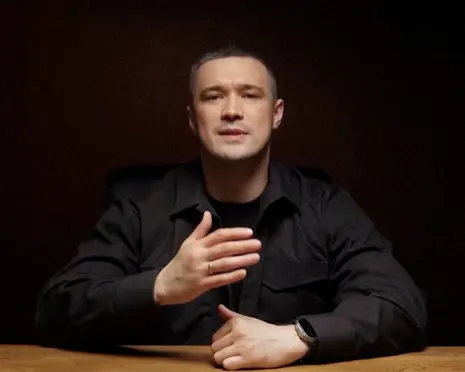
Table of Contents
From Insider to Dissident: How Ukraine’s Ousted Defence Minister Became Zelenskyy’s Most Visible Rival
Wanderstayfinder.com – Mykhailo Fedorov spent six months inside the most powerful ministry in wartime Ukraine, pushing through procurement reforms and courting the trust of a president who had appointed him. Within weeks of being dismissed from that post, the 35-year-old has reinvented himself as the sharpest public critic of Volodymyr Zelenskyy’s wartime leadership — a transformation that has electrified a capital already simmering with frustration over governance failures.
The rupture is now visible in the streets. For over a month, crowds have assembled in Ivan Franko Square, the open space directly facing the presidential office, chanting not the president’s name but that of the man he removed from the defence portfolio. On Sunday evening, roughly 2,000 marchers moved down Khreshchatyk, Kyiv’s central boulevard, carrying handmade cardboard placards in solidarity with the former minister. Zelenskyy has declined to reverse the dismissal, effectively closing the door on Fedorov’s return to government.
Parliament Seals the Break
On Wednesday, the Rada — Ukraine’s unicameral legislature — voted to confirm Yevhen Khmara as the new defence minister. The vote formalised what the sacking had already implied: Fedorov’s political career inside the executive is over. What remains is his role as an opposition voice operating from outside the state apparatus, armed with public sympathy and a platform that reaches millions.
A Nine-Minute Video That Rocked Kyiv
The catalyst for the current standoff arrived on Tuesday, when Fedorov posted a nine-minute address to YouTube. In it, he called for elections to be held even under wartime conditions and reminded his former employer that ultimate authority belongs to the citizenry.
“Democracy cannot be held hostage by Russia,” Fedorov said. “We must find a legal, safe and realistic mechanism which will allow Ukraine to renew its full democratic process even in the conditions of a long war.”
The video delivered a pointed indictment of the administration’s internal culture. Fedorov described what he called a “systemic crisis of governance,” arguing that corruption embedded within the defence ministry was actively degrading the war effort. He accused the leadership of promoting loyalists over competent professionals and of allowing entrenched interests to block necessary reform.
“The old system lives by its own rules too often. It protects itself. It is scared of change,” he said.
Those remarks were widely read as a thinly veiled explanation for his own removal: Fedorov had attempted to dismantle corrupt procurement networks inside the ministry, and the backlash, critics argued, cost him his job.
Corruption’s Wartime Face
The broader context is familiar to Ukrainians. Corruption has been endemic across the former Soviet space, and during the 2010–14 presidency of Viktor Yanukovych — a leader backed by Moscow — it reached what observers described as spectacular proportions. In peacetime, large-scale siphoning of state budgets meant fewer resources for schools and hospitals. Under full-scale invasion, the stakes have shifted dramatically.
Fedorov stressed that today’s graft carries “an entirely different meaning” because every stolen hryvnia translates into drones never purchased, ammunition that never reaches the front line, and technologies that could have entered production but did not. The video included a photograph of Andriy Yermak, Zelenskyy’s former chief of staff, who stepped down last year amid a corruption scandal that also implicated Timur Mindich, a longtime business associate of the president. Yermak’s attorney has called the allegations “baseless,” while Mindich, who relocated to Israel, likewise denies any wrongdoing.
Expert Voices and Civil-Society Momentum
Orysia Lutsevych, deputy director of the Russia and Eurasia programme and head of the Ukraine forum at Chatham House, endorsed the broad thrust of Fedorov’s critique.
“I think he’s right. He says the system is old-fashioned, does not run fast enough, stalls innovation and prioritises loyalty,” she said.
She added that “personal and vested interests” sometimes shaped official decisions in ways that did not serve Ukraine’s strategic interests, and that such behaviour “could be called corruption.” At the same time, she emphasised that Ukrainian society — energised by students, veterans, journalists, and anti-corruption watchdogs — remains politically active and capable of holding power accountable.
“The street is a check on the president. It corrects,” Lutsevych said. “Parliamentarians are active too. Ukraine is a pluralistic space. There are checks and balances even under martial law.”
Yet she warned that a combination of public fatigue and Zelenskyy’s reluctance to explain his decisions had produced what she termed a “nervous exhaustion” in the political atmosphere. “It’s a perfect powder box,” she observed.
Zelenskyy’s Silence and the Mudra Raid
The president has not publicly answered Fedorov’s accusations. On Wednesday, however, he dismissed his deputy chief of staff, Iryna Mudra, after the National Anti-Corruption Bureau conducted a raid on her office. The bureau stated that Mudra and a Rada deputy were suspected of laundering approximately $3.4 million. The episode recalled a similar confrontation a year earlier, when Zelenskyy attempted to strip the bureau of its operational independence before reversing course under pressure from domestic activists and European partners.
Olena Tregub, co-founder of the Independent Defence Anti-Corruption Commission, framed the issue in structural terms. She argued that individuals “from the system” routinely filled senior posts at the expense of talented professionals, and that corruption was a symptom rather than a root cause.
“Corruption is the symptom. It’s not the cause. The cause of the problem is bad governance,” she said.
She acknowledged that military contracting involved “shades of grey,” complicating clean accountability in a theatre where speed often trumps procedure.
What Comes Next
The political arithmetic in Kyiv is shifting. A president who once treated Fedorov as a trusted reformer now faces a former ally who commands street-level energy, media reach, and the sympathy of civil-society institutions. With Khmara installed at the defence ministry and the Rada’s vote behind him, the executive has consolidated its position. But the question Fedorov’s video poses — whether wartime urgency can indefinitely suspend democratic renewal without eroding the very legitimacy the war depends on — has no easy answer, and the square outside the presidential office suggests Ukrainians intend to keep asking it.
Related Reading
Frequently Asked Questions
What is Sacking turns former Zelenskyy loyalist into?
Sacking turns former Zelenskyy loyalist into is the main topic of this guide. The article explains the context, practical details, and next steps readers should understand.
Why does Sacking turns former Zelenskyy loyalist into matter?
Sacking turns former Zelenskyy loyalist into matters because readers are looking for a useful answer, not just a short summary. Good content should match search intent and help them decide what to do next.