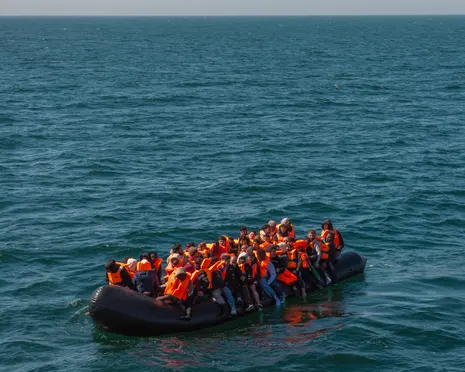
Convictions for Channel Crossings Rise as Vulnerable Migrants Face Imprisonment
Over 1,100 Prosecutions Since New Offence Was Introduced
Wanderstayfinder.com – A growing number of asylum seekers have found themselves behind bars after being convicted of illegally arriving in Britain, with new figures showing that over 1,100 individuals have faced prosecution since the offence was created. Among those convicted are people who have survived torture and human trafficking, raising concerns about whether the justice system is adequately protecting vulnerable populations.
The Home Office established the illegal arrival offence in 2022 as part of its strategy to discourage people from crossing the English Channel by small boat or using other irregular routes, such as hiding in lorries. The policy was immediately controversial among human rights advocates, who pointed out that the 1951 Refugee Convention specifically protects people from being penalised for their method of arrival, recognising that refugees often cannot travel through legal channels when fleeing danger.
Freedom of information requests made by Dr Victoria Taylor, a criminologist and research fellow at the University of Manchester, uncovered that 1,109 people were prosecuted between July 2022 and January 2026. The breakdown reveals that 628 individuals arrived by small boat, with 296 of those captured on surveillance drone footage while steering their dinghy. Some of those convicted had previously lived in the UK and had existing immigration records.
Only twelve people have been convicted of the separate facilitation offence, which applies to those who actively steer the boats they arrive on. Prosecutors face greater difficulty proving that someone on a dinghy helped organise the entire journey compared to simply proving they arrived illegally. People can be identified as having their “hand on the tiller” for various reasons, including having prior boating experience, steering in exchange for reduced travel costs, taking turns with others, or being compelled to do so under pressure.
Trafficking Survivors Caught in the Net
One particularly significant case involved a trafficking survivor from South Sudan who was forced at gunpoint to pilot a small boat across the Channel. The Home Office eventually settled a judicial review related to this case and agreed to provide greater protection for trafficking victims in similar situations.
Unfortunately it is clear from our client’s case that potential victims of trafficking are regularly being convicted for illegal arrival and imprisoned for many months. The concessions made in our client’s case underline the need for a robust and consistent application of the UK’s modern slavery framework to prevent survivors of trafficking from being wrongly treated as criminals.
Emily Soothill, a partner at Deighton Pierce Glynn who represented the South Sudanese man, highlighted how the system struggles to distinguish between genuine trafficking victims and those who should face prosecution.
Among all those convicted of various offences related to illegal arrival, at least thirty children had their ages disputed. Nineteen of these young people spent time in adult prisons, raising additional concerns about the treatment of minors within the immigration system.
Questions About Deterrence and Fairness
Captain Support UK, an organisation that has assisted hundreds of people imprisoned in illegal arrival cases, noted that all of those they worked with had sought asylum in the UK within hours before their arrest.
We see first-hand the negative impact these prosecutions have on people and their families. We urgently call on the government to stop imprisoning people on the move. No one should be put in prison for seeking safety and a better life.
Dr Taylor’s analysis suggests that the selection process for prosecution appears inconsistent. She noted that most people imprisoned for illegal arrival since 2022 had claimed asylum shortly before being arrested. Many have since been granted asylum or recognised as trafficking victims, or both.
The researcher pointed out that the refugee convention was specifically designed to prevent countries from punishing refugees for how they reach safety. She questioned whether the current approach aligns with this principle, noting that there is no concrete evidence supporting the government’s assertion that these prosecutions actually deter people from attempting the Channel crossing.
The Home Office has been contacted for further comment on these findings and the ongoing debate about whether the illegal arrival offence is achieving its intended purpose while treating vulnerable migrants fairly.
Related Reading
Frequently Asked Questions
What is More than 1 100 people convicted?
More than 1 100 people convicted is the main topic of this guide. The article explains the context, practical details, and next steps readers should understand.
Why does More than 1 100 people convicted matter?
More than 1 100 people convicted matters because readers are looking for a useful answer, not just a short summary. Good content should match search intent and help them decide what to do next.