Mohamed Salah’s Story of Success: From Nagrig to Global Stardom
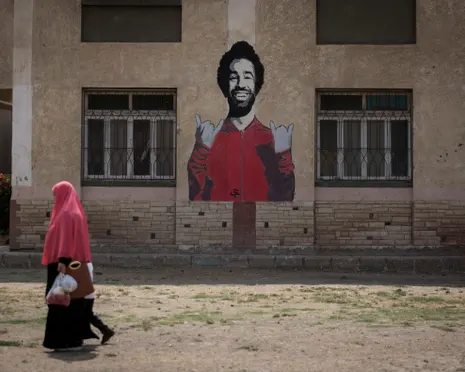
Wanderstayfinder.com – Walk through the imposing gates of Al Mokawloon Al Arab’s youth academy in eastern Cairo, and you are following in the footsteps of one of football’s greatest modern success stories. Above the entrance, a face gazes down—a permanent reminder of what happens when raw talent meets unwavering discipline. The building’s facade, with its thick concrete slabs and marble-like trim that shifts color with the light, might seem intimidating at first. But for anyone who understands the journey that brought this Egyptian star from Nagrig village to global recognition, the entrance feels like a gateway to something extraordinary.
The Daily Odyssey
What makes this footballer’s journey truly remarkable is not just where he ended up, but the grueling daily pilgrimage that preceded his rise. For years, the young player endured a nine-hour round trip five days a week, navigating Egypt’s complex transport network with nothing but determination and a dream. The route has become legendary, documented in Chinese, Spanish, and every major language since he began transforming the Premier League in 2017.
His journey began at the T-junction on the edge of Nagrig village, where he would catch the first bus to Basyoun. From there, a transfer took him to Tanta, the capital of the Gharbia Governorate. The longest leg involved a grueling 100-kilometer trek to reach Cairo’s chaotic Ramses Square. Once in the capital, he navigated the central transport hub to reach Nasr City, where Al Mokawloon’s academy awaited. On fortunate days, he could catch a ride close to the club’s gates, sparing himself a nearly two-kilometer uphill run to arrive on time for training.
“I didn’t feel tired travelling when I was young,” he would reflect in 2022. “It’s because I was doing something I wanted, chasing a dream I had to reach. I wasn’t seeing my situation, I was seeing my goal. These are days I sit and think about, I’ll never forget them and I still smile now when I remember everything.”
Sacrifice Beyond the Surface
Summarizing the journey as a simple commute misses the profound sacrifice involved. Hamdi Nouh, his first coach at Al Mokawloon and someone the Egyptian star has called a “second father,” understood this deeply. “He was ready to sacrifice everything, he wanted to work hard, and liked to learn,” Nouh observed. The reality was far more visceral than any summary could capture.
He gave up his youth to sit shoulder-to-shoulder in overcrowded microbuses, his body pressed against strangers as they filled every available inch. Sometimes passengers even hung off the sides of these vehicles, racing to catch connections in schedules that seemed to operate without logic. The anxiety of missing a connection weighed heavily, especially when he carried only enough cash for the exact journey—no margin for error, no room for mistakes.
Remarkably, he never asked his father for more money, despite the tight financial constraints. Instead, he embraced the stressful odyssey rather than merely enduring it. The journey became part of his training, a daily test of resilience that would serve him throughout his career.
A Mother’s Worries
While he found purpose in the journey, his mother, Umm Mohamed, experienced constant anxiety. She worried about her eldest son spending only two hours at school between seven and nine in the morning before embarking on his long journey. The lanes of Nagrig were more suggestion than road, and dangerous driving was the norm. Microbus accidents were common, and each one sent waves of panic through her.
One major accident along her son’s route triggered sheer terror. She tried calling over 20 times, her heart pounding with each unanswered ring. He insists exhaustion never gripped him during his great trek, but on this occasion, he simply could not hear the phone—he was fast asleep, exhausted from another day of training and travel.
Financial concerns also weighed on the family. Salah Ghaly, the boy’s father, worked as a government administrator while trading in jasmine, Nagrig’s greatest export. He funded his football development, first sending him to Ittihad in Basyoun—a manageable half-hour trip—then to the Othmason club in Tanta, 90 minutes away. All of this happened before he became a teenager, before the almighty mission to Al Mokawloon awaited.
The Fearless Young Player
He began training at Al Mokawloon at just eight years old, and his playing style reflected the fearless spirit of his village. Ghamri Abdel-Hameed, a coach who watched him develop, noted: “He was small, but his left foot and his shots were powerful.” This combination of size and strength, honed through years of daily sacrifice, would eventually captivate the world.
Frequently Asked Questions
How long was Mohamed Salah’s daily commute to training? His daily commute was approximately nine hours round trip, five days a week, spanning from Nagrig village to Al Mokawloon’s academy in Nasr City, Cairo.
What was the total distance of Salah’s journey to training? The journey covered roughly 100 kilometers to reach Cairo’s Ramses Square, followed by additional travel to Nasr City, with some days requiring a nearly two-kilometer uphill walk.
How old was Salah when he started at Al Mokawloon? Mohamed Salah began training at Al Mokawloon at just eight years old, developing his powerful left foot and shooting ability under the guidance of coaches like Ghamri Abdel-Hameed.
What did Salah’s father do to support his football career? Salah Ghaly worked as a government administrator while trading in jasmine, Nagrig’s greatest export, funding his son’s football development from local clubs to Al Mokawloon.