Solar Surface Reveals Hidden Turbulence in Breakthrough Images
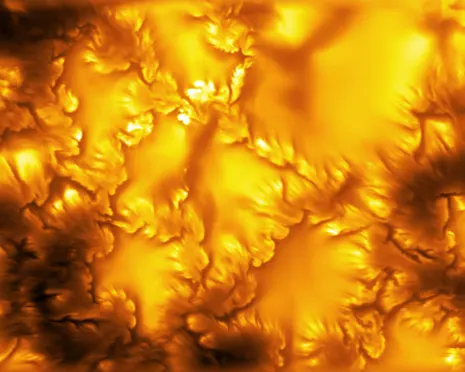
Wanderstayfinder.com – New photographs captured by Hawaii’s premier solar observatory have unveiled swirling patterns and golden bands across the sun’s surface, potentially resolving one of astrophysics’ most enduring puzzles. These images, taken with the Inouye solar telescope, represent the finest detail ever recorded of our home star’s turbulent exterior. Astronomers working with the facility identified previously unseen features measuring less than twenty kilometers in diameter within magnetically active zones near sunspots. The photographs reveal dynamic processes that may finally account for why the sun’s outer atmosphere reaches temperatures millions of degrees higher than its visible surface.
Unprecedented Resolution Captures Tiny Solar Structures
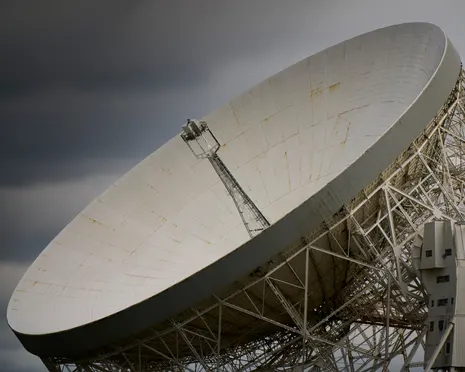
Dr. Friedrich Wöger, a senior scientist at the US National Solar Observatory, which manages the telescope near the summit of Haleakalā volcano on Maui, described the achievement.
These are the highest spatial resolution images of the solar surface ever acquired.
Earlier observations using the same instrument revealed the sun’s surface as a mosaic of granular formations, each roughly comparable in size to France. Those earlier images resolved details down to thirty kilometers across. The newest photographs push even closer to the telescope’s maximum capability. Dr. David Kuridze, an astronomer participating in the research team, expressed his astonishment at the findings.
My first reaction was: ‘Wow, how can we see such tiny, fine-scale structures on the sun?’ This is something we have never seen before in any solar observations.
Kelvin-Helmholtz Instabilities Confirmed on the Sun
The most significant discovery within these images involves small whirlpool-like formations on the solar surface. Scientists have now identified these as signatures of Kelvin-Helmholtz instabilities, commonly abbreviated as KHIs. These instabilities develop when rapidly moving plasma slides alongside slower-moving fluid, generating shear forces at their boundary. This interaction creates small disturbances within the sun’s plasma that expand into spiraling vortices resembling breaking ocean waves. Researchers have documented KHIs in terrestrial lakes and oceans, in cloud formations above Earth, and even within the atmospheres of Jupiter and Saturn. However, confirming their presence on the sun represents a first. The complete findings appear in the journal Nature.
Connecting Solar Turbulence to Space Weather
Explosive phenomena occurring on the sun—including solar flares, jets, and coronal mass ejections—derive their energy from extreme magnetic field fluctuations within the star. These eruptions can trigger widespread disruptions on Earth, damaging power grids, satellites, GPS navigation systems, and global communications networks. The magnetic fields originate from the movement of hot, charged plasma inside the sun, though the underlying physics remains incompletely understood. Scientists recognize that magnetic field lines can twist around one another like braided hair, building tension that releases suddenly when tangled lines break. What remained unclear was the initiating mechanism. The newly observed swirling vortices now appear central to this process, explaining why field lines become braided initially and potentially why the sun’s corona reaches temperatures of several million degrees while the surface stays at approximately 6,000°C.
This could solve this biggest mystery of the last half a century for solar physics and astrophysics,
Kuridze stated.
When you have this instability in the system, it is very easy to cascade the energy into smaller scales. And at some point, it just dissipates as a heat. This could make hot coronas, hot outer atmospheres of the sun and similar stars.
Broader Implications for Stellar Understanding
The confirmation of Kelvin-Helmholtz instabilities on the sun carries implications extending beyond our solar system. Similar stars likely experience comparable turbulent processes in their outer atmospheres. Understanding how energy transfers from large-scale motions down to microscopic scales helps astronomers model stellar behavior across different types of stars. The Inouye telescope’s ability to capture these fine details opens new avenues for studying magnetic reconnection events and energy dissipation mechanisms. Future observations may reveal how frequently these instabilities occur and how they contribute to the overall heating of the solar corona. Space weather forecasting could benefit significantly from improved understanding of these processes. Better models of how magnetic energy builds and releases will help predict when potentially dangerous solar eruptions might threaten Earth’s technological infrastructure. The photographs represent not merely a technical achievement in imaging capability, but a conceptual breakthrough in understanding how our star functions. The golden bands and swirling vortices captured in these images tell a story of constant motion and energy transfer that has shaped the sun for billions of years—and continues to influence life on Earth today.
Related Reading
Frequently Asked Questions
What is Unprecedented images may explain one of greatest?
Unprecedented images may explain one of greatest is the main topic of this guide. The article explains the context, practical details, and next steps readers should understand.
Why does Unprecedented images may explain one of greatest matter?
Unprecedented images may explain one of greatest matters because readers are looking for a useful answer, not just a short summary. Good content should match search intent and help them decide what to do next.