A Chemical Legacy: New York’s Battle Against a Parkinson’s-Linked Herbicide
Wanderstayfinder.com – Environmental exposure may be the hidden architect of neurological decline for thousands of Americans, and nowhere is this more evident than in the rolling hills of upstate New York. In Hebron, a quiet agricultural community nestled within Washington county, residents are grappling with an unsettling pattern of Parkinson’s disease that defies conventional explanations. With no genetic markers or family histories to account for the cluster of cases, many locals point their fingers toward a chemical culprit that has been drifting through their skies for generations.
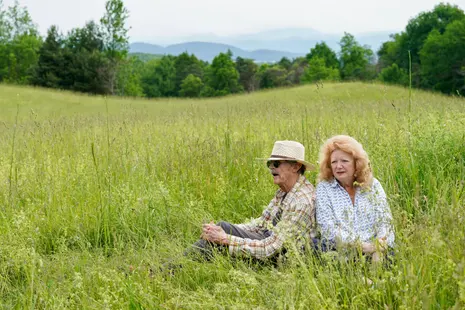
At the center of this emerging crisis stands Gordon Chaplin, an 81-year-old farmer whose once-vigorous life has been reshaped by an incurable degenerative brain condition. Chaplin navigates his property with deliberate caution, gripping a cane as he moves through vegetation that reaches his knees. Each step requires effort, and he pauses frequently to rest against the support of his caregiver. The landscape before him—the distant peaks of the Adirondack and Catskill ranges—once served as a backdrop for effortless runs up the steep incline behind his home. Now, movement itself has become a challenge.
“Things just don’t work as well as they used to. In fact, sometimes they don’t work at all,” Chaplin reflected. “There’s nothing worse than having your whole life … falling apart.”
His transformation began almost ten years ago, when subtle symptoms emerged without clear cause. The elegant script he once wrote with precision deteriorated into illegible marks. His expression settled into a permanent furrow of concern. During sleep, he physically enacted the scenarios of his dreams. Medical evaluations yielded conflicting results until a definitive diagnosis finally arrived: Parkinson’s disease, a progressive neurological disorder that impairs both movement and cognition.
Chaplin and his spouse, Sarah Teale, maintain that the answer lies buried beneath the pastoral beauty of their 200-acre operation, which raises cattle and cultivates corn. For decades, a tenant farmer has applied paraquat across their fields—a potent herbicide designed to eliminate broadleaf weeds and grasses. Emerging research has increasingly connected this chemical to the development of Parkinson’s disease.
Teale’s investigation revealed that fourteen individuals living near their property had received similar diagnoses. She designated the seven-mile corridor connecting eastern and western Hebron as “Parkinson’s Valley.” Her search extended beyond their immediate community, uncovering dozens of additional cases in surrounding municipalities. A shared environmental factor seemed the most plausible explanation.
The political response has been slow but growing. While dozens of nations have prohibited paraquat entirely, the United States continues to permit its widespread application. This year alone, fourteen state legislatures introduced measures to limit or eliminate the herbicide’s use. Vermont emerged as the first to enact a comprehensive ban. New York lawmakers attempted to follow suit, but their legislation stalled during an extended budget negotiation that consumed the legislative calendar.
“Hundreds of bills that we would normally pass never got a vote because we ran out of time,” explained assembly member Linda Rosenthal, who sponsored the New York proposal. “More people will suffer between now and when this bill becomes law. You can bet I’m going to work really hard to make sure it passes the next session.”
Paraquat entered agricultural use during the 1960s and has experienced remarkable growth in popularity. Geological survey data indicates that annual consumption nationwide doubled between 2014 and 2018, reaching a minimum of eleven million pounds per year. The chemical is routinely applied to corn, soybeans, cotton, and grape crops. New York’s usage patterns have fluctuated over time; in certain years during the early 2000s, the state ranked among the top ten consumers nationally. By 2018, growers had applied approximately 149,000 pounds, placing the state at thirty-first position in national rankings.
The scientific community has accumulated substantial evidence linking paraquat exposure to Parkinson’s disease over several decades. Investigations beginning in the late 1990s established initial connections. Research published in 2002 demonstrated that mice exposed to paraquat experienced significant loss of dopamine neurons—the defining characteristic of Parkinson’s pathology. A 2011 investigation revealed that agricultural workers who sprayed paraquat faced 2.5 times greater likelihood of developing the disease compared to unexposed individuals. More recently, a 2024 study confirmed that residents and workers in areas receiving paraquat applications experienced double the risk of Parkinson’s development.
“Research linking paraquat to Parkinson’s is one of the strongest databases out there linking a chemical exposure to a disease,” stated Deborah Cory-Slechta, a neurotoxicologist at the University of Rochester.
Ray Dorsey, a neurologist affiliated with the Atria Research and Global Health Institute, challenges the prevailing assumption that aging or heredity represent the primary drivers of Parkinson’s disease. He notes that approximately 85 percent of American patients carry no identifiable genetic risk factor. According to Dorsey, who published a comprehensive book on the condition last year identifying Hebron as a significant hotspot, the fundamental causes reside outside human biology rather than within it.
“The principal causes of Parkinson’s disease are not inside of us, not in our DNA, but outside of us, in our environment,” Dorsey asserted. “The continued use of paraquat is likely sowing the future seeds of Parkinson’s disease.”
The international consensus has largely moved against paraquat, with more than seventy countries implementing bans. Major agricultural producers including China and Brazil have joined the European Union in restricting the chemical. Yet the United States remains an outlier, allowing farmers to continue applying a substance that scientists increasingly view as a preventable threat to public health. As New York lawmakers prepare for renewed legislative efforts, the residents of Hebron and similar communities watch and wait, hoping that policy will finally catch up with science.
Related Reading
Frequently Asked Questions
What is Parkinson s Valley?
Parkinson s Valley is the main topic of this guide. The article explains the context, practical details, and next steps readers should understand.
Why does Parkinson s Valley matter?
Parkinson s Valley matters because readers are looking for a useful answer, not just a short summary. Good content should match search intent and help them decide what to do next.