Good food, good genes, good luck: how Ronaldo, Serena and other top athletes compete in their 40s
Wanderstayfinder.com – In the 2026 World Cup, eight players aged 40 or older took the field, a number that surpasses all previous tournaments combined. This trend is not confined to football; athletes like Lewis Hamilton in Formula One and Serena Williams at Wimbledon exemplify the growing phenomenon of elite competitors extending their careers far beyond what was once considered feasible. The question arises: are these stars truly aging gracefully, or have they simply mastered the art of delaying physical decline?
The Rise of Older Athletes in Modern Sport
The 40-year-old Luka Modrić, who captained Croatia in a high-stakes match, is emblematic of a shift in athletic longevity. A generation ago, competing at the peak of one’s sport in the 40s was exceptional, but today, it is becoming standard. The 2026 World Cup’s roster includes more players aged 40 or above than any prior edition, highlighting how sports science, improved training methods, and better facilities have transformed the landscape of professional competition.
According to a study by the Centre of Excellence in Population Ageing Research, the average age of Olympians has risen by approximately two years since 1992, climbing from 25 to 27. In football, male players’ average age increased from 26 in 1990 to 27 by 2018, while female athletes saw a more significant rise, from 23 to 26 over the same span. These statistics underscore a broader pattern: athletes are not only competing longer but also maintaining their performance levels with greater resilience.
Physiological Changes and Strategic Adaptation
While aging is inevitable, its effects vary across sports. Dr. Liam Anderson, an exercise physiologist at the University of Birmingham, notes that sports science has enabled athletes to “slow the rate of decline and maximise what they have left.” This includes advancements in recovery techniques, nutrition, and training regimens that target age-related deterioration. For instance, maximal oxygen consumption (VO2 max), heart rate, and cardiac output all decrease with age, as do flexibility and muscle recovery. However, athletes in endurance-based disciplines, such as marathon running, often retain their edge for longer.
At the Tokyo Olympics, marathon runners averaged 30 years for men and 31 for women, with some competitors reaching 44. In contrast, short-distance runners were predominantly in their early 20s, and swimmers had an average age of 22 to 23. These disparities reflect the differing demands of sports. While speed and explosiveness are critical in sprints, endurance and mental stamina play a larger role in long-distance events. Dr. Paul Hough, a sport and exercise scientist at the University of Westminster, explains that “one of the fitness qualities that most deteriorates is our explosiveness.” This decline can be particularly challenging for athletes relying on rapid movements, such as sprinters or forwards in football.
Experience as a Competitive Advantage
Despite physical challenges, older athletes often leverage decades of experience to stay relevant. “Experience, tactical awareness, anticipation, decision-making and emotional control often continue to improve with age,” Anderson emphasizes. These intangible assets can partially offset physical limitations. In football, for example, goalkeepers and defenders tend to maintain longer careers than forwards, as their roles require more technical precision than raw speed.
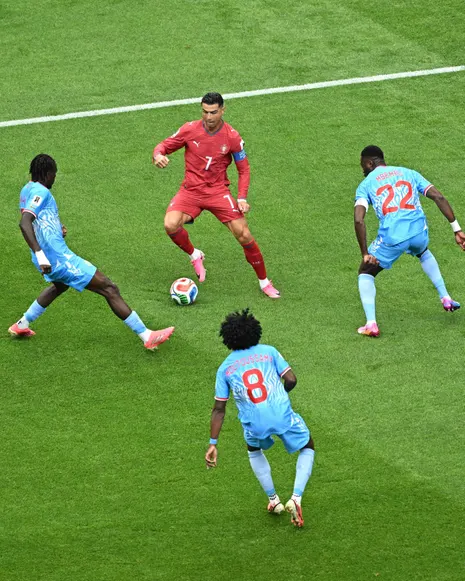
Cristiano Ronaldo exemplifies this adaptability. Once a speed-dependent winger, he has evolved into a more tactical forward, relying on reading the game rather than sprinting repeatedly. “He’s gradually adapted his game,” says Hough, “so he’s not having to make those sprints all the time.” Similarly, Serena Williams has shifted focus to doubles tennis, a format that emphasizes strategy over pure physicality. By redefining her role, she has extended her career while remaining a formidable presence on the court.
The Role of Modern Training and Professionalisation
Professionalisation has also played a key role in enabling athletes to compete into their 40s. Modern training regimes are far more rigorous and scientifically driven, ensuring that athletes optimise their performance at every stage of their careers. Recovery, nutrition, and sleep are now treated as essential components of success, with athletes following schedules that would have been unimaginable a few decades ago.
Financial considerations further support this trend. With greater revenue streams and sponsorship deals, athletes can afford prolonged training, access to cutting-edge facilities, and specialist coaching. This creates a feedback loop: as careers lengthen, athletes become more invested in maintaining their form. For example, Lewis Hamilton’s continued dominance in Formula One can be attributed to both his technical expertise and the resources available to him, allowing him to compete at a high level for over a decade.
Moreover, advancements in sports technology have reduced the physical toll of competition. Equipment like lightweight materials, injury-prevention gear, and data-driven analytics help athletes manage wear and tear more effectively. These tools enable older players to stay on the field longer, contributing to the overall rise in average athlete ages across disciplines.
Conclusion: A New Era of Athletic Longevity
As the 2026 World Cup and Wimbledon 2026 demonstrate, the boundaries of athletic longevity are being redefined. While physiology dictates certain limits, strategic adaptations and modern support systems are pushing those boundaries further. “Athletes don’t stop ageing,” Anderson acknowledges, but “what sports science has done is help them slow the rate of decline.” This synergy between science, strategy, and sustained professionalism ensures that top performers can remain competitive well into their 40s. Whether through mastering new roles, refining techniques, or leveraging advanced training, the future of elite sport is increasingly shaped by the ability to adapt to the natural aging process.
In this new era, the line between age and ability is blurring. The once-unthinkable feat of competing at 40 is now a reality, driven by a combination of scientific innovation, mental resilience, and a professional mindset that prioritises longevity. As athletes continue to redefine their limits, the question is no longer whether they can compete into their 40s—but how they will continue to thrive in that phase of their careers.