US threatens severe sanctions against countries with economic ties to Iran

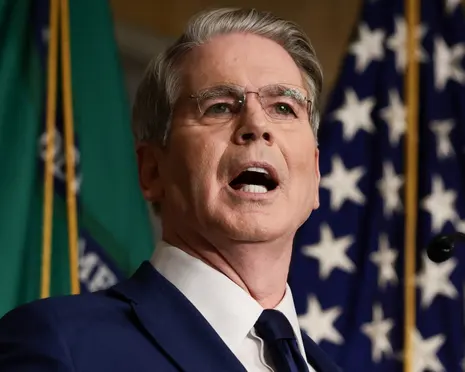
Table of Contents
Washington Escalates Economic War Against Iran’s Global Trade Network
Wanderstayfinder.com – The United States has moved to tighten an economic vise around Iran by threatening sweeping secondary sanctions on any nation or institution that continues doing business with Tehran. The announcement, delivered by Treasury Secretary Scott Bessent on Monday, marks a sharp escalation in a confrontation that has already consumed nearly six months of military and diplomatic effort without producing a decisive outcome for Washington.
Bessent branded the initiative “Operation Economic Outcast,” framing it as a historic turning point comparable to the Allied landings at Normandy in 1944. His rhetoric left little ambiguity about the administration’s intent: to isolate Iran’s financial infrastructure from the global economy until the regime, in his words, stands alone.
“Today, in that same spirit, we are launching an economic onslaught against Iran’s financial connections around the globe. Our objective is to sever every economic lifeline that sustains this tyrannical regime until Tehran stands alone.”
China at the Center of the Confrontation
The most consequential question hanging over the announcement concerns Beijing. China purchased roughly 80 percent of Iran’s exported crude oil in the previous year, making it by far the largest commercial partner of the Iranian economy. Yet the Chinese government has already pushed back against Washington’s pressure campaign, signaling that it will not simply sever ties with an ally at American insistence.
Pressed directly on whether the sanctions would reach Chinese entities, Bessent offered a pointed reply:
“We want to make clear here today that no one is above the reach of US sanctions. That if they facilitate transactions and are part of the ecosystem that turns Iranian oil into money, into repression, they will be targeted.”
He added that Washington had already identified specific actors continuing to trade with Iran and that each would receive a deadline to end those dealings or face punitive measures. The length of each deadline, he noted, would vary according to individual circumstances. Entities caught laundering funds on Iran’s behalf, he warned, would be expelled from the US dollar clearing system.
“The clock just started ticking.”
Bessent also disclosed that President Trump had been making direct phone calls to foreign leaders, pressing them to halt commercial interactions with Tehran. He did not confirm whether the president had spoken with Chinese leader Xi Jinping.
China’s embassy in Washington issued a brief statement to reporters, declining to engage with the sanctions framework:
“Regarding the Iran issue, sanctions and pressure do not help resolve the problem. China calls on the relevant parties to take responsible actions and resolve the issue through political and diplomatic means.”
Tehran Vows Multi-Domain Retaliation
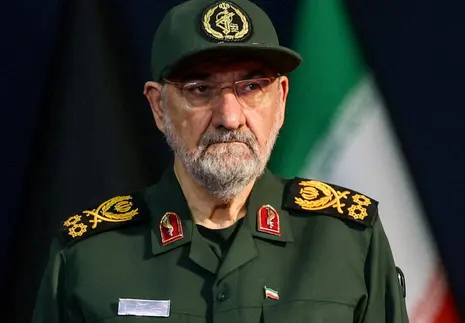
In Tehran, the response was swift and categorical. Iran declared it would answer the sanctions package with a broad menu of countermeasures. Major General Ali Abdollahi, chief of staff of the armed forces, told reporters that retaliation could manifest as conventional land operations, naval actions, air strikes, or sustained cyber-attacks against Western infrastructure.
The threat lands against a backdrop already strained by nearly half a year of open conflict. In late February, the United States and Israel launched a coordinated military campaign against Iran that killed Supreme Leader Ali Khamenei. Early hopes in Washington that the regime would collapse or capitulate to American demands — including surrender of its uranium enrichment capability and other pillars of its nuclear programme — proved misplaced. Instead, hardline factions consolidated their hold on power in Tehran and declared the closure of the Strait of Hormuz, the narrow waterway through which roughly a fifth of the world’s oil passes. Ships that ignored the closure were attacked.
Trump responded with a counter-blockade on Iranian crude exports transiting the strait, producing a standoff whose ripple effects have been felt across global energy markets and shipping insurance rates ever since.
Regional Allies and Neighbours Weigh In
Anticipating the US measures, the United Arab Emirates — a close partner of both Washington and Jerusalem — announced it would suspend trade relations with Iran. Turkey, another significant commercial partner of Tehran and a vocal critic of the American-led campaign against the Islamic Republic, had not yet issued a formal response as of Monday.
Analysts Question the Strategy’s Endgame
Sina Toossi, a senior non-resident fellow at the Center for International Policy, characterized the move as an attempt to achieve through economic strangulation what military force had failed to deliver.
“After nearly six months without a military or diplomatic victory, Washington appears to be trying to accomplish through intensified economic strangulation what military force has so far failed to achieve. But Tehran is answering that zero-sum approach with one of its own.”
Andrew Miller, a senior fellow at the Center for American Progress, offered a more pointed assessment of what the sanctions signal about the war’s trajectory:
“The announcement of new economic sanctions on Iran and those countries trading with it signals what is plain to all: this war has brought the United States no closer to eliminating Iran’s nuclear programme or crippling the Iranian regime. But while sanctions can be effective, it is highly unlikely they will produce a quick settlement favourable to the United States.”
Military Option Remains Open
Despite the economic framing of Monday’s announcement, the Pentagon made clear that kinetic options have not been shelved. Defense Secretary Pete Hegseth told reporters that the United States was not foreclosing the use of strikes anywhere in the Strait of Hormuz or in the broader region surrounding Iran.
“By no means are we foreclosing using kinetic strikes anywhere in the strait of Hormuz or around Iran.”
The layered posture — economic pressure paired with an explicit military reservation — suggests the administration intends to keep maximum leverage while testing whether sustained financial isolation can extract concessions that neither bombs nor diplomacy have yet secured. For the countries caught between Washington’s demands and their own commercial interests in Tehran, the coming weeks will determine whether the sanctions regime functions as a credible enforcement mechanism or collapses under the weight of the very trade it seeks to extinguish.
Related Reading
Frequently Asked Questions
What is US threatens severe sanctions against countries?
US threatens severe sanctions against countries is the main topic of this guide. The article explains the context, practical details, and next steps readers should understand.
Why does US threatens severe sanctions against countries matter?
US threatens severe sanctions against countries matters because readers are looking for a useful answer, not just a short summary. Good content should match search intent and help them decide what to do next.