Democratic socialist Angie Nixon clinches surprise primary win in Florida US Senate race

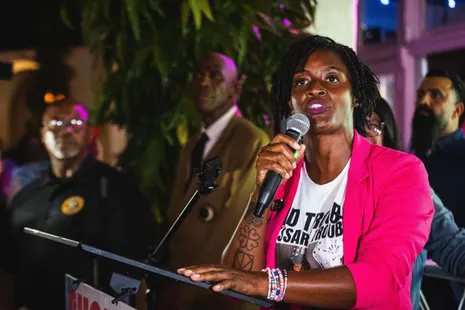
Table of Contents
Angie Nixon Clinches Florida Senate Primary
Wanderstayfinder.com – Democratic socialist Angie Nixon clinches the Florida Democratic Senate nomination in a result that stunned party insiders and donors alike. State Representative Angie Nixon, a self-described democratic socialist serving in Tallahassee, defeated former Army intelligence officer Alexander Vindman in a contest most observers had already written off before ballots were counted. Nixon carried roughly $975,000 into the final weeks while Vindman’s operation had accumulated about $16.3 million—a ratio of approximately one-to-sixteen that made the race look like a formality to pollsters and campaign-finance trackers.
How a Grassroots Operation Overcame a Sixteen-to-One Spending Gap
The path to the nomination hinged on targeted digital outreach, door-knocking in working-class districts, and a message that spoke directly to a slice of the Democratic base hungry for structural-change rhetoric rather than centrist incrementalism. Nixon has been a vocal member of the Democratic Socialists of America, a national organization advocating expanded public ownership of key industries, universal healthcare, and stronger labor protections. Her presence on the ballot in a state that voted Republican in every statewide race in 2024 made the candidacy itself a statement about where Florida’s Democratic energy was flowing.
That energy, as it turned out, proved sufficient to overcome a massive spending disadvantage. The outcome fits squarely within a recurring pattern in recent Democratic primaries: candidates with deep institutional credentials and substantial fundraising networks have repeatedly lost to challengers who frame the contest as a choice between the status quo and transformative policy. Democratic socialist Angie Nixon clinches a seat in that lineage of insurgent victories.
Vindman’s Background and the General Election Ahead
Alexander Vindman entered the race carrying considerable name recognition from a very different arena. In 2019, while serving as a senior official in the National Security Council, he became the whistleblower whose testimony helped trigger President Donald Trump’s first impeachment. The underlying allegation was that the president sought to withhold military aid to Ukraine as leverage in a separate diplomatic dispute. That episode made Vindman a figure of national prominence and, in the eyes of many donors, a natural choice to represent the party’s establishment wing in a competitive Senate contest.
Nixon’s next opponent will be Republican Ashley Moody, who holds the Senate seat by virtue of a gubernatorial appointment. When Marco Rubio departed the chamber last year to assume the role of US secretary of state, Governor Ron DeSantis selected Moody to fill the remaining two years of the term. Moody then faced what amounted to a token primary challenge on the Republican side and advanced to the November ballot with little meaningful opposition. The general election will be a straight contest for a seat that expires in January 2027.
For the Democratic Party, the stakes are clear: Florida’s Senate delegation currently tilts Republican, and flipping even one of the two seats would reshape the chamber’s arithmetic. Moody’s profile as a DeSantis appointee gives the challenger a ready-made narrative—she can frame the race as a choice between a governor’s handpicked placeholder and an elected representative of Florida’s voters.
What the Upset Signals for Florida’s Political Landscape
Florida has long been treated as a blue-state outlier only in its urban corridors—Miami-Dade, Broward, and parts of Orange County—while the vast interior and panhandle remain reliably Republican. A Democratic Senate candidate winning a primary by leaning into progressive, socialist-adjacent messaging suggests the party’s competitive base in the state is shifting leftward, at least in the primary electorate. Whether that same electorate can be mobilized at scale in November, when the contest expands to include independents and Republicans, remains the central question.
The funding disparity also raises practical questions about the winner’s ability to sustain a statewide general-election campaign against a candidate backed by the state’s Republican machinery and national party resources. A sub-$1 million primary war chest is a very different proposition from the tens of millions typically required to run television and digital advertising across a state of over twenty million residents.
Frequently Asked Questions
Who did Angie Nixon defeat in the Florida Senate primary? She defeated Alexander Vindman, a former Army intelligence officer and 2019 National Security Council whistleblower, in the Democratic primary for the US Senate seat currently held by Ashley Moody.
How much money did each candidate have going into the final weeks? Campaign-finance trackers recorded approximately $975,000 available to the challenger and roughly $16.3 million for Vindman by the close of July 2026.
When is the general election, and who