‘Like a miracle’: 84-year-old woman pulled alive from rubble three days after Indonesian quake

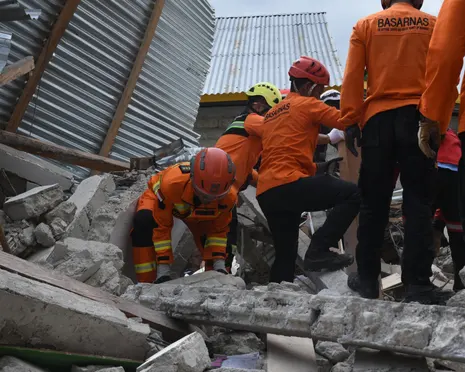
Table of Contents
Survivor Emerges After Three Days Beneath Collapsed Home in Flores Earthquake Aftermath
Wanderstayfinder.com – Paulina Pobi, an 84-year-old resident of Nitunglea village on Indonesia’s Flores island, was pulled from beneath the wreckage of her dwelling on Tuesday, alive and largely unharmed, after spending three full days trapped under collapsed bamboo walls following a devastating seismic event. Local authorities confirmed the rescue, describing the elderly woman’s survival as an extraordinary feat given the conditions she endured.
The tremor that shattered homes across the island registered at magnitude 7.7 and struck Saturday morning in the waters off Flores. Its shallow depth amplified ground shaking across the archipelago, flatting structures built from lightweight local materials. In the days since, the death toll has climbed to at least 73, with more than 900 people sustaining injuries and roughly 60,000 residents forced from their homes.
The Rescue at Nitunglea
A landslide spawned by the initial quake severed the only road into Nitunglea, isolating the small settlement and delaying search-and-rescue operations. Paulina Pobi remained buried beneath the debris of her home until Tuesday, when family members finally located her. Sikka regency police officer Bambang Supeno told local media that the woman had been safely extracted and transported to the nearest health centre for medical assessment.
Rudolfus Riba, another local official, explained the circumstances of her prolonged entrapment to Agence France-Presse:
“Because she was paralysed, she couldn’t move or speak, so it wasn’t until the fourth day that her family finally found her.”
He added that her physical condition remained stable despite the ordeal:
“She is in good health; there were no injuries at all. She was just a bit weak because she hadn’t eaten or drunk anything for days.”
A family member, overwhelmed by relief, summed up the moment:
“It feels unreal, almost like a miracle.”
Recovery Efforts Across Flores
While small commercial operations such as grocery outlets and fuel stations have begun reopening in parts of the island, streets in affected districts remain choked with shattered timber, concrete fragments, and uprooted vegetation. Search teams continue methodically clearing rubble in hopes of locating additional survivors or recovering the missing.
Indonesia’s national disaster mitigation agency reported that 398 tonnes of relief supplies — encompassing food parcels, temporary shelters, tents, and public donations — have been airlifted and shipped to communities hardest hit by the quake. However, the island’s steep, forested topography combined with roads rendered impassable by the shallow earthquake has slowed ground-level distribution considerably.
In response, the government has broadened its deployment of military transport aircraft, naval vessels, and uniformed personnel to reach remote settlements cut off from conventional supply routes, according to disaster agency spokesperson Berton Panjaitan, who addressed the public in a recorded video statement.
Aftershocks and Psychological Toll
Indonesia’s geological survey agency has logged more than 3,000 aftershocks since Saturday, of which at least 86 were powerful enough to be distinctly felt by residents across the island. The persistent tremors have left many displaced families unwilling or unable to re-enter damaged structures, prolonging the humanitarian crisis well beyond the initial impact window.
Regional police chief inspector general Rudi Darmoko warned that the psychological scars of the disaster may prove as lasting as the physical destruction. Speaking to displaced communities, he stressed the need for sustained mental-health support:
“These refugees are not only physically injured, but they also have mental health issues that we must not ignore, especially for children.”
For communities in eastern Indonesia, where earthquakes are a recurring feature of daily life rather than a singular catastrophe, the cumulative effect of repeated seismic events compounds anxiety and erodes trust in structural safety. Children in particular, who witnessed the collapse of familiar buildings, face a heightened risk of post-traumatic stress that can persist for months without targeted intervention.
Geological Context: Living on the Ring of Fire
Indonesia’s vulnerability to major earthquakes is rooted in its position along the Pacific Ring of Fire, a vast arc of tectonic boundaries stretching from Japan through South-east Asia and across the Pacific basin where oceanic plates subduct beneath continental margins. The Flores region sits near the convergence of the Sunda, Australian, and Banda Sea plates, making it one of the most seismically active zones in the archipelago.
The most catastrophic seismic event in the country’s modern history occurred in December 2004, when a magnitude-9.1 earthquake off the coast of Sumatra generated a trans-oceanic tsunami. That disaster claimed approximately 220,000 lives across the Indian Ocean rim, with roughly 170,000 of the fatalities occurring within Indonesian territory. The memory of that event still shapes national preparedness policy, yet the sheer number of inhabited islands and the prevalence of informal, non-engineered construction mean that each new quake tests both infrastructure and institutional response capacity.
As Flores works through the debris and the aftershock sequence gradually attenuates, the rescue of Paulina Pobi stands as a rare, human-scale counterpoint to the statistics: a reminder that beneath the rubble, individual lives persist, and that the window for saving them, however narrow, occasionally remains open.
Related Reading
Frequently Asked Questions
What is Like a miracle?
Like a miracle is the main topic of this guide. The article explains the context, practical details, and next steps readers should understand.
Why does Like a miracle matter?
Like a miracle matters because readers are looking for a useful answer, not just a short summary. Good content should match search intent and help them decide what to do next.