North Korea fires 10 missiles day after Trump curtails South Korea joint drills

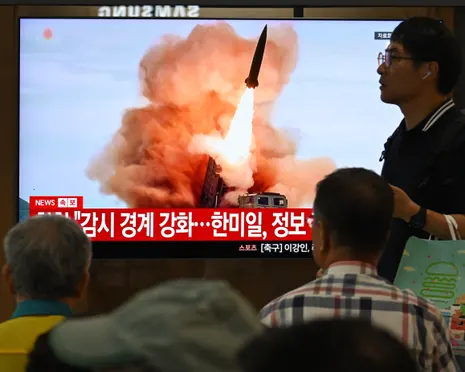
Table of Contents
North Korea Fires 10 Missiles After Trump Cuts Joint Drills
Wanderstayfinder.com – When North Korea fires 10 missiles toward its eastern seaboard just one day after Washington ordered a major reduction to its largest annual combined exercise with Seoul, the signal was unmistakable: Pyongyang remains unimpressed by conciliatory overtures from the White House. The salvo, confirmed by South Korea’s military, landed in a tense window where the diplomatic corridor between the two Koreas and the United States had already narrowed to a sliver.
The Launch and Regional Response
South Korea’s joint chiefs of staff announced that roughly ten short-range ballistic missiles departed from the area surrounding Pyongyang at approximately 5:00 pm local time (08:00 GMT) on Thursday, heading toward waters off the nation’s eastern coastline. Seoul said it had intensified its surveillance posture and was sharing launch telemetry in real time with Washington and Tokyo. Japan’s prime minister’s office had earlier flagged a suspected launch detected by its own tracking systems.
In the wake of the barrage, South Korea’s presidential national security council convened an emergency session. The council’s subsequent statement called on Pyongyang to cease ballistic missile tests, noting that such launches violate binding United Nations Security Council resolutions adopted after the DPRK’s nuclear tests in 2006, 2009, 2012, and 2013. Those resolutions remain in force and form the legal backbone of the international sanctions regime imposed on North Korea.
Trump’s Drill Reduction and Kim Yo-jong’s Rebuttal
The launches came one day after Seoul and Washington announced they would scale back their annual Ulchi Freedom Shield exercises, an 11-day combined military training period set to begin on Monday. Trump had directed the Pentagon to “substantially reduce” the scope of the drills just before they were scheduled to commence, citing what he described as a strong personal rapport with Kim Jong-un and South Korea’s decision not to join the US-led campaign against Iran. The exercise, first introduced in 2018 as a successor to the larger Freedom Shield and Ulchi Freedom Guardian drills, typically involves tens of thousands of troops from both nations across the Korean Peninsula and surrounding waters.
Kim Yo-jong, the North Korean leader’s sister and one of the most powerful figures in the DPRK’s inner circle, publicly rejected Trump’s overture on Wednesday.
“The provocative, aggressive nature of the drills won’t change even though their duration and size were reduced,” she said. “If the US calculates that it can propagate its recent measure as one of so-called good faith, they will not get the desired answer.”
She went on to catalogue a series of other US-South Korean military exercises conducted earlier in the year and pointed to Seoul’s stated intention to acquire nuclear-powered submarines — a step that would deepen South Korea’s strategic autonomy and further complicate the regional balance. Notably, however, Kim Yo-jong stopped short of the blistering rhetoric that typically accompanies North Korean rebuttals of American policy. She described the personal relationship between her brother and Trump as “still excellent,” a measured tone that observers read as a signal Pyongyang may be waiting for Washington to offer more substantial concessions before re-entering formal talks. She also pushed back on Trump’s assertion that Kim Jong-un had already responded to his request for a conversation, effectively denying that any such reply had been sent.
What Comes Next
Pressed by reporters on Wednesday about whether he expected to meet Kim Jong-un later this year, Trump answered without hesitation:
“Yeah, I will be.”
He declined to confirm whether the two leaders were exchanging letters, though he insisted their personal chemistry remained intact. The sequence of events — a conciliatory order from Washington, a public shrug from Pyongyang, followed by a missile salvo — illustrates the narrow corridor through which diplomacy between the two Koreas and the United States must currently pass.
Frequently Asked Questions
How many missiles did North Korea launch? South Korea’s military confirmed approximately ten short-range ballistic missiles fired from the area surrounding Pyongyang toward the eastern seaboard on Thursday.
Why did Trump reduce the joint drills? The president directed the Pentagon to “substantially reduce” the scope of the Ulchi Freedom Shield exercises, citing his personal relationship with Kim Jong-un and South Korea’s choice not to participate in the US-led campaign against Iran.
What did Kim Yo-jong say about the reduced drills? She argued that the “provocative, aggressive nature” of the exercises would not change merely because their duration and size were scaled back, and warned that Washington would not receive the “desired answer” by framing the reduction as good faith.
Are the UN resolutions still in effect? Yes. The Security Council resolutions adopted after North Korea’s nuclear tests in 2006, 2009, 2012, and 2013 remain binding and continue to underpin the sanctions regime imposed on the DPRK.