Netanyahu and Kushner talks make no breakthrough on stalled Gaza deal

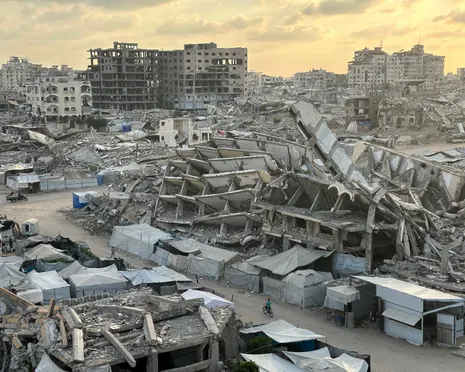
Table of Contents
Gaza Ceasefire Talks Stall Again as Netanyahu Demands Hamas Disarm Before Any Israeli Pullout
Wanderstayfinder.com – The fragile architecture of a US-backed ceasefire framework in Gaza took another significant hit on Monday when Prime Minister Benjamin Netanyahu told American envoy Jared Kushner that no Israeli military withdrawal, and no reconstruction effort, will proceed until Hamas has been fully stripped of its weapons. The three-hour session in Israel produced no breakthrough, according to an Israeli official familiar with the discussions, and left the two sides locked in the same sequencing dispute that has paralyzed the process since the roadmap was first floated.
The Sequencing Deadlock
At the heart of the impasse is a question of order: who moves first? Israel, which currently holds roughly 60 percent of the Gaza Strip under military control, insists that Hamas must hand over every weapon before a single IDF unit steps back. Netanyahu went further during the Monday meeting, asking that a senior American general be placed in charge of supervising the weapons handover process itself — a demand that effectively makes the United States a guarantor of Hamas compliance before any Israeli concession is made.
Hamas, for its part, has told mediators in Egypt that Israel must withdraw its forces from the occupied territory before any disarmament timetable can be negotiated. The group’s political chief, Khalil al-Hayya, met Kushner on Sunday in Cairo and pressed that position, according to a regional official and a Hamas source who spoke on condition of anonymity because they had not been cleared to brief reporters publicly. The Hamas official added that the group remained committed to the process and was awaiting the start of a 14-day negotiation window designed to produce a concrete implementation schedule. That window, however, cannot open until every party formally approves the roadmap.
The so-called “yellow line” — a demarcation that was supposed to divide the territory between Israeli-held and Hamas-held zones — has never been precisely mapped, and Israeli forces have repeatedly pushed beyond whatever informal boundary existed. Al-Hayya demanded that Israel halt its strikes and pull back to that line before implementation begins, a condition Netanyahu’s office has not accepted.
What Was Said in the Room
Netanyahu’s office issued a statement after the Monday session describing the exchange as substantive:
“The prime minister and Board of Peace had deep and constructive discussions. It was agreed to establish two working groups, one on disarmament and demilitarisation of Gaza, which both Israel and the Board of Peace are determined should be prompt and completed before any reconstruction happens in Gaza.”
A Board of Peace official offered a parallel characterization, calling the meeting “lengthy, in depth and very productive” and adding:
“We agreed with the PM on a path forward. The Israelis are going to give this a chance. Now it’s up to Hamas to show if it truly intends to comply.”
Also present in the room were Tony Blair and Nickolay Mladenov, both members of the self-styled Board of Peace that Trump has assembled to oversee the Gaza process. Officials from the three mediating countries — Egypt, Qatar, and Turkey — were likewise in attendance.
Trump’s Growing Frustration
The timing of the talks was anything but favorable for Netanyahu. With national elections looming later this year, the prime minister is under sustained pressure in the polls, and Gaza — along with his perceived role in the chain of events that preceded Hamas’s surprise attack on Israeli border communities on 7 October 2023 — remains a politically explosive issue on which opponents portray him as exposed and indecisive.
Israeli media reports indicate that Trump has grown increasingly irritated by what he views as Netanyahu’s failure to deliver on commitments embedded in the ceasefire framework. The newspaper Yedioth Ahronoth reported on Sunday that Kushner had been expected to arrive in Israel carrying a list of concrete measures the administration wanted to see implemented: a halt to Israeli strikes, measurable progress on military withdrawal, and a substantial ramp-up of humanitarian aid into the Strip.
Compounding the tension, Israeli outlet Haaretz reported that the Monday meeting concluded with Washington agreeing that Israel could continue its strikes in Gaza — a position that appeared to contradict a remark Trump made earlier that same day, in which he said Israel “should not be striking in Gaza.”
A Roadmap Neither Side Fully Owns
The 15-point roadmap, backed by the United States, was forcefully rejected by Netanyahu roughly a week before the Kushner visit. Hamas, by contrast, has publicly stated that it has accepted the document, which does include a disarmament component, and is now urging the mediators and the Board of Peace to compel Israel to sign on. The sequencing problem — disarmament before withdrawal versus withdrawal before disarmament — represents a long-term structural impasse that neither side appears willing to resolve unilaterally.
Israeli troops continue to occupy approximately 60 percent of the Strip, and Netanyahu has previously threatened to expand that footprint further. Meanwhile, roughly two million people in Gaza remain dependent on a reconstruction effort that, under the current Israeli position, cannot begin until the disarmament question is settled — a timeline that neither side has been able to compress.
Diplomatic Questions Beyond the Room
Analysts have pointed to a broader pattern: Trump’s delegation of critical negotiations to a small circle of family members, friends, and associates — both in the wider Middle East and in Ukraine — has, they argue, eroded Washington’s diplomatic weight. Allies and adversaries alike have sought to test the limits of these inexperienced envoys, and the Gaza track has become a visible case study in that dynamic. Whether the two working groups announced Monday can produce a workable timetable, or whether the sequencing dispute will simply recycle itself in a new format, remains the central question for the roughly two million Gazans whose lives and livelihoods hang on the outcome.
Related Reading
Frequently Asked Questions
What is Netanyahu and Kushner talks make no breakthrough?
Netanyahu and Kushner talks make no breakthrough is the main topic of this guide. The article explains the context, practical details, and next steps readers should understand.
Why does Netanyahu and Kushner talks make no breakthrough matter?
Netanyahu and Kushner talks make no breakthrough matters because readers are looking for a useful answer, not just a short summary. Good content should match search intent and help them decide what to do next.