Double jeopardy could spell end of state case after Luigi Mangione’s guilty plea

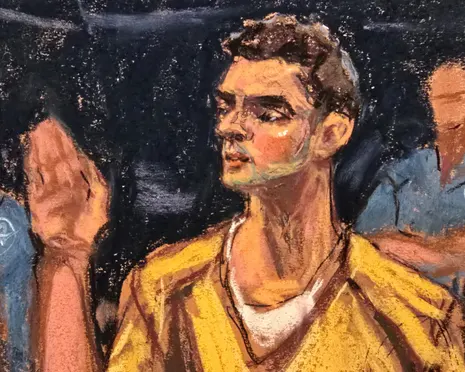
Table of Contents
Legal Experts Predict State Murder Case May Collapse Following Mangione’s Federal Plea
Wanderstayfinder.com – Luigi Mangione’s unexpected guilty plea to federal stalking charges has ignited a fresh legal battle over whether New York can still prosecute him for the murder of UnitedHealthcare CEO Brian Thompson. The Manhattan district attorney’s office now faces the prospect of losing its case entirely, as defense attorneys argue that double jeopardy protections under state law prevent a second prosecution for the same criminal conduct.
A Surprise Plea Upends Trial Timeline
Mangione entered guilty pleas to two federal counts on Tuesday: interstate stalking resulting in death and cyberstalking through the use of interstate facilities resulting in death. Both charges stem from the December 4, 2024, shooting that claimed Thompson’s life outside a Midtown Manhattan hotel. Each count carries a maximum penalty of life imprisonment.
The timing of the plea caught many observers off guard. Legal professionals, journalists, and members of the public had anticipated that Mangione’s state-level murder trial would begin within weeks. Instead, jury selection was scheduled to commence in early September, and that timeline now faces significant disruption.
During his allocution before Judge Garnett, Mangione made a direct admission about the shooting. “I shot Mr Thompson in Manhattan and he died,” he told the court, acknowledging the core conduct at the heart of the state murder charge.
Double Jeopardy Protections Under New York Law
The central legal question centers on whether Mangione can face punishment twice for essentially the same criminal act. New York’s constitutional double-jeopardy provisions offer broader protection than federal law, prohibiting a person from being tried twice “for the same or substantially similar acts” unless a distinct, independent crime exists that escaped the original prosecution.
“Dual prosecutions are prohibited if they’re part of the same criminal act or occurrence,” explained Neama Rahmani, founder of West Coast Trial Lawyers and a former federal prosecutor. “The defense is arguing that the federal stalking and the state murder were all part of the same criminal act or offense.”
Rahmani noted that the phrase “same criminal act or offense” represents the critical legal standard. While she acknowledged that the outcome remains uncertain, she expressed confidence that Mangione’s attorneys would prevail in their dismissal motion.
Defense Files Motion to Dismiss State Case
Within moments of Mangione’s federal plea proceeding concluding, his legal team announced they were filing a motion to dismiss the Manhattan murder case. The filing contends that continuing the state prosecution would violate New York’s double-jeopardy prohibitions.
Anna Cominsky, a law professor and director of the criminal defense clinic at New York Law School, explained the defense’s position. She stated that Mangione’s team is “making an argument that because of what will be a conviction in federal court, the state is precluded from prosecuting the same conduct in state court.”
“What’s key to me is what he [said] in court today,” Cominsky said. “His [statement] was really focused on the same elements that the state would have to prove.”
Cominsky emphasized that Mangione’s admission that he shot Thompson creates a significant hurdle for prosecutors. “Given that Mangione said he shot Thompson, ‘in my opinion, the state is going to have a hard time making an argument that factual allegation can be distinguished’ from the state accusation.”
What Happens Next in Court
Manhattan Supreme Court Judge Gregory Carro must now establish a briefing schedule allowing both prosecution and defense to present their legal arguments. A hearing or court appearance may follow to address the double jeopardy issue directly.
“All of that has to be resolved before jury selection,” Cominsky said. “Even if this case proceeded, it’s not going to start on September 8.”
Ron Kuby, a criminal defense attorney with extensive experience in civil rights cases, offered a definitive assessment. “The state case is dead,” Kuby declared. “It hasn’t been taken off life support yet, but it will be.” He predicted that Judge Carro would dismiss Mangione’s state case entirely.
“Nothing is going to happen on September 8th,” Kuby said, emphasizing that the procedural delays would extend well beyond the original timeline.
Manhattan Prosecutors Vow to Fight
Despite the defense’s strong position, Manhattan prosecutors have signaled their intention to contest the dismissal. The district attorney’s office noted that it had not effectively coordinated with federal authorities to prevent the risk of double jeopardy from arising.
In a public statement, the Manhattan DA’s office expressed determination to continue its pursuit of a conviction. “The Manhattan DA’s Office has been tirelessly preparing to pursue a trial conviction in New York State Supreme Court for the alleged cold-blooded murder of Brian Thompson,” the statement read. “We are encouraged that Mr Thompson’s family received a measure of accountability today.”
The office added that while federal sentencing remains pending, prosecutors are “prepared to litigate the defense motions” and remain “committed to seeking justice for Mr Thompson and his family.”
Broader Implications for the Case
The potential collapse of the state case carries significant implications for Thompson’s family and the broader legal landscape. A state conviction would have provided additional certainty and closure, particularly given that federal sentencing proceedings can extend over many months or even years.
New York’s double-jeopardy framework, which offers more robust protections than federal law, may set a precedent for how overlapping federal and state prosecutions are handled in high-profile cases. The outcome of Judge Carro’s decision will likely influence how prosecutors approach similar situations in the future, particularly regarding coordination between federal and state authorities before pursuing parallel cases.
For now, all eyes remain on Manhattan Supreme Court as the legal community awaits Judge Carro’s ruling on whether Luigi Mangione’s state murder case will survive or fall victim to double jeopardy protections.
Related Reading
Frequently Asked Questions
What is Double jeopardy could spell end of state?
Double jeopardy could spell end of state is the main topic of this guide. The article explains the context, practical details, and next steps readers should understand.
Why does Double jeopardy could spell end of state matter?
Double jeopardy could spell end of state matters because readers are looking for a useful answer, not just a short summary. Good content should match search intent and help them decide what to do next.