‘Unprecedented’ rain kills four in Japan as thousands stranded at airport

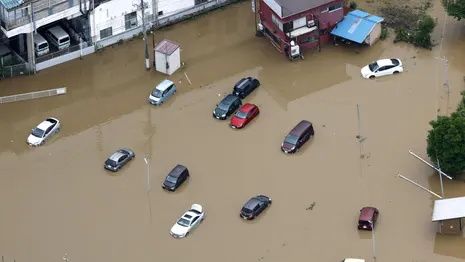
Table of Contents
Record-Breaking Downpour Claims Lives Across Eastern Japan
Wanderstayfinder.com – Four individuals have lost their lives following an extraordinary deluge that swept through eastern Japan, leaving thousands of travelers stranded and prompting widespread evacuations across the region. The catastrophic weather event centered on Chiba prefecture, located just east of the capital city, where rainfall rates reached levels meteorologists described as entirely without precedent in recent memory.
A Storm of Unprecedented Proportions
The torrential downpour began on Thursday evening and rapidly escalated into one of the most severe weather emergencies the region has experienced. At its peak, the area received approximately 115 millimeters of precipitation within a single hour—a volume that typically accumulates over the entire month of August. This extraordinary rate of rainfall triggered immediate concerns about both flooding and landslides across vulnerable terrain.
The Japan Meteorological Agency responded by issuing its highest possible alert, designated as level five, specifically for heavy rainfall and landslide conditions affecting Chiba prefecture. This marked the first occasion in the agency’s history that such an elevated warning had been extended to this particular region for these combined weather threats.
Mass Evacuations and Infrastructure Disruption
Emergency authorities quickly mobilized, issuing evacuation directives to more than 400,000 residents across Chiba and neighboring districts. The intensity of the storm caused significant infrastructure damage, with approximately 45,000 households experiencing power outages as the heavy rain and strong winds disrupted electrical systems throughout the area.
Transportation networks faced severe disruptions, particularly at Narita International Airport, one of Japan’s primary gateways for international travel. Nearly 7,000 passengers found themselves unable to depart or arrive as flight operations ground to a halt. Many travelers spent the night on airport floors and in terminal areas, while an additional 1,700 individuals sought refuge at the Chiba prefectural government building, which opened its doors to those displaced by the storm.
Tragic Losses and Rescue Operations
The flooding that accompanied the heavy rain proved deadly for several residents. In Ichikawa City, emergency responders discovered the body of a man, believed to be between sixty and seventy years old, floating in a road that had become inundated with water. Meanwhile, in Sakura City, a sixty-six-year-old woman perished when her vehicle became trapped in rapidly rising floodwaters.
Reports indicate that two additional fatalities occurred when individuals were unable to escape from their automobiles as water levels surged around them. In response to the growing crisis, military personnel have been deployed to the affected region to assist with relief operations and support emergency services.
Visual Evidence of the Storm’s Power
Television coverage from public broadcaster NHK captured dramatic scenes illustrating the storm’s intensity. The footage revealed water forcefully erupting from what appeared to be a maintenance access point in the ground, shooting upward to a height surpassing a nearby five-story building in Chiba’s central district. These images provided compelling visual documentation of the pressure building within the city’s underground infrastructure as rainfall overwhelmed drainage systems.
Official Responses and Ongoing Concerns
Chiba governor Toshihito Kumagai addressed the media on Friday morning, emphasizing the exceptional nature of the disaster.
This case was an extremely unusual situation. I have responded to many disasters in the past, but I have never experienced a case like this.
While rainfall gradually diminished by Friday, officials cautioned that the danger had not fully passed. Kazuhito Shimamoto, representing the ministry of land, infrastructure, transport and tourism, urged residents to remain vigilant.
For rivers where the risk of flooding is already high, please take action to protect your lives in any way possible. There are also rivers where the risk of flooding is expected to increase further, so please check the evacuation advisories issued by your local municipalities and evacuate early.
Climate Context and Future Implications
Japanese meteorologists have increasingly linked such extreme weather events to broader patterns of climate disruption. Scientific observations indicate that changing global conditions are contributing to both more frequent and more intense weather phenomena across the region. As temperatures continue to rise, experts warn that communities may need to adapt to increasingly severe seasonal storms and flooding events in the years ahead.
The combination of heavy rainfall, infrastructure strain, and population density in eastern Japan creates particular vulnerabilities that require ongoing attention from both local authorities and residents. The response to this emergency will likely inform future preparedness strategies for similar events as climate patterns continue to evolve.
Related Reading
Frequently Asked Questions
What is Unprecedented rain kills four in Japan?
Unprecedented rain kills four in Japan is the main topic of this guide. The article explains the context, practical details, and next steps readers should understand.
Why does Unprecedented rain kills four in Japan matter?
Unprecedented rain kills four in Japan matters because readers are looking for a useful answer, not just a short summary. Good content should match search intent and help them decide what to do next.