South Korea city deluged by almost a metre of rain, triggering deadly landslide

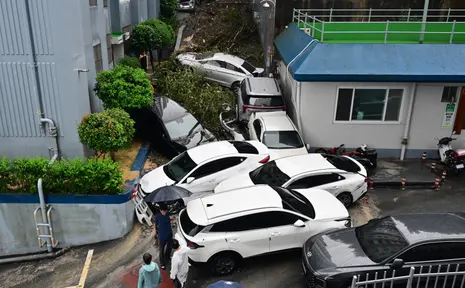
Table of Contents
South Korea City Deluged by Almost a Metre of Rain
Wanderstayfinder.com – A South Korea city deluged by almost a full metre of precipitation in just two days suffered a fatal landslide Monday as the downpour destabilised a hillside beside an apartment complex in Geoje, South Gyeongsang province. The interior and safety ministry reported roughly 912 mm of rain had fallen by 6 p.m. Monday, a volume equivalent to an entire summer compressed into 48 hours. At least one person died and four others were injured when a wall of mud and debris tore into the residential structure.
Landslide Casualties and Rescue Effort
Fire crews and police pulled three residents from the damaged building. One arrived at hospital in cardiac arrest and was pronounced dead; two more Geoje residents and two people in neighbouring municipalities struck by the same weather system sustained injuries, the ministry confirmed. Geoje logged 805.7 mm between Saturday and 8 a.m. Monday, while the adjacent port city of Tongyeong accumulated 671.9 mm over the same window. Both locations set new single-day precipitation records, and other districts in the province registered between 240 mm and 340 mm.
The sustained deluge forced approximately 390 residents to evacuate and knocked out power to around 3,580 households. Twelve schools and kindergartens were inundated, and emergency lines flooded with calls over water intrusion, structural damage, and minor accidents. Prime Minister Han Seong-sook ordered police, fire departments, and allied agencies to deploy every available resource toward rescuing stranded residents and shielding those still exposed to ongoing slope hazards.
Philippines: Three Weeks of Monsoon Violence
Thousands of kilometres south, Manila was paralysed Monday as monsoon downpours submerged arterial roads and halted commuter traffic. The government suspended all public-sector operations and shifted schools to remote instruction. The disruption capped roughly three weeks of atmospheric violence that had battered the archipelago, including a powerful storm that struck Luzon about two weeks earlier.
The cumulative toll stood at at least 23 fatalities, most from landslides and flash flooding. An estimated five million people were affected across multiple provinces, and nearly 25,000 remained in government-run emergency shelters as of Monday, per the national civil defence office. Among the worst single events was a 9 August landslide in Baguio, the northern mountain-resort city at roughly 1,500 m elevation, where ten people—including several children—were buried when their homes were swallowed by a collapsing slope. Three additional survivors were excavated alive but injured from the avalanche of mud, rock, and timber.
Why These Events Matter
Both episodes show how intensifying monsoon systems, amplified by climate-driven increases in atmospheric moisture, are converting once-manageable seasonal rains into acute disasters within hours. In Geoje and Tongyeong, dense urban development on steep coastal terrain means short-duration extreme rainfall can overwhelm drainage and trigger slope failures with little warning. In the Philippines, where informal settlements cling to hillsides above upland towns, the margin between a heavy night’s rain and a fatal slide is measured in millimetres. Sustained vigilance, rapid-response capacity, and infrastructure hardening will be essential through the coming weeks of continued monsoon activity.
Frequently Asked Questions
How much rain fell in Geoje during the two-day event? Approximately 912 mm was recorded by 6 p.m. Monday, with 805.7 mm logged between Saturday and 8 a.m. Monday alone—enough to match a typical summer total.
How many people were killed or injured? At least one person died and four were injured in South Gyeongsang province. In the Philippines, the three-week monsoon period left at least 23 dead.
What should residents do during extreme rainfall warnings? Avoid low-lying areas and slopes, monitor official alerts, keep evacuation routes clear, and move to higher ground if you hear rumbling or see cracks in nearby hillsides. Follow instructions from local emergency services without delay.