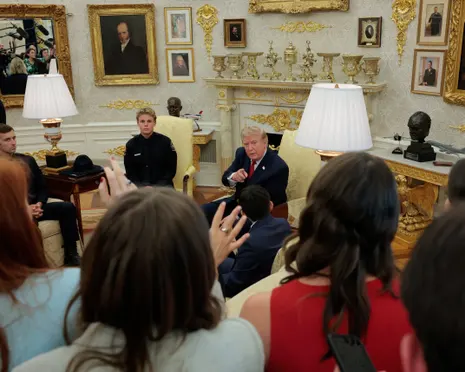
Trump’s move to gut South Korea alliance is ‘inane, haphazard decision’, lawmakers say

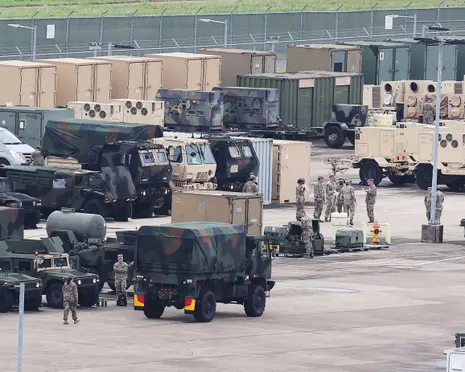
Table of Contents
Trump’s Move to Gut South Korea Alliance Draws Fire
Wanderstayfinder.com – Trump’s move to gut South Korea’s seventy-three-year military partnership with Washington has triggered a rare bipartisan outcry in Congress. President Donald Trump posted on social media that he had ordered Defense Secretary Pete Hegseth to scale back Ulchi Freedom Shield, the eleven-day combined exercise scheduled for 17–27 August and involving roughly 18,000 South Korean troops. Lawmakers on both sides of the aisle called the decision reckless, arguing it hands Moscow leverage in Ukraine and tells every partner in the Indo-Pacific that American guarantees are now negotiable.
What Happened and Why Lawmakers Are Furious
The president framed the cutback as a gesture of goodwill toward Pyongyang, invoking what he called his “very good relationship” with Kim Jong-un and describing North Korea as “unthreatening and respectful.” He wrote that maintaining full-scale drills would “send a signal that is totally inappropriate and hostile.” The timing sharpened the criticism: North Korea had test-fired ballistic missiles just days before the exercise was set to begin, the very capability those scenarios were designed to counter.
Jack Reed, the senior Democrat on the Senate Armed Services Committee, branded the order “another inane, haphazard decision by President Trump and his chaotic administration.” In a written statement he added:
“When President Trump cuts military exercises to flatter a dictator or punishes South Korea for declining to join a war he started, all of our allies – and adversaries – think that America’s commitments are negotiable.”
Mark Kelly of Arizona, also on the Armed Services Committee, stressed that the two Koreas remain technically at war under the 1953 armistice and that Seoul’s defense depends on sustained, high-intensity coordination. “Hollowing out these joint exercises is shortsighted and a mistake,” Kelly said. Andy Kim of New Jersey, on the Senate Foreign Relations Committee, called the alliance “critical for US security and prosperity” and warned that the president’s social-media post “suggests a disregard for this relationship.”
The Iran Angle and Broader Alliance Context
Trump also tied the exercise reduction to Seoul’s refusal to join the American campaign against Iran. After Tehran closed the Strait of Hormuz, US missile stockpiles were drawn down and domestic fuel prices climbed. The president acknowledged the two issues were “somewhat unrelated (?)” yet punished South Korea over both, writing that he had asked the South Korean president to join the “Denuclearization of the Islamic Republic of Iran” and was told, “‘No thanks’!”
The structural framework now under strain dates to the 1953 Mutual Defense Treaty. Approximately 28,500 American troops remain stationed across South Korea under a combined command structure, and Washington extends its nuclear umbrella over Seoul — a guarantee that has underpinned regional stability for seven decades. The administration’s own 2026 Annual Threat Assessment nonetheless describes an “increasingly confident North Korean regime,” warning that its weapons of mass destruction, conventional forces, and cyber operations pose direct threats to the United States, South Korea, and Japan.
Democratic lawmakers argued the episode handed Pyongyang a free propaganda victory: an ally bore the cost of a Middle East war it never consented to, while North Korea gained a narrative of American weakness at no expense. Trump’s move to gut South Korea’s deterrence posture, they contended, was neither strategic nor necessary.
Frequently Asked Questions
What exercise did Trump order scaled back? Ulchi Freedom Shield, an eleven-day combined drill running 17–27 August 2026, involving approximately 18,000 South Korean service members in scenarios covering ballistic missile strikes, drone incursions, and cyber-attacks.
How many US troops remain in South Korea? Roughly 28,500 American service members are stationed across the country under a combined US-South Korean command structure, per the 1953 Mutual Defense Treaty framework.
What did senators say about the decision? Jack Reed called it “inane” and “haphazard”; Mark Kelly warned it was “shortsighted and a mistake”; Andy Kim said the post “suggests a disregard” for a relationship that is “critical for US security and prosperity.”
Is North Korea technically at war with South Korea? Yes. The two Koreas signed an armistice in 1953, not a peace treaty, meaning a formal state of war persists even as the two nations maintain a tense peace.