Pacific Islands Forum meeting in turmoil after several leaders pull out of Palau summit

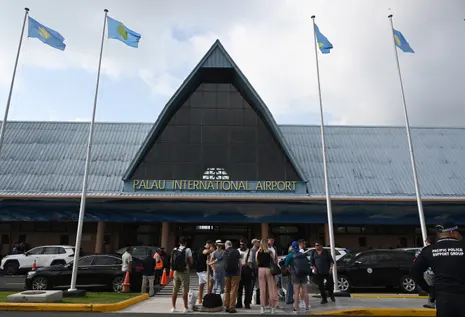
Table of Contents
Palau Summit in Turmoil as Pacific Leaders Withdraw
Wanderstayfinder.com – The Pacific Islands Forum meeting in turmoil began before the first session even convened. In the final hours ahead of the Palau summit, several regional heads of government announced they would not attend, stripping the gathering of its anticipated diplomatic weight and casting doubt on its ability to advance climate and security agendas for the year.
Domestic Politics and Bilateral Priorities Drive the Pullouts
The most consequential absence came from Solomon Islands. Prime Minister Matthew Wale scrapped his Palau trip after Home Affairs Minister Manasseh Maelanga lodged a formal no-confidence motion, accusing Wale of repeatedly deciding matters of national importance without cabinet consultation. As relayed by the Australian Broadcasting Corporation, the written challenge framed the practice as an erosion of collective responsibility and representative governance. The timing is acute: Wale had been expected to use the summit’s sidelines to advance a security arrangement with Australia, further talks potentially taking place alongside the forum gathering.
Fiji’s Prime Minister Sitiveni Rabuka, Vanuatu’s leader Jotham Napat, and Samoa’s Prime Minister La’auli Leuatea Schmidt have likewise confirmed they will not travel. Australian Prime Minister Anthony Albanese, by contrast, said his attendance would proceed as planned.
Analysts Question Whether the Forum Still Delivers
Oliver Nobetau, director of the Pacific Islands program at the Lowy Institute, told Guardian Australia that the cascade of withdrawals dilutes the potential of what could come out of the leaders’ meeting. He noted that expectations had been high for the convening to advance pilot projects on Pacific climate resilience — groundwork positioned ahead of the COP31 climate conference in November and a pre-COP31 summit to be hosted jointly by Fiji and Tuvalu in October. Without full leadership participation, the momentum for those initiatives risks stalling.
“With the pulling out of this many key prime ministers within the region, it dilutes the potential of what could come out of this leaders’ meeting.”
Nobetau offered a structural reading of the pullouts: the absent leaders may be signalling that their governments now prioritise bilateral arrangements with larger partners — Australia foremost among them — over multilateral, region-wide commitments. He argued the Pacific Islands Forum meeting in turmoil has exposed a gap between the institution’s stated purpose and the practical incentives facing bigger member states.
“PIF has to demonstrate its usefulness as well. While it is a useful forum for a lot of our Pacific members, maybe the bigger countries feel there are more pressing issues or they can achieve more benefits for their countries by engaging bilaterally or directly with other partners.”
Albanese, speaking at the Queensland Labor conference in Brisbane on Sunday, framed Australia’s continued engagement as both a duty and a strategic interest. He argued that enabling Pacific nations to thrive would, in turn, strengthen Australia’s own security and economic position, and that in an era of intensifying strategic competition across the Indo-Pacific, Canberra’s participation in the forum and its contributions to regional infrastructure, security architecture, and climate action carry greater weight than at any prior point.
“The big challenges facing the Pacific require solutions designed and delivered for the Pacific, by the Pacific. Australia has a key role to play, as a partner and leader.”
The Palau visit follows Albanese’s recent signing of a formal security deal with Fiji, which elevated the bilateral relationship to the status of a formal alliance. The arrangement is widely understood as part of a broader Australian strategy to anchor its strategic position in the Pacific through layered bilateral commitments alongside continued multilateral engagement.
Frequently Asked Questions
Why did Solomon Islands’ Prime Minister withdraw from the Palau summit? Matthew Wale pulled out after Home Affairs Minister Manasseh Maelanga lodged a formal no-confidence motion accusing him of bypassing cabinet approval on matters of national importance.
Which other leaders confirmed their absence? Fiji’s Sitiveni Rabuka, Vanuatu’s Jotham Napat, and Samoa’s La’auli Leuatea Schmidt all confirmed they would not attend the forum gathering.
What was the summit expected to achieve? Organisers had anticipated the convening would advance pilot projects on Pacific climate resilience ahead of COP31 in November and a joint Fiji–Tuvalu pre-COP31 summit in October.
Is Australia still attending? Yes. Prime Minister Anthony Albanese confirmed his participation would proceed as planned and used the Queensland Labor conference to reaffirm Canberra’s commitment to the region.
What does the Pacific Islands Forum meeting in turmoil mean for future summits? Analysts say the episode will force the forum to demonstrate tangible value to member governments that are increasingly weighing bilateral deals against multilateral participation.