Number of missing in Nepal and Tibet rises to 3,000 as bad weather hampers search

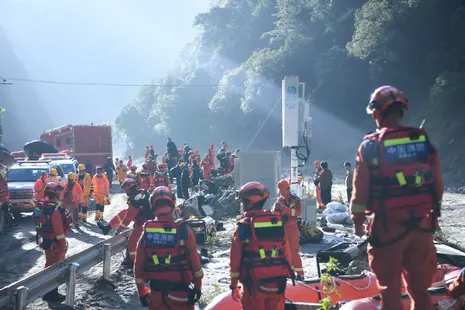
Table of Contents
Nepal-Tibet Floods Leave 3,000 Missing
Wanderstayfinder.com – The number of missing in Nepal and Tibet has climbed past the 3,000 mark three days after a catastrophic glacial outburst flood obliterated the Gyirong border crossing and the valleys flanking it. Rescue teams are battling relentless rainfall, collapsed terrain, and the ever-present threat of two upstream barrier lakes that could release yet another surge of water without warning.
Casualty Figures and Rescue Status
China’s most recent tally, issued Sunday, placed the combined death toll at 691. Nepal’s National Disaster Risk Reduction and Management Authority reported 675 fatalities and 2,498 people unaccounted for as of late Saturday, while Chinese authorities logged 16 deaths and 546 missing within their own jurisdiction. Over 3,700 survivors have been extracted to safety on the Nepali side of the border. Seven bodies recovered from rivers that flow southward into India are presumed to be flood victims.
The missing list includes 517 foreign nationals, 933 workers attached to hydropower projects along the affected river, 45 Nepali army personnel, and 40 police officers. The sheer breadth of that roster illustrates how the torrent swept through residential valleys, industrial facilities, and active rescue corridors all at once.
The Gyirong Crossing Reduced to Rubble
Surveillance footage captured on Wednesday shows enormous walls of water and debris swallowing structures and people trying to flee. A Chinese rescue unit did not reach the site until Friday. Their assessment, delivered without embellishment, was that they found
“nothing but ruins.”
Gyirong has long served as a principal overland artery connecting Kathmandu with Lhasa and carrying heavy trade and transit traffic. Its destruction has severed one of the few remaining land corridors between the two nations in this region, compounding every logistical challenge facing subsequent rescue operations.
Kathmandu Calibrates Its Ask for Foreign Help
Earlier on Friday, Nepal’s foreign ministry indicated that Kathmandu could handle the response on its own and turned down outside participation. By late that same day, Foreign Minister Shisir Khanal walked back the blanket refusal, specifying that the government now requires foreign expertise in narrow technical areas while explicitly declining assistance in general search-and-rescue, which Nepali crews are already carrying out.
The domains where outside capability is sought include restoring transport and communications across roughly two dozen destroyed bridges, identifying recovered remains, performing DNA analysis, extracting survivors trapped inside tunnels, and supplying extended cold-storage for bodies. Khanal drew a firm line on duplication of effort:
“We think there is no need for repetition in this.”
Nepal has formally requested that neighbouring India and China provide bailey bridges — prefabricated spans that can be deployed rapidly — to re-establish road and rail connectivity over the destroyed crossings.
Rasuwa Tunnel: A Race Against Mud and Weather
In Rasuwa district, army engineers and police are working through deep mud and operating drilling rigs to reach more than 100 people sealed inside a hydropower tunnel. Over 350 workers have already been pulled from the site under conditions officials labelled “extremely risky.” The prime minister’s office described the ongoing operation as “extremely challenging” given the adverse weather.
Aerial search-and-rescue flights were grounded Saturday morning by rain and fog but resumed once visibility improved in the afternoon. On the ground, the physical toll is severe. Kawan Koirala of the Nepal Scout Disaster Response Team described the exhaustion after an 18-hour shift:
“People want their family member’s body back, either dead or alive, but we cannot find them … you can see the mud.”
Barrier Lakes: Watching for the Next Surge
Two glacial barrier lakes upstream of the flood zone remain under continuous satellite and field monitoring. Officials caution that flood risk will persist until both lakes have fully drained. Imagery shows the second lake still expanding with no visible outlet, suggesting water pressure continues to build behind a fragile moraine dam. China’s Xinhua agency, citing the water resources ministry, reported that the first barrier lake was shrinking. A Chinese government geohazards expert added, however, that the lake’s structural integrity may remain compromised and that further failure cannot be ruled out.
Frequently Asked Questions
How many people are still missing in the Nepal-Tibet flood zone?
As of the latest available figures, more than 3,000 individuals remain unaccounted for across both countries. Nepal’s disaster authority reported 2,498 missing on its side; Chinese authorities reported 546 missing within Tibet.
When did the flood strike, and when did rescue teams arrive?
The outburst flood hit the Gyirong crossing complex on Wednesday. A Chinese rescue team reached the site for the first time on Friday, two days later, after weather and terrain delays.
What kind of foreign assistance is Nepal requesting?
Nepal is asking for specific technical support — bridge reconstruction, forensic identification, DNA testing, tunnel extraction, and cold-storage capacity — while conducting general search-and-rescue operations independently. Bailey bridges have been requested from India and China.
What is the current threat from the barrier lakes?
Two glacial barrier lakes upstream of the flood zone are being monitored around the clock. The second lake is still growing with no visible drainage path, meaning another destructive surge remains possible until the lakes fully drain.