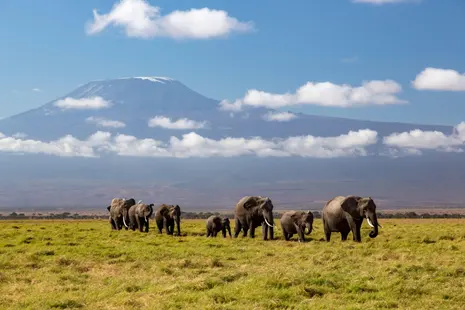
Kenya investigating unexpected deaths of 15 elephants in Amboseli region
Wanderstayfinder.com – Kenya investigating unexpected deaths of 15 elephants has become a priority for wildlife authorities following a concerning cluster of mortalities in the Amboseli ecosystem. Over the course of the past month, officials have documented the loss of fifteen elephants across the Kimana sanctuary and Kuku ranch areas that surround the famous national park. The Kenya Wildlife Service (KWS) has launched a comprehensive investigation to determine what caused these sudden deaths, which have raised alarms among conservationists and local communities alike.
According to preliminary findings released by the wildlife authority, ten of the deceased elephants exhibited clear signs of partial paralysis before succumbing to their condition within a two-day period. This neurological symptom suggests that whatever caused the deaths may have affected the animals’ nervous systems. The remaining five carcasses presented challenges for investigators, as they were either too decomposed or had been partially scavenged by predators, making it impossible to establish a definitive cause of death for those individuals.
Demographics and geographic distribution of the affected elephants
The pattern of mortality has revealed interesting demographic trends among the affected population. Most of the elephants that perished were female individuals and their calves, with only one male elephant among the deceased. This distribution has prompted researchers to consider whether certain age groups or genders might be more susceptible to the suspected cause. The deaths occurred primarily in the Kimana sanctuary and Kuku ranch areas, which form part of the greater Amboseli ecosystem that extends beyond the park boundaries into neighboring territories.
Kenya has a documented history of elephant mortality events linked to various factors. Previous incidents have included cases of elephants being poisoned, often as a result of poaching activities or human-wildlife conflict. However, the current situation differs in its rapid onset and the specific symptoms observed, leading officials to explore multiple potential causes simultaneously.
Environmental investigations are also being undertaken, including the analysis of water sources and other potential environmental contaminants within the affected areas, to establish whether the elephants were exposed to a common source, the Kenya Wildlife Service stated in an official announcement.
Scientific analysis and ongoing investigations
Comprehensive laboratory testing has been initiated to identify the potential cause of death. Preliminary tests conducted on samples collected from the elephants by a laboratory at the University of Nairobi detected what scientists described as a “potential toxic substance.” However, separate analyses performed by a government laboratory returned negative results for the specific toxins that were tested, creating an interesting scientific puzzle that requires further investigation.
The Kenya Wildlife Service confirmed that additional testing is currently underway to narrow down the possibilities. Environmental scientists are examining water sources throughout the affected region, while also analyzing soil samples and vegetation for potential contaminants. This multi-pronged approach aims to determine whether the elephants were exposed to a common environmental source that could explain the cluster of deaths.
Authorities have moved quickly to reassure the public that there is no evidence suggesting the condition could be transmitted to humans. This clarification comes as local communities and tourists alike have expressed concern about the safety implications of the elephant deaths. Amboseli remains one of Kenya’s most celebrated wildlife destinations, renowned for its impressive herds of elephants and its stunning savannah landscapes. The park offers visitors the opportunity to witness these magnificent creatures against the backdrop of Mount Kilimanjaro, which is clearly visible across the border in Tanzania.
Current estimates suggest that approximately 2,000 elephants inhabit the Amboseli ecosystem, making this a significant population that warrants careful monitoring. The Kenya Wildlife Service has committed to providing regular updates as the investigation progresses and more data becomes available from laboratory analyses.
Frequently Asked Questions
What is the current status of the elephant investigation in Kenya? Kenya investigating unexpected deaths of 15 elephants remains an active priority for the Kenya Wildlife Service, with laboratory tests and environmental sampling ongoing to identify the cause.
Where exactly did the elephant deaths occur? The deaths took place in the Kimana sanctuary and Kuku ranch areas that surround Amboseli national park in southern Kenya.
Are the elephant deaths related to human activity? While Kenya has recorded previous incidents of elephants being poisoned due to poaching and human-wildlife conflict, officials have not yet confirmed a direct link to human activity in this case.
Can the condition affecting the elephants be transmitted to humans? Authorities have stated there is no evidence that the condition could be transmitted to humans, and environmental investigations are examining potential contaminants in water sources.
How many elephants live in the Amboseli region? It is estimated that about 2,000 elephants inhabit the Amboseli ecosystem, making this a significant population for conservation monitoring.
With Associated Press and Agence France-Presse