US Saudi Strikes in Iraq: Region Enters Uncharted Territory
Coordinated Operations Mark New Phase in Middle East Conflict
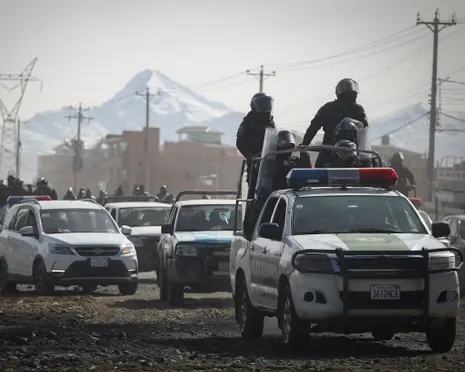
Wanderstayfinder.com – Analysts warn that the Middle East has entered uncharted territory following coordinated US Saudi strikes in Iraq against Iran-aligned militias. The unprecedented decision by Riyadh to publicly join Washington in targeting facilities connected to Iraq’s Popular Mobilisation Forces represents a significant escalation. At least twenty combatants were reportedly killed during Wednesday’s operations, marking one of the most significant joint military actions between the two allies in recent years.
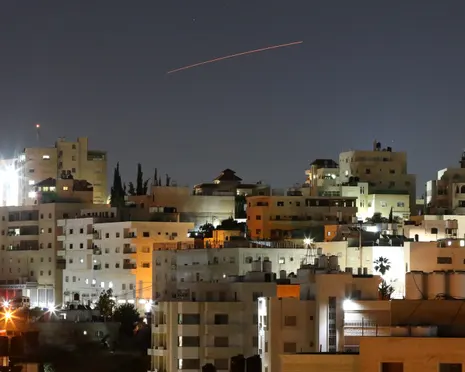
This development arrives amid growing concerns about a conflict that is becoming both wider in scope and increasingly difficult to predict. While the United States had experienced a brief respite from direct attacks on Iranian targets, allied forces across Yemen and other regions have been progressively drawn into the escalating hostilities. Simultaneously, Iran responded by launching missiles against American military installations situated in Jordan, marking its first regional offensive since the temporary cessation of hostilities with Washington.
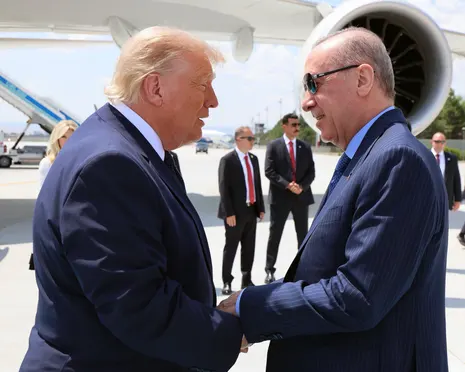
These reciprocal strikes suggest that the informal pause in fighting has effectively concluded. President Donald Trump declared that the United States would intensify its pressure on Iran, even as he maintained that the Iraqi operations had been coordinated with Baghdad’s government, despite the Iraqi administration’s strong condemnation of the actions.
Egypt Emerges as New Front in Regional Tensions
Complicating matters further, explosions were reported at a natural gas loading facility in Damietta, Egypt, on the Mediterranean coast. This incident, believed to involve a drone strike, marks the first documented attack on Egyptian territory since the conflict began. The origin of the drone remains uncertain, though British maritime security firm Ambrey reported that a US-owned floating storage tanker at the port had been struck, potentially indicating another geographic expansion of the Middle Eastern war.
Within Baghdad, the Iraqi presidency issued a statement characterizing the air raids on the PMF—also known as al-Hashd al-Shaabi, an armed coalition incorporating influential pro-Iranian factions—as a clear violation of national sovereignty that targeted official state institutions.
Historical Context and Political Repercussions
The PMF constitutes a network of predominantly Shia factions created in 2014 specifically to combat the Islamic State organization. Their operations were historically supervised by Iranian general Qassem Suleimani, who previously led the al-Quds force, the external operations division of Iran’s Islamic Revolutionary Guard Corps. Suleimani was killed by an American missile strike in Baghdad during Trump’s initial presidential term.
Political repercussions have been swift. Iraqi Prime Minister Ali al-Zaidi, who had recently held discussions with Trump, cancelled a scheduled meeting with Saudi Crown Prince Mohammed bin Salman in Jeddah on Thursday. Meanwhile, Iraq’s Harakat Hezbollah al-Nujaba, an Iran-supported militia, warned that both American and Saudi interests would face consequences for their actions.
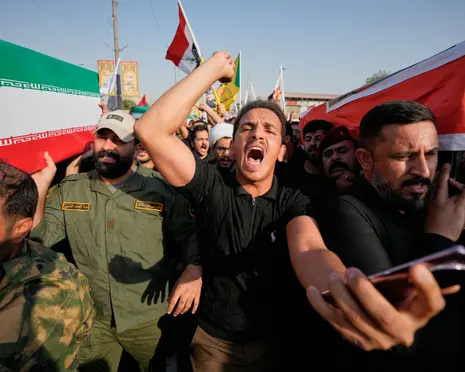
In Mosul, northern Iraq, mourners carried bodies wrapped in body bags from a hospital while shouting Shia sectarian slogans and chanting “Death to America!”
Geopolitical Implications and Future Outlook
Iraq, which has suffered significantly from the closure of the Strait of Hormuz—through which the majority of its oil exports flow—has struggled to prevent the American-Iranian conflict from extending beyond its borders. Successive Iraqi governments have attempted to navigate a delicate equilibrium between the United States, which invaded the Shia-majority nation in 2003, and Iran, which has pursued regional influence for decades through powerful militias that played crucial roles in defeating IS.
While Saudi Arabia has reportedly conducted several covert strikes against Iran as part of the broader conflict, its overt participation signals a transformative moment. Yemen’s Iran-backed Houthi rebels had announced a blockade of Saudi ports and cargoes at the Red Sea entrance barely seven days prior.
Sanam Vakil, director of the Middle East and North Africa programme at Chatham House, captured the prevailing sentiment: “Everyone is trying make sense of something that is increasingly senseless.” She noted that while some viewed the informal American pause as allowing Tehran’s proxies to sustain pressure on Washington, the current situation eliminates plausible deniability as all parties recognize how deeply interconnected their relationships have become.
Frequently Asked Questions
What triggered the US Saudi strikes in Iraq? The coordinated operations were launched against Iran-aligned militias, particularly the Popular Mobilisation Forces (PMF), following escalating tensions in the region and renewed Iranian military activity.
How many casualties were reported? At least twenty combatants were reportedly killed during Wednesday’s operations, with additional casualties confirmed in Mosul where mourners carried bodies from a local hospital.
What is Iraq’s official position on the strikes? The Iraqi presidency characterized the air raids as a clear violation of national sovereignty that targeted official state institutions, with Prime Minister Ali al-Zaidi cancelling diplomatic meetings in response.
Has the conflict expanded beyond Iraq? Yes, the conflict has expanded to include Egypt, where a drone strike hit a natural gas facility in Damietta, and Jordan, where Iran launched missiles against American military installations.
What role did Saudi Arabia play in the operations? Saudi Arabia’s public participation alongside Washington represents an unprecedented level of cooperation, marking a significant shift from its previous covert involvement in regional conflicts against Iranian interests.