Major Earthquake Strikes Kumamoto: Shopping Centre Collapse Leaves Many Trapped
Wanderstayfinder.com – A powerful seismic event has struck southern Japan, with emergency responders working urgently to locate survivors following a devastating earthquake. The incident centered on the Kumamoto prefecture on the southern Kyushu island, where a significant shopping complex suffered severe structural damage. According to fire service officials, an explosion erupted at the Aeon mall shortly after the tremor began, trapping numerous individuals inside the building.
Japanese Prime Minister Sanae Takaichi addressed the media regarding the unfolding crisis. She confirmed that authorities continue evaluating the full scope of destruction across the region.
“We have already been informed that people have been injured. Power outages and fires have occurred in some areas, and there has also been damage to roads and bridges and the collapse of buildings,” Takaichi stated.
The prime minister further advised citizens to seek shelter immediately. “I ask everyone to take action to protect themselves, including evacuating to a safe location,” she emphasized.
Rescue Operations Underway
Television broadcaster TBS relayed that police officials indicated several individuals are believed to have perished within the damaged structure. National public broadcaster NHK reported that between twenty and thirty employees at the facility could not be located. An Aeon representative confirmed that both shoppers and staff were moved to safety following the initial shaking, though investigators have yet to determine what triggered the subsequent blast.
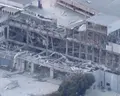
Video footage captured dramatic scenes showing one section of the mall—the prefecture’s largest commercial complex housing approximately two hundred retail outlets—had been partially torn from its foundation. Steel support beams were exposed while rubble scattered across the adjacent parking area. Emergency vehicles, including ambulances and fire trucks, lined the perimeter as rescue personnel combed through debris searching for survivors.
So far, four individuals have been extracted from the wreckage, and none face life-threatening injuries. However, the location of ten additional people remains uncertain. A senior government representative explained the situation to journalists: “We don’t know if it was the cause of the explosion, but there have been reports that gas was leaking. The main gas valve has been shut off, and the police, fire department, and Self-Defense Forces are conducting rescue operations.”
Wider Regional Impact
The disaster management agency announced that roughly three hundred thousand residents have been directed to evacuation centers. The Japan Meteorological Agency warned that regions experiencing the strongest shaking remain vulnerable to additional earthquakes and landslides for approximately seven days due to ongoing seismic activity triggered by the shallow earthquake.
Officials documented more than sixty aftershocks with magnitudes ranging from one to four. A tsunami alert was promptly issued following the main event but was withdrawn within two hours. Tragically, Kyodo News confirmed one fatality in south-west Japan when a residential structure collapsed during the shaking.
Medical facilities reported substantial casualty numbers. One hospital treated over fifty injured patients, while another facility handled approximately forty cases, including ten individuals in critical condition, according to NHK. Additional injuries were reported among passengers aboard a high-speed train, and several people could not be accounted for after a chimney fell at a Nippon Paper Industries manufacturing plant.
Historical Context and Infrastructure Damage
The earthquake’s epicenter sat approximately twelve miles (twenty kilometers) south of Kumamoto city, the largest urban center on central Kyushu with a population nearing seven hundred thousand. The United States Geological Survey initially estimated the magnitude at 7.1 before revising the figure to 6.8.
Kumamoto has a history of seismic activity. In 2016, this volcanic region endured one of Japan’s most destructive earthquake sequences, with the strongest tremor registering 7.0 and occurring directly beneath Kumamoto city. That disaster claimed 277 lives through direct impact or related complications. At the time, tens of thousands fled the severely affected town of Mashiki.
The prefecture sits along the Japan Median Tectonic Line, the nation’s longest geological fault zone. Hundreds of injured residents have been transferred to healthcare facilities across Kumamoto, though some hospitals suspended operations due to electrical failures and other complications. The Ministry of Health, Labour and Welfare reported that by 10pm local time, forty-three medical institutions had experienced disruptions including power loss, water scarcity, and inability to utilize medical gases.
According to the Kyushu Electric Power Transmission and Distribution website, more than forty thousand households in Kumamoto Prefecture faced electricity outages as of 1:30am local time.
Related Reading
Frequently Asked Questions
What is Deaths feared after many people trapped?
Deaths feared after many people trapped is the main topic of this guide. The article explains the context, practical details, and next steps readers should understand.
Why does Deaths feared after many people trapped matter?
Deaths feared after many people trapped matters because readers are looking for a useful answer, not just a short summary. Good content should match search intent and help them decide what to do next.