India s Cockroach Movement Threatens New Protests
Wanderstayfinder.com – India s Cockroach movement threatens to escalate further after widespread student arrests across the country. The youth-driven “Cockroach” movement, officially known as the Cockroach Janta Party (CJP), announced plans to resume nationwide demonstrations following what it describes as broken government promises. Hundreds of young activists have been detained or harassed by law enforcement since the movement began mobilizing crowds over examination irregularities and leaked test papers.
Political Tensions Rise in BJP-Run States
Legal proceedings have been launched against student participants in four major states—Delhi, Assam, West Bengal, and Bihar—all governed by Narendra Modi’s Bharatiya Janata party. This political alignment has intensified scrutiny of the government’s handling of the situation. The CJP had initially agreed to suspend demonstrations on Saturday evening after education minister Dharmendra Pradhan resigned and senior BJP leaders assured protesters that no retaliatory measures would follow.
By Monday, however, the party declared that the Modi administration had violated its commitment regarding protester treatment.
“If the government does not honour the agreement and release everyone detained or arrested, we will be compelled to resume the protest,” said CJP spokesperson Ashutosh Ranka.
Arrests Mount and Legal Challenges Begin
According to CJP estimates, more than one hundred individuals have been taken into custody, with many facing strict non-bailable charges. This surge in arrests has prompted immediate action from movement leaders. Neha Bora, who leads the All India Students Association and serves as a prominent figurehead for the CJP campaign, traveled to Bihar on Monday to demand that officials withdraw all pending cases against demonstrators within the state.
Her visit follows a recent incident where a Bihar police officer faced suspension for deploying an assault rifle against student protesters during Saturday’s events. Meanwhile, in West Bengal—where the BJP recently secured control—hardline chief minister Suvendu Adhikari suggested that most participants in last week’s demonstrations were Muslim. Authorities in the state have registered cases against numerous attendees under a stringent new legislation.
Organizational Support and Digital Growth
The CJP has established a financial resource to assist protesters facing criminal charges filed by police, according to Saurav Das, another spokesperson for the organization. This legal support mechanism reflects the movement’s commitment to protecting its members from long-term consequences. The youth-led initiative has accumulated millions of supporters across social media platforms since its inception in May, when Abhijeet Dipke, a thirty-year-old public relations graduate, launched the campaign.
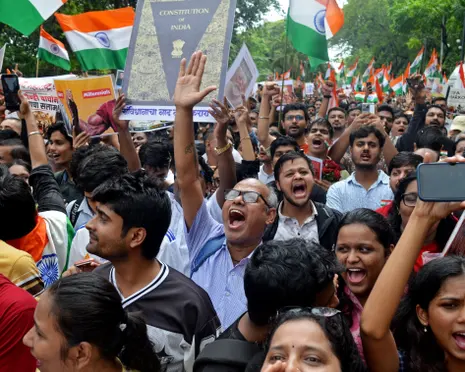
The digital presence has proven crucial in amplifying the movement’s message and coordinating actions across different regions. During the previous week, hundreds of thousands of demonstrators—predominantly students—gathered in New Delhi and additional urban centers, calling for Pradhan’s departure and comprehensive reforms to the examination framework.
Constitutional Rights and Government Response
Tensions escalated on July 20 when large crowds attempted to march from the Jantar Mantar protest location toward parliament. Police responded with teargas and batons, resulting in confrontations and numerous arrests. This wave of demonstrations represents an extraordinary display of public opposition to the Modi government, which has maintained a firm stance against critics and opposition figures throughout its twelve-year tenure.
Pradhan’s resignation marks the first occasion when a senior minister within the Modi cabinet was compelled to step down due to popular pressure. The chief justice of India has requested an independent inquiry after a petition was submitted to the supreme court claiming police misconduct during the Delhi protests. The justice emphasized that “the right to peaceful, lawful protest is absolutely guaranteed” under the Indian constitution.
Parliamentary discussions on Monday reflected the ongoing concern, with opposition legislators calling for an official government response regarding the police crackdown. In addition, the administration has pledged to address the concerns that triggered the demonstrations and has established a committee to manage reforms of India’s examination framework. On Monday, lawmakers introduced legislation seeking enhanced penalties for examination paper leaks, signaling the government’s willingness to implement structural changes.
Frequently Asked Questions
What is the India s Cockroach movement? The India s Cockroach movement is a youth-led protest campaign that began in May 2026, led by Abhijeet Dipke. It focuses on examination irregularities, leaked test papers, and government accountability.
Why are students being arrested? Students are being detained for participating in peaceful demonstrations. The CJP reports that over one hundred activists have been arrested, with many facing non-bailable charges.
Which states are most affected? The four most affected states are Delhi, Assam, West Bengal, and Bihar—all of which are currently governed by the Bharatiya Janata party.
What does the government plan to do? The administration has established a committee to manage examination reforms and introduced legislation for enhanced penalties on paper leaks. A parliamentary inquiry is also underway.