Australians Value Batteries and EVs: Trust Gap Remains
Wanderstayfinder.com – Australians value batteries and EVs but the renewables industry faces a critical challenge: earning the trust of regional communities. According to the latest Clean Energy Solutions Index, organised campaigns against wind and solar energy have proven “extremely effective” at undermining public support, while enthusiasm for electric vehicles has surged following Donald Trump’s attack on Iran. The survey reveals that “deep support” for clean technologies remains strongest for home batteries and rooftop solar, with major infrastructure projects like transmission lines also gaining ground despite criticism.
Community Support Shows Mixed Results
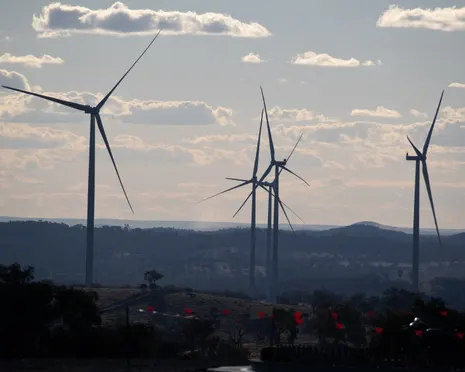
Rebecca Huntley, who leads the annual Clean Energy Solutions Index, explained that anti-wind campaigns promoted by conservative groups have successfully weakened community backing. “All that these campaigns need to do is create the perception that other people think [windfarms] are a bad idea,” she noted. “It isn’t difficult at this stage to get people to think renewable energy is a good idea. But you can get people to think there is no social licence for a fast transition.”
“The fundamental problem this industry has is trust. We do not have enough of it in the places where we build – regional and rural Australia.” — Jackie Trad, Clean Energy Council CEO
As the data emerged at the renewable energy industry’s annual summit in Sydney, the Clean Energy Council identified a “fundamental problem” with insufficient trust in regional and rural communities. The council advocated for a nationwide legislated scheme allowing local councils to receive payments from renewables companies for every megawatt hour generated by projects over their lifetime.
Huntley measured “deep support” by asking respondents if they personally supported renewable technologies, believed they benefited Australia, would speak positively about them, and understood how others perceived the same technology. She found Australians tend to overestimate opposition to clean energy transition compared to their personal views, creating a perception gap that undermines rapid progress away from coal and gas.
The index also revealed that people significantly underestimate renewable electricity generation. Well over half (62%) of Australians believe renewables supply less than 30% of electricity in the main eastern market, when the actual figure stands at 46%. Meanwhile, Trump’s conflict with Iran and the resulting fuel crisis provided a boost for electric vehicles.
Building Regional Trust Through Benefits
Huntley warned that renewable projects face an “existential threat” because companies are failing to properly share benefits with regional and rural towns hosting them. She urged renewables companies to examine previous resource booms—coal, gas, and gold—that helped build community infrastructure like halls and arts centres.
“The question the industry needs to ask is: in 50 years as Australians wander around renewable energy zones, what can they point to that was built off the back of wind turbines?” — Rebecca Huntley
Jackie Trad, Clean Energy Council chief executive, told the summit on Tuesday: “Our intentions are sincere. Our product is clean. But go looking for the research that says regional communities trust the renewable energy industry, and you will not find it. It does not exist. And in this business, what communities believe determines what gets built.”
Trad emphasized that the current “patchwork of community benefit funds, grants and negotiated payments” requires replacement with a national legislated scheme. “Regional Australia is being asked to host the machinery of our energy security. The least we can do is make sure the towns that host it share squarely in the wealth it creates.”
FAQ: Understanding Australia’s Renewable Energy Transition
What percentage of Australia’s electricity comes from renewables?
The actual figure is 46% in the main eastern market, though 62% of Australians believe it is less than 30%.
Why do regional communities lack trust in renewables?
Companies have failed to adequately share benefits with hosting towns, relying on inconsistent community benefit funds rather than a national legislated scheme.
What is the Clean Energy Council proposing?
A nationwide legislated scheme where local councils receive money from renewables companies for every megawatt hour generated by projects over their lifetime.
Which clean technologies have the highest “deep support”?
Home batteries and rooftop solar show the strongest levels of deep support, with transmission lines also improving.
For more on Australia’s clean energy future, read our coverage on renewable energy policy and electric vehicle adoption.