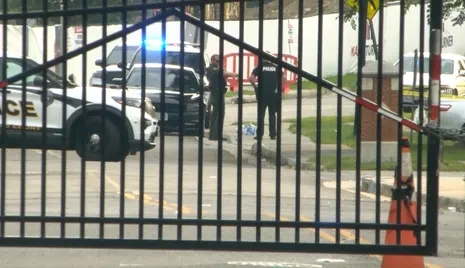
Indiana residents endure 11th day without power after storms topple power lines

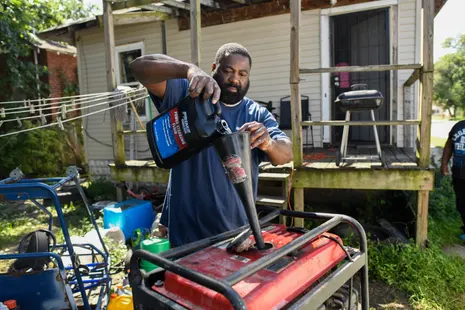
Table of Contents
Two Weeks After the Storms, Gary, Indiana Still Sits in Darkness
Wanderstayfinder.com – By Saturday, residents of north-west Indiana were entering their eleventh consecutive day without electricity, a grim milestone that underscored how slowly the region is recovering from the devastating storm system that tore through the state beginning on 11 August. Trees crashed onto transmission lines, transformers burst, and entire neighborhoods plunged into blackout conditions that have yet to be fully repaired. The toll on daily life has been severe: grocery shelves went stale, school buildings shut their doors, cell phones died, gas stations ran dry, and laundry piled up in closets across hundreds of homes.
The Scale of the Outage
Northern Indiana Public Service Company (Nipsco), the primary electric utility serving the region, reported that 33,124 customers remained without service as of Saturday. In total, the storms knocked out power to 374,500 customers, and the utility said it had restored service to 341,376 of them. Yet for residents of Gary, a city of roughly 70,000 people situated along the Indiana shoreline of Lake Michigan, the timeline offered little comfort. Officials told them restoration might not arrive until Tuesday — nearly two weeks after the first winds hit.
In a public statement, Nipsco acknowledged that “substantial progress has been made in restoring service to our communities,” while cautioning that customers “may continue to encounter circumstances that temporarily increase numbers of outages.” The company also announced it was suspending disconnection actions for customers struggling to pay their bills during the recovery period. Roughly 300 utility poles were damaged in the storms, a figure that speaks to the sheer physical destruction wrought on the distribution grid.
Residents Push Back
The slow pace of restoration has fueled anger and, in some cases, legal action. A proposed class-action lawsuit filed against Nipsco alleges that the utility failed to perform adequate tree trimming along its right-of-way, allowing overgrown branches to snap onto lines when winds picked up. Otto Shragal, an attorney with the Allen Law Group representing the plaintiffs, was blunt about the company’s obligations.
“This situation was predictable. It was obvious and it was preventable.”
Nipsco pushed back, stating that it operates a vegetation management program and that its spending on that program “has more than doubled since 2016, demonstrating our commitment and focus on maintaining a safe and reliable electric system.” The company said it “strongly disagree[s] with the characterization of Nipsco’s vegetation management practices” and acknowledged that it “understands the impact that prolonged outages can have on our customers and communities, particularly following storms, and in particular, the severe weather events that caused unprecedented damage across Nipsco’s electric system.”
For Bridget Sanders, a Gary resident, the utility’s language rang hollow. Speaking to a CBS News affiliate based in nearby Chicago, she called the company’s framing “ridiculous” and “unacceptable,” adding that residents feel they are “being left behind” and relegated to being “the last ones on the totem pole.”
Life Without Current
In the Aetna neighborhood of Gary, one of the areas struck hardest, downed trees still lined the streets alongside shattered utility debris. Cynthia Hunter described the improvised routines her household had adopted to survive the heat and the blackout.
“I feel that we have just like learned to adapt to it. Like, I don’t know. We’re trying to maintain, but it’s not easy. We have every window in our house open, you know, trying to maintain safety as well. As far as charging phones or anything else electronic, we take it to the car and charge it. We spent the night in the car, the truck, a couple of nights just for air. It’s hard, guys. It’s really, really hard.”
Renita Theus, 41, told the New York Times that the ordeal had taken a daily emotional toll.
“Every day I’m crying. It’s hot in the house. I toss and turn and can’t sleep. I walked to the dollar store and they’re all out of candles and batteries.”
Theus added that her car had been pinned beneath a fallen tree, cutting off her primary means of transport. She voiced concern for the most vulnerable neighbors — newborns and patients dependent on ventilators — and offered a pointed observation about inequality.
“There’s a lot of people here struggling. I feel bad for newborn babies and people on ventilators. I think if this was a richer area, it would be different.”
Tasha Harris, who lives in neighboring Griffith, described the exhausting logistics of basic survival: making repeated trips to collect ice, filling coolers, and scavenging food while the grid stayed dark.
“We gotta go back-and-forth and get ice. Fill it with a cooler. Going back-and-forth to get something to eat … It’s too much.”
Context: A Region Already Under Pressure
Gary’s vulnerability is not accidental. Roughly one-third of its residents live below the poverty line, meaning fewer households own backup generators, air conditioners, or vehicles capable of providing temporary shelter from the August heat. The socioeconomic profile of the city amplifies every hour of darkness into a compounding crisis.
The storm system itself was among the most powerful to cross the upper Midwest in recent memory. Winds exceeding 80 mph (130 km/h) swept through Indiana, Ohio, Illinois, and Kentucky, accompanied by tornadoes and catastrophic flooding. The National Weather Service’s Storm Prediction Center recorded straight-line gusts of 99 mph (160 km/h) in Gary — a figure that explains why so many mature trees were snapped rather than merely bent.
The human cost extended beyond infrastructure. A four-year-old child died after a tree collapsed onto his home in Geneva Township. Separately, a person was killed in a suspected weather-related house explosion in Portage, a city approximately 30 miles (50 km) south-east of Chicago. Both deaths were linked to the same days-long storm period that began on 11 August.
As Tuesday approaches, the question for Gary and its neighbors is whether the utility’s remaining crews can close the gap between the 33,000-plus customers still in the dark and the restoration timeline the company has outlined. For now, the streets of the Aetna neighborhood remain cluttered with splintered wood, and the windows of homes stay propped open against the humid August air — a small, desperate act of self-preservation in a city that has been waiting, day after day, for the lights to come back on.
Related Reading
Frequently Asked Questions
What is Indiana residents endure 11th day without?
Indiana residents endure 11th day without is the main topic of this guide. The article explains the context, practical details, and next steps readers should understand.
Why does Indiana residents endure 11th day without matter?
Indiana residents endure 11th day without matters because readers are looking for a useful answer, not just a short summary. Good content should match search intent and help them decide what to do next.