US Bans Humanoid Robots: New FCC Restrictions Target Chinese Technology
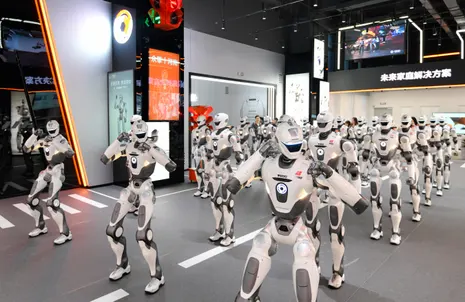
Wanderstayfinder.com – The Federal Communications Commission has officially announced that the US bans humanoid robots from China, citing significant concerns about national security threats posed by these advanced devices. This landmark decision, revealed on Tuesday, represents a major escalation in the ongoing technological rivalry between the two nations. The FCC’s determination highlights how these robotic systems could potentially be exploited by foreign entities to monitor American citizens and strengthen intelligence operations abroad.
According to the commission’s official statement, the US bans humanoid robots as part of a broader strategy to protect critical infrastructure and maintain technological sovereignty. The regulatory body specifically identified these “advanced robotic devices” as posing what they termed “unacceptable risks” to American security interests. The restrictions encompass not only humanoid robots but also animal-like quadrupeds that share similar technological capabilities and data collection functions.
Security Concerns and Economic Implications
FCC officials outlined several specific threats in their comprehensive analysis. “Advanced robotic devices collect data that could be leveraged by malign actors to surveil Americans, enhance the capabilities of foreign intelligence services, or to remotely commandeer the robots,” the commission stated in its official determination. These concerns extend beyond mere data collection to include potential remote control capabilities that could compromise critical systems.
“The president has made clear that the United States must have independent and secure supply chains for critical and emerging technologies like robotic devices and power inverters,” an administration official told Reuters. “Economic security is national security, and the Trump administration continues to implement a nuanced and multi-faceted policy agenda to reindustrialize America.”
In addition to the US bans humanoid robots, the FCC simultaneously restricted connected power inverters—essential components that enable renewable energy sources and battery systems to interface with electrical grids and datacenter equipment. This dual approach reflects the administration’s comprehensive strategy to elevate domestically produced technology while encouraging manufacturing relocation to American soil.
China’s diplomatic response has been swift and measured. The Chinese embassy in Washington emphasized that Beijing “urges the United States to heed the objective and rational voices of the business communities in both countries” and called on Washington to “stop smearing Chinese companies and threatening them with sanctions.” The embassy further warned that China’s government will “take all necessary measures in response to any action that causes material harm to its interests.”
The Global Times newspaper provided additional context through Xiang Ligang from the Zhongguancun Information Consumption Alliance, who characterized the American actions as reflecting “a deep sense of anxiety.” He noted that “The US knows that its former technological advantage is rapidly eroding, but remains determined to preserve its position as the world’s leading technological power.” According to Ligang, Washington has “abandoned rational calculation, lashed out indiscriminately and introduced a range of irrational restrictions.”
Market Impact and Future Outlook
While the current restrictions apply primarily to robot and inverter models that have not yet reached the market, the FCC retains the authority to revoke existing authorizations for models already approved for sale in the United States. This provision gives regulators flexibility to respond to evolving security assessments.
Industry analysts project that humanoid robots, equipped with AI-enabled processing capabilities, will see widespread adoption across both consumer and industrial sectors in the coming years. Simultaneously, the explosive growth in US datacenter construction will increasingly depend on reliable sources of power inverters. China currently dominates this market, with Sungrow Power Supply and Huawei leading production—both companies already facing significant US sanctions.
Frequently Asked Questions
Q: When did the US ban humanoid robots from China? A: The Federal Communications Commission announced the ban on Tuesday, July 28, 2026, as part of its ongoing efforts to protect national security interests.
Q: What types of robots are affected by this ban? A: The restrictions cover humanoid robots and animal-like quadrupeds classified as “advanced robotic devices” that collect and transmit data.
Q: Do these restrictions apply to robots already in the US market? A: The current restrictions primarily target models not yet released, but the FCC maintains the authority to revoke existing authorizations for already-approved models.
Q: How does this ban affect power inverters? A: Connected power inverters are also restricted, as they are critical components for renewable energy systems and datacenter operations.
Q: What is China’s response to these restrictions? A> China has called for rational dialogue and warned of potential countermeasures if the restrictions cause material harm to Chinese interests.
For more information on technology policy developments, readers may also explore our coverage of [US-China trade relations](https://www.theguardian.com/us-news) and [FCC regulatory decisions](https://www.theguardian.com/technology/fcc).