Trump announces new 50% tariff on Canadian cars, trucks and steel


Table of Contents
Canada Faces 50% US Tariff on Autos and Steel Starting January 2027
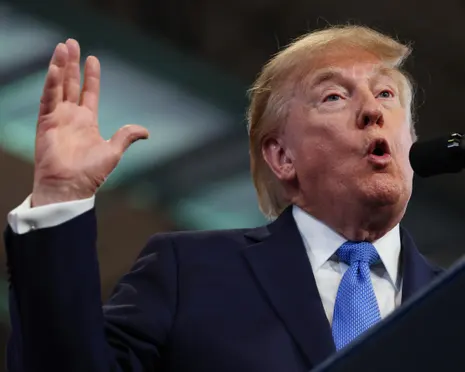
Wanderstayfinder.com – The already strained economic relationship between Washington and Ottawa took another sharp turn when President Donald Trump declared that a sweeping 50 percent levy would be imposed on Canadian-made automobiles, trucks, vehicle components, and steel shipments beginning 1 January 2027. The announcement marks the most aggressive escalation yet in a trade dispute that has consumed months of negotiations between the two countries sharing the longest international border on Earth.
Trump framed the move as a necessary corrective to what he characterized as decades of one-sided exploitation. Posting on Truth Social, he accused Canada of having been “ripping off” the United States “for years” and went further to label the country among the worst trading partners globally.
“On Trade, and in other ways, also, they are among the worst Nations in the World to deal with,” he wrote. “They feel entitled, and yet, WE DON’T NEED CANADA, THEY NEED US! They do 95% of their business with the U.S., with us, the exact opposite!”
Ottawa’s Response: Expected but Painful
Prime Minister Mark Carney, speaking to reporters from Quebec on Monday, acknowledged that the tariff escalation was anticipated following weeks of failed negotiations. He characterized the American action as a retaliatory step layered atop earlier measures he considered unwarranted.
“It’s not a surprise for us that the US would take some form of reprisal to our response to their unjustified tariff, which was on top of other unjustified tariffs,” Carney said.
The Canadian leader then pivoted to the domestic political cost the new duties would impose on American workers, particularly in the Rust Belt states that depend heavily on cross-border auto supply chains.
“But what message does that send to the workers in Michigan, in Ohio, in Kentucky, in Alabama, who rely on Canadian demand?” he asked. “We’re their largest customer for automobiles, more than the European Union, Japan, Korea, many others combined, and the United Kingdom.”
Carney stressed that Ottawa remained open to dialogue but set a precondition: the United States would need to approach future talks with what he called “the right attitude toward our industry and a true partnership.”
The Collapse of a Weekend Deal
The tariff announcement came immediately after a potential compromise on auto and materials duties fell apart at the final hour over the weekend. Earlier in the dispute, Trump had layered an additional 50 percent duty onto roughly $20 billion in Canadian exports spanning categories as varied as hockey equipment and consumer electronics. Carney formally rejected the proposed arrangement on Saturday, stating that Washington had “asked too much and they offered too little.” He pledged that Canada would mirror American tariff increases “dollar for dollar,” a posture that has already pushed bilateral trade policy into a tit-for-tat spiral.
Scale of the Trade Relationship at Stake
The two nations have exchanged approximately $909 billion in goods and services in recent years, according to figures maintained by the Office of the United States Trade Representative. That volume dwarfs most other bilateral relationships and makes the current confrontation economically consequential on both sides of the border. Canadian steel feeds American construction and manufacturing; Canadian auto parts slot into assembly lines in Michigan and Ohio; American trucks and sedans roll through Canadian ports and dealerships. A 50 percent surcharge on those flows will reshape pricing, sourcing decisions, and employment projections across multiple sectors within months of the January 2027 effective date.
Carney last year declared that the era of “deep ties” between the two countries had effectively ended under Trump’s second-term trade agenda, and he has since positioned himself as a vocal opponent of what he describes as sweeping, unilateral tariff actions. The prime minister’s rhetoric has shifted from diplomatic hedging to explicit confrontation, signaling that Ottawa intends to defend its export industries through both retaliatory measures and multilateral pressure.
Broader Implications
For consumers in both countries, the tariff schedule will translate into higher sticker prices on new vehicles, increased costs for replacement parts, and elevated prices on steel-intensive products ranging from appliances to infrastructure components. Automakers that operate integrated North American supply chains face the prospect of paying a half-price premium on inputs crossing the border, a cost that will either be absorbed into margins or passed through to buyers. Steel producers in Ontario and Quebec, which have long supplied American mills and fabricators, will confront a market that is effectively closed at current price points.
The political dimension is equally significant. With midterm elections approaching in the United States, tariff policy has become a central campaign issue in swing states. Carney’s pointed reference to workers in Michigan, Ohio, Kentucky, and Alabama is a deliberate attempt to complicate the domestic narrative that tariffs protect American jobs, by highlighting that Canadian demand underpins those very positions. Whether that framing gains traction in American public discourse will shape the trajectory of the dispute well beyond the January 2027 implementation date.
For now, both governments appear locked in a posture of mutual accusation. Washington insists the tariffs correct long-standing imbalances; Ottawa insists they punish a partner that supplies critical inputs to American industry. Until one side concedes ground at the negotiating table, the economic fallout will continue to compound across the continent’s most integrated trade corridor.
Related Reading
Frequently Asked Questions
What is Trump announces new 50 tariff on Canadian?
Trump announces new 50 tariff on Canadian is the main topic of this guide. The article explains the context, practical details, and next steps readers should understand.
Why does Trump announces new 50 tariff on Canadian matter?
Trump announces new 50 tariff on Canadian matters because readers are looking for a useful answer, not just a short summary. Good content should match search intent and help them decide what to do next.