CDC Allocates $107 Million to Bolster Ebola Outbreak Response in DRC and Uganda
Wanderstayfinder.com – On Thursday, the Centers for Disease Control and Prevention (CDC) announced the allocation of $107 million in emergency funding to address the ongoing Ebola crisis in the Democratic Republic of the Congo (DRC) and Uganda. This financial commitment comes amid the global spotlight on the FIFA World Cup, which is being co-hosted by Canada, Mexico, and the United States. The event has drawn millions of international visitors, raising concerns about the potential for cross-border transmission of the virus. However, officials emphasized that while the outbreak remains a significant challenge, the risk of global spread is currently deemed low.
A Third-Largest Outbreak on Record
The current Ebola outbreak in the DRC is now classified as the third largest in history, with the situation worsening as cases continue to mount. Dr. Satish K Pillai, the CDC’s incident manager for the Ebola response, highlighted the urgency of the situation during a press briefing. “We are now approaching 1,000 confirmed cases across 31 health zones in the DRC,” Pillai stated. “In Uganda, 31 cases have been reported in Kampala.” The figures underscore the scale of the crisis, which has prompted the CDC to ramp up its support efforts.
Despite the alarming numbers, Pillai reassured that the outbreak’s global threat remains contained. The virus spreads through direct contact with blood, bodily secretions, and contaminated surfaces, a transmission method distinct from airborne pathogens like COVID-19 or measles. This distinction is critical in assessing the risk to international travelers. However, the CDC’s actions are not limited to overseas support; the agency also maintains a strong domestic preparedness strategy to ensure it can respond swiftly if cases emerge within the United States.
Staffing and Coordination Efforts
The CDC has deployed a team of 23 field staff to conduct disease investigations in the DRC and Uganda, with an additional 125 personnel working across both countries. These efforts are complemented by regular coordination calls between CDC teams and the U.S. host cities of the World Cup. Such collaboration aims to align local health initiatives with global containment strategies, even as the outbreak continues to strain resources in the region.
Local health authorities have reported that the outbreak has predominantly affected populations in large gatherings, akin to the intensity of events like the Super Bowl. Illnesses such as heat-related conditions and other common health issues have been observed, though the focus remains on preventing the spread of the virus. The emergence of the Bundibugyo viral disease (BVD), a rare zoonotic variant of Ebola, has added complexity to the situation. BVD is known for its high mortality rate, killing between 30% and 50% of those infected in previous outbreaks in Congo and Uganda. This has raised alarms among African health officials, who warn that the current trajectory could lead to the worst Ebola epidemic on record.
Travel Restrictions and Challenges
Although the global risk of the outbreak is considered low, several countries, including the United States, have implemented travel restrictions targeting individuals from the DRC and Uganda. These measures, while intended to curb the spread of the virus, have been criticized for creating logistical hurdles in the response efforts. For instance, restrictions have slowed the movement of medical personnel and supplies, complicating containment strategies in affected areas.
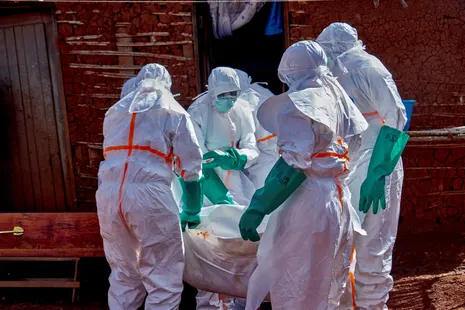
Containment has also been hampered by persistent mistrust among communities and a shortage of essential resources such as personal protective equipment and vehicles for transporting deceased bodies. These challenges have slowed vaccination campaigns and contact tracing, exacerbating the outbreak’s growth. The CDC’s emergency funding is expected to alleviate some of these pressures, but officials note that additional support is needed to achieve long-term control.
Funding Landscape and Global Commitments
As of now, the CDC’s emergency funding represents a crucial addition to the $910 million already pledged to combat the Ebola outbreak. However, only a fraction of this total has been received from donors, according to African health leaders. This shortfall has left local authorities struggling to meet the demands of an expanding crisis, with limited capacity to scale up interventions.
The scale of the outbreak has prompted discussions about the need for increased international collaboration. While the U.S. and other countries have taken proactive steps, some have faced criticism for overreacting. For example, travel bans imposed by the U.S. on individuals from the DRC and Uganda have been seen as disproportionate, given the low likelihood of the virus spreading to the U.S. through routine travel. Nonetheless, these measures have contributed to a sense of urgency in the global health response.
Historical Context and Future Outlook
Historically, the most severe Ebola outbreak infected over 28,000 people and caused the deaths of more than 11,000 between 2014 and 2016, primarily in West Africa and the eastern regions of the DRC. This past crisis serves as a cautionary tale, highlighting the potential for the current situation to escalate if not managed effectively. African health officials have expressed concern that without significant investment, the outbreak could persist for over a year, leading to devastating consequences.
Pillai acknowledged the challenges ahead but remained optimistic about the CDC’s role in the response. “Our activities are focused on controlling the outbreak in the DRC, managing the situation in Uganda, and ensuring domestic readiness to respond in the unlikely event of cases,” he explained. The CDC’s recent funding allocation is a step toward addressing these priorities, but the agency has warned that sustained efforts will be necessary to prevent the outbreak from spiraling out of control.
With the World Cup drawing global attention, the outbreak has become a focal point for international health discussions. While the DRC and Uganda bear the brunt of the crisis, the CDC’s support underscores the interconnected nature of public health challenges. The agency’s presence in both countries, combined with its domestic preparedness, aims to create a multi-pronged approach to combat the virus. However, the success of this strategy will depend on timely funding, community engagement, and the resolution of logistical barriers.
As the numbers continue to rise, the urgency of the situation is clear. The CDC’s $107 million in emergency funding is a vital resource, but it must be part of a broader effort to address the outbreak’s root causes. Health officials in Africa have stressed the importance of rapid action, noting that the current infection rates could lead to a catastrophic scenario if left unchecked. The global community’s response, both in terms of financial support and political will, will play a decisive role in determining the outcome of this unprecedented health emergency.
Experts also emphasize the need for improved communication to build trust within affected communities. Mistrust has been a major obstacle, with some populations reluctant to participate in vaccination drives or report symptoms. Overcoming this barrier requires not only medical interventions but also cultural sensitivity and community outreach. The CDC’s funding is intended to support these efforts, ensuring that the response is both effective and equitable.
In summary, the CDC’s emergency funding marks a critical moment in the fight against the Ebola outbreak. While the situation is dire, the agency’s commitment to the DRC and Uganda, along with its domestic readiness, provides a framework for addressing the crisis. However, the path to containment remains fraught with challenges, requiring coordinated action, adequate resources, and a sustained global effort to prevent the outbreak from becoming the worst in history.