The Great Stink of 2026? Hot, dry summer leaves London holding its nose

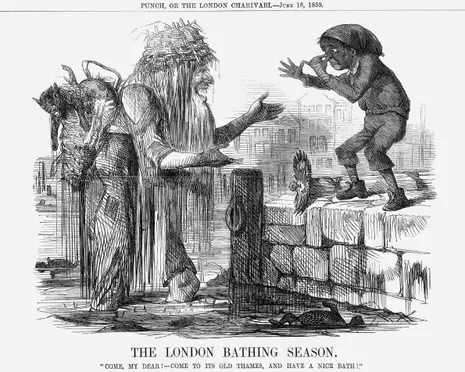
Table of Contents
London’s Modern Malodor: A Victorian System Struggles Under Climate Pressure
Wanderstayfinder.com – The capital city is currently navigating an olfactory crisis that echoes through nearly two centuries of urban history. Following consecutive weeks where mercury climbed beyond 30 degrees Celsius alongside scarce precipitation, residents have been subjected to an overwhelming atmospheric burden. While Benjamin Disraeli once characterized the Victorian crisis as “reeking with ineffable and intolerable horrors,” contemporary Londoners are experiencing their own version of this environmental challenge.
What distinguishes this current episode is not merely the intensity of the odor, but what it reveals about infrastructure designed for a different climate era. The combination of sustained heat and dry conditions has transformed the capital’s drainage network into something resembling a living digestive system, releasing gases that would normally be processed at treatment facilities.
A Connoisseur’s Nose Confirms the Problem
Simon Birkett, who established and leads Clean Air in London, has been monitoring atmospheric conditions for two decades. His assessment carries weight given his long-term observation of pollution patterns across the city.
There’s been a bad smell around for weeks. After campaigning for 20 years my nose is a bit of connoisseur for air pollution, and there really is a stench. If you go anywhere near a stormwater drain you can almost feel it wafting up. The general public are not going to forget the summer of 2026 and one of the symptoms is this toxic stench.
The phenomenon is particularly noticeable near drainage outlets, where the odor becomes almost tangible. This is not a fleeting inconvenience but rather a systemic indicator that the capital’s approach to wastewater management requires fundamental reconsideration.
The Science Behind the Stench
Professor Barbara Evans, holding the position of chair in public health engineering at Leeds University, offers a compelling biological explanation for what residents are experiencing. She characterizes the existing sewer network as functioning like a “giant intestine” within the city’s body.
Under normal conditions with regular rainfall, the mixture of organic materials, carbon, nitrogen, and phosphorus flows through the system to treatment works. There, microorganisms break down waste into various gases. However, drought conditions alter this process dramatically. The fermenting sewage remains trapped within the pipes, allowing decomposition to occur in situ rather than at designated facilities.
In our guts we have a massive microbiome designed to break down organic materials. When we put all that plus the carbon, nitrogen and phosphorus that’s in our gut into the sewer, the process just carries on.
This internal fermentation produces a complex cocktail of emissions. Methane dominates the mixture, accompanied by smaller quantities of hydrogen sulphide—the compound responsible for the characteristic rotten egg aroma. Nitrous oxide also contributes to the blend, though it remains odorless to human detection.
Heat as an Accelerant
The relationship between temperature and microbial activity provides additional clarity on why this summer’s experience feels particularly acute. Professor Simon Clarke, a cellular microbiology expert at the University of Reading, explains that bacterial decomposition rates increase substantially in warmer conditions.
Bacteria and other microorganisms that decompose organic matter often work more quickly at warmer temperatures, increasing the release of gases that we perceive as unpleasant smells.
This acceleration means that what would normally be a gradual process becomes concentrated and intensified, creating the wafting sensation that residents describe. The system essentially “farts and burps” as microbes become more active under thermal stress.
Historical Parallels and Future Solutions
The current situation mirrors the circumstances that prompted Victorian engineer Joseph Bazalgette to redesign London’s drainage infrastructure in response to the original Great Stink of 1858. That historical intervention established the foundation for modern urban sanitation, yet the system has not been fundamentally reimagined for contemporary challenges.
Evans emphasizes that the odor, while unpleasant, represents a manageable public wellbeing concern rather than an immediate health emergency. The primary risk involves potential methane accumulation, though this remains minimal given the gas’s dispersion characteristics.
People don’t want to talk about it, they want to flush it away and forget about it as they have for 150 years. But it’s the foundation of a civilised world – if you don’t manage it, it’s disgusting and dangerous.
The proposed solutions draw inspiration from European models currently being implemented in Sweden and Germany. These approaches involve separating grey water from domestic sinks and baths from black water originating in toilets. Additionally, rainwater reuse within buildings and aquifer recharge mechanisms help reduce the volume entering the sewer network during precipitation events.
Looking Ahead
The ultimate resolution requires designing infrastructure that maintains hydraulic functionality regardless of weather patterns. Only when substantial rainfall returns will the microbial activity shift, potentially producing what Clarke describes as one of Britain’s most iconic summer sensations—the petrichor that signals relief after dry periods.
For now, Londoners must endure the reminder that their city’s Victorian legacy, while remarkable, requires adaptation to meet the demands of a changing climate. The question remains whether this sensory experience will catalyze the comprehensive overhaul that experts believe necessary for sustainable urban living in the twenty-first century and beyond.
Related Reading
Frequently Asked Questions
What is The Great Stink of 2026 Hot dry?
The Great Stink of 2026 Hot dry is the main topic of this guide. The article explains the context, practical details, and next steps readers should understand.
Why does The Great Stink of 2026 Hot dry matter?
The Great Stink of 2026 Hot dry matters because readers are looking for a useful answer, not just a short summary. Good content should match search intent and help them decide what to do next.