Ex-Myanmar ambassador to UK on trial for trespassing in diplomatic residence

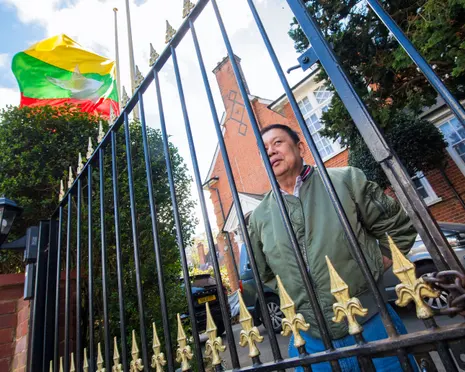
Table of Contents
Former Myanmar Diplomat Faces Trespassing Trial After Refusing to Abandon Embassy Residence
Wanderstayfinder.com – Kyaw Zwar Minn, Myanmar’s former ambassador to Britain, is currently standing trial for trespassing after declining to vacate a diplomatic residence in north-west London. The legal proceedings stem from his refusal to leave the property following his abrupt removal from the embassy in 2021, when military forces seized control of the country and locked him out for publicly declaring allegiance to ousted civilian leader Aung San Suu Kyi.
A Diplomatic Standoff Begins
The confrontation that sparked this legal battle unfolded in April 2021, shortly after Myanmar’s military coup triggered widespread protests that eventually escalated into full-scale civil war. Kyaw Zwar Minn found himself locked outside the embassy building by his deputy, Chit Win, alongside military attache Soe Aung, acting on orders from the new regime. The former ambassador spent an entire night sleeping in his car outside the embassy gates before eventually returning to his residence in north-west London. He subsequently contacted police after former embassy staff delivered a formal letter demanding he relocate from the property. According to Kyaw Zwar Minn, the situation had become so precarious that he no longer felt secure at the north London residence. His decision to remain in the diplomatic residence has since become the focal point of criminal proceedings.
Legal Arguments Take Shape
On Wednesday, the 68-year-old diplomat appeared before a London court where he entered a not guilty plea to charges of trespassing at a diplomatic residence spanning from May 2021 through November 2024. His legal defense centers on a fundamental challenge to the legitimacy of Myanmar’s current leadership.
The military authorities could not lawfully terminate his licence at the address. Nor could they legitimately use the property.
Kyaw Zwar Minn’s attorney, David Perry, presented this argument to the court, emphasizing that the former ambassador’s refusal to leave was based on principled opposition to the military government’s authority. The prosecution, however, maintains that diplomatic protocol supersedes personal political convictions.
Having been granted permission to reside at Myanmar House as the ambassador, his refusal to vacate the diplomatic premises after he was removed from that position means that he is guilty of the offence of diplomatic trespass,
Prosecutor Louise Oakley told the court. She noted that Myanmar’s authorities had formally instructed the former ambassador to hand over state-owned properties in April 2021, and that the British Foreign Office also communicated instructions for him to leave the residence. Despite these directives, Kyaw Zwar Minn chose to remain.
Political Legitimacy Under Question
The core of Kyaw Zwar Minn’s defense rests on his assertion that Min Aung Hlaing, the military general who orchestrated the coup and plunged Myanmar into both conflict and economic turmoil, lacks legitimate authority. The former ambassador argues that Min Aung Hlaing possessed no power to demand his departure from the diplomatic residence. Min Aung Hlaing’s pro-military party secured a decisive victory in elections held earlier this year, though these polls have faced widespread international condemnation as a sham. Beyond domestic politics, Min Aung Hlaing faces scrutiny on the international stage, with the International Criminal Court seeking his arrest for crimes against humanity committed against Myanmar’s Muslim Rohingya minority. The prosecution contends that Kyaw Zwar Minn’s personal assessment of Myanmar’s government does not constitute a valid legal defense. Most democratic nations, including Britain, have not formally recognized the current Myanmar administration, yet this diplomatic reality does not automatically invalidate trespassing charges.
Broader Implications for Myanmar
This court case arrives as Myanmar’s conflict enters its sixth year, with devastating consequences for the nation’s population. The Council on Foreign Relations estimates that more than 100,000 people have perished in the fighting, while over 5 million citizens have been forced to flee their homes. The human toll continues to mount as the military government shows no signs of relinquishing control. Kyaw Zwar Minn’s personal circumstances reflect the wider crisis. He has stated that friends and relatives within Myanmar have been compelled into hiding, fearing retaliation for his public stance against the military regime. His diplomatic career began under Aung San Suu Kyi’s leadership following a lengthy service in the army, and he has consistently emphasized the importance of addressing the Rohingya humanitarian crisis. Before his removal as ambassador, Kyaw Zwar Minn received intelligence from a source within Myanmar’s foreign ministry indicating that his own staff members were monitoring his activities. His foresight proved accurate when he predicted in 2021 that the political crisis would inevitably spiral into civil war.
You can see the military government is not going to step back. More people will die and the economy is going to collapse. Then anything can happen in our country.
Aung San Suu Kyi’s Enduring Legacy
The trial also serves as a reminder of Aung San Suu Kyi’s complex political journey. Now 81 years old, the former democracy icon has been detained on multiple charges since the military’s seizure of power. Her history includes 15 years of house arrest under a previous military junta, and she received the Nobel Peace Prize in 1991 for her nonviolent struggle for democracy. Following her election as state counsellor in 2015, Aung San Suu Kyi’s reputation became complicated. Critics pointed to her administration’s handling of the Rohingya crisis, her government’s decision to excuse what many viewed as genocide, and its tendency to imprison journalists and political opponents. Her continued detention underscores the ongoing tension between Myanmar’s democratic aspirations and military dominance. For Kyaw Zwar Minn, the trespassing trial represents more than a personal legal matter. It embodies the broader struggle over Myanmar’s political future and the question of who holds legitimate authority to govern the nation. His decision to remain in the diplomatic residence, despite official orders to leave, stands as a quiet but persistent act of defiance against the military regime that has dominated Myanmar’s affairs for decades.
Related Reading
Frequently Asked Questions
What is Ex Myanmar ambassador to UK on trial?
Ex Myanmar ambassador to UK on trial is the main topic of this guide. The article explains the context, practical details, and next steps readers should understand.
Why does Ex Myanmar ambassador to UK on trial matter?
Ex Myanmar ambassador to UK on trial matters because readers are looking for a useful answer, not just a short summary. Good content should match search intent and help them decide what to do next.