Brands Deploy AI-Influencers for Social Media Marketing
Wanderstayfinder.com – An investigation by The Guardian has uncovered that companies are increasingly using AI-generated influencers to promote their products on digital platforms, prompting debates about the need for greater transparency. These synthetic figures, designed to mimic human behavior and appearance, are being integrated into advertising campaigns without clear disclosure to consumers. The findings highlight a growing trend where brands rely on AI to create content that simulates authentic customer experiences, often without revealing the artificial nature of the influencers.
EU Regulations Set to Take Effect in August
While the UK remains without specific rules for AI-generated content labeling, the European Union is taking steps to address the issue. Under the Artificial Intelligence Act, new regulations will begin applying in August 2026, requiring deepfake images, audio, and video to be clearly marked as AI-created. This legislative shift aims to ensure consumers can distinguish between real and synthetic content, particularly in promotional materials. However, the UK’s current framework does not mandate such disclosures, leaving room for ambiguity in how AI is used.
Examples of AI-Influencer Use in Advertising
One notable case involves the Once app, which allows users to generate disposable camera-style photographs for events directly from their smartphones. Analysis by Reality Defenders, a cybersecurity firm specializing in deepfake detection, suggests the brand may have employed AI-generated influencers in its marketing. On Instagram, a series of videos feature a bride expressing contentment with the app at her wedding, captioned, “The app I used is called @oncefilmapp.” In one clip, she says: “Everyone expected a no-phone wedding, so I gave them cameras instead.” Though the brand did not respond to a request for comment, the content raises questions about the authenticity of the influencer’s experience.
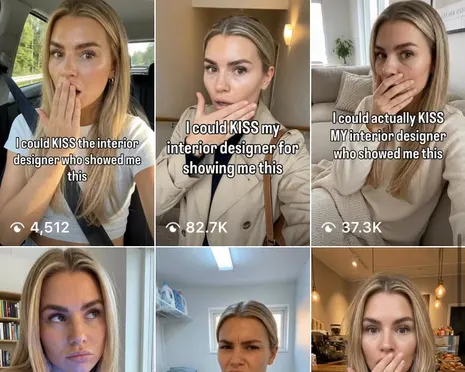
Another instance features a video where an AI-generated influencer captions, “I could kiss the interior designer who showed me this,” while demonstrating the Maket app. This tool uses artificial intelligence to design and plan housing projects, and the influencer’s presence in the clip suggests the brand is testing how AI can be used to engage audiences. Maket explained that AI-generated influencers are part of an experimental phase, not a central marketing strategy. “They help us explore creative concepts and marketing hooks on a smaller scale before committing to larger campaigns,” a spokesperson stated.
Consumer Confusion and Concerns Over Misleading Content
The issue extends beyond individual brands, as consumer groups warn of the risks posed by AI-generated content. Lisa Barber, editor of Which? Tech, emphasized that the organization’s recent study revealed a troubling trend: 70% of participants struggled to identify all fake videos from real ones. “This indicates that people are often unaware of the synthetic nature of the content they consume,” Barber said. “Consumers could be misled by AI influencers, making them easier targets for scams.”
The problem is compounded by the lack of clear guidelines requiring brands to disclose AI use. For example, a Dubai-based fashion brand, Ashle, posted a photograph of a woman wearing its clothing at a restaurant. The woman appeared to have an extra finger, a detail that raised suspicions about the image’s authenticity. When The Guardian inquired about the use of AI influencers, the brand removed the photos, stating that the garments were real and handmade. “The images were taken down because those designs are no longer part of our collection,” a spokesperson clarified. “They were not AI-generated, but we used the technology initially to showcase our products.”
Regulatory Perspectives on AI-Generated Advertising
The Advertising Standards Authority (ASA) has stated that its current rules do not explicitly prohibit brands from using AI-generated content without labeling it. “There’s nothing in our rules that stops this practice, and no requirement to label AI content,” an ASA representative noted. However, they added that the content must still comply with standard advertising guidelines, such as avoiding misleading claims and ensuring social responsibility. “The key factor is whether the ad itself creates a false impression about the product,” the spokesperson explained.
While the ASA does not enforce AI content labeling, the EU’s upcoming regulations aim to fill this gap. The Artificial Intelligence Act requires AI-generated or manipulated content to be clearly marked, which could help consumers recognize the difference between real and synthetic influencers. This measure is intended to protect audiences from being deceived, especially in an era where deepfake technology becomes increasingly sophisticated. The UK, meanwhile, is still navigating its approach, with no immediate plans to introduce similar rules.
Broader Implications for Digital Marketing
The rise of AI influencers underscores a shift in how brands approach online engagement. By using algorithms to create content that mimics human behavior, companies can target audiences with tailored messages and visual appeal. However, this practice also blurs the line between authentic experiences and manufactured ones, challenging consumer trust. “The challenge lies in maintaining transparency while leveraging AI’s efficiency,” Barber said. “If brands don’t clearly label these influencers, audiences may question the credibility of the content they see.”
Industry experts argue that AI-generated influencers offer a cost-effective way to test marketing ideas before scaling up. For instance, Maket’s use of AI in its videos highlights the potential for small-scale experimentation. Yet, this flexibility comes with risks. Without clear labeling, consumers might struggle to differentiate between genuine reviews and AI-generated testimonials. “It’s not just about the technology itself, but how it’s applied,” said the ASA spokesperson. “If the ad is misleading, that’s what we’ll focus on, regardless of whether it’s AI-created or not.”
As AI continues to evolve, the debate over its role in advertising is likely to intensify. Brands that adopt this technology must balance innovation with honesty to avoid alienating their audience. Meanwhile, regulators like the ASA and the EU are working to establish frameworks that ensure AI content is both effective and trustworthy. “The goal is to empower consumers with the knowledge they need to make informed decisions,” Barber concluded. “Without that, AI could become a powerful tool for manipulation.”
“Our recent investigation into deepfakes found that a worrying 70% of people are unable to correctly identify all the real and fake videos we showed them, meaning consumers could be frequently being misled by AI-generated content and becoming targets for scammers.”
With the implementation of the AI Act in August, the EU is setting a precedent for other regions to follow. However, the absence of similar rules in the UK means that brands may continue to experiment with AI influencers without the same level of oversight. As the technology becomes more advanced, the need for clear guidelines and consumer education will only grow, ensuring that the digital landscape remains both innovative and transparent.