Nothing Succeeds Like Excess: Dolce & Gabbana’s Milan Menswear Show
Wanderstayfinder.com – In the second day of Milan Fashion Week, Dolce & Gabbana opted for grandeur as a strategic shield against recent challenges. The brand’s SS27 menswear presentation was a bold display of opulence, aiming to divert focus from its mounting debts, past controversies, and internal management shifts. With a show that screamed “molto sexy” Italian flair, the collection exuded an exaggerated interpretation of European summer fashion, blending classic elegance with a daring, almost provocative edge.
Excess as a Narrative Tool
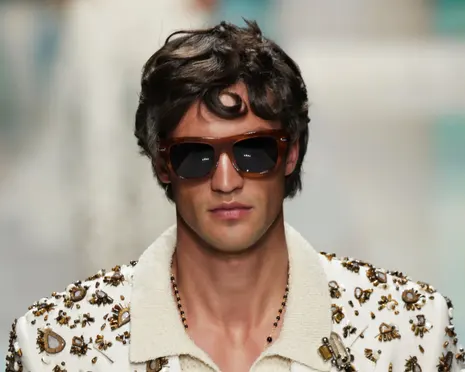
The runway was a spectacle of theatrical excess, where every detail was engineered to captivate. Models strutted in clingy muscle vests and micro shorts, redefining modesty with their sheer, revealing cuts. Some even went topless, ensuring the audience’s attention was fixed on the brand’s signature allure. Jeans, too, took a dramatic turn—ripped, shredded, or adorned with shimmering jewels that turned simple garments into statements of extravagance. T-shirts bore giant prints of Sicilian lemons and ancient amphitheatres, while one piece featured a mosaic of Christ, intertwining religious iconography with the brand’s signature playfulness.
This show marked Dolce & Gabbana’s return to menswear after a controversial all-white casting earlier this year, which had sparked a wave of criticism. The presentation also coincided with Stefano Gabbana’s departure from his role as chair, though he remains co-creative director. The brand’s financial struggles, including a £391m debt pile, have placed it in a precarious position, prompting reports of potential negotiations involving the sale and leaseback of properties in the city. Despite these challenges, Dolce & Gabbana continues to dominate red carpets during awards season, with stars like Colman Domingo, Patrick Schwarzenegger, and Ryan Gosling endorsing its style.
Behind the Scenes: A Focus on Nostalgia and Innovation
Backstage, the creative team emphasized their commitment to reimagining classic elements. The show’s designs, while theatrical, drew inspiration from the brand’s storied legacy, blending vintage references with contemporary twists. For instance, the collection incorporated elements of 1980s and late 1990s tailoring, resurrecting styles that once defined the brand’s identity. These nods to the past were paired with modern silhouettes, ensuring the collection felt both rooted in tradition and forward-thinking.
Meanwhile, the brand’s management reshuffles have been a topic of speculation. Stefano Cantino, former Gucci chief executive, joined the team in January as co-chief, alongside Alfonso Dolce, Domenico’s brother. This move followed Stefano Gabbana’s resignation as chair in December 2025, marking a significant shift in leadership. Despite these changes, the creative vision of the brand remains intact, with Gabbana’s signature flair evident in every piece.
As the fashion world grapples with a broader luxury slump, Dolce & Gabbana’s show served as a reminder of its ability to command attention through spectacle. The brand’s recent emphasis on excess has become a key strategy, transforming potential criticisms into a celebration of boldness. Whether it’s the shimmer of jewel-encrusted jeans or the provocative cut of a micro short, the collection reaffirmed its status as a trendsetter in the face of adversity.
Paul Smith’s Take on the Suit’s Resurgence
Later that day, the British menswear icon Paul Smith took the spotlight, showcasing his enduring expertise in suiting. Smith, who turns 80 next month, highlighted the evolving perception of the suit, noting that younger generations are rejecting the formality once associated with the garment. “A lot of our customers grew up with their dads wearing hoodies during the pandemic,” he explained. “Those kids are now 18-25 and don’t want to look like their dad. They want to smarten up.”
“The suit in many people’s heads means formality or funerals or weddings,” Smith said. “A lot of what we try to do is show how it can be more relaxed so we roll the cuffs up, or pop the collar up or style the shirts untucked.”
Smith’s designs leaned into this trend, featuring unbuttoned waistcoats and shirts that offered a glimpse of flesh, blending sophistication with a casual, modern edge. The collection also showcased pad stitching that allowed fabric to curve naturally, lightweight materials that resisted creasing, and quirky details like crocodile eye buttons and lapel pins. These elements referenced everything from teaspoons to sardines, illustrating the designer’s knack for blending the mundane with the luxurious.
Smith, who continues to run his Albemarle Street store in London, described his approach as “being a bit different” while maintaining a strong sense of identity. His focus on suiting, he argued, was not about nostalgia but about redefining its purpose in a contemporary context. “We’re not just making clothes for the past,” he said. “We’re creating something that feels relevant today.” This philosophy resonated with the audience, highlighting how even in a challenging market, innovation and reinvention can keep a brand at the forefront.
While Dolce & Gabbana’s show leaned into the past with a touch of extravagance, Paul Smith’s collection embraced the future, adapting classic staples to suit new tastes. Both presentations underscored the resilience of menswear in the face of shifting consumer preferences and economic pressures. For Dolce & Gabbana, the message was clear: excess remains a powerful tool, even when the brand’s leadership and financial health are under scrutiny. For Paul Smith, the lesson was equally vital: the suit, though timeless, must evolve to stay relevant.
As the Milan Fashion Week continued, the contrast between these two approaches highlighted the diverse paths brands take to navigate the industry. Dolce & Gabbana’s dramatic flair and Paul Smith’s nuanced take on suiting each offered a different perspective on what menswear can be. In a market where excess and minimalism often collide, both designers proved that their craft is as dynamic as ever. Whether through a glittering gemstone-studded jeans or a subtly relaxed tailored jacket, the message was the same: fashion, like life, thrives on boldness and creativity.