Dubai Property Sales Plummet Sharply Amid Middle East Conflict
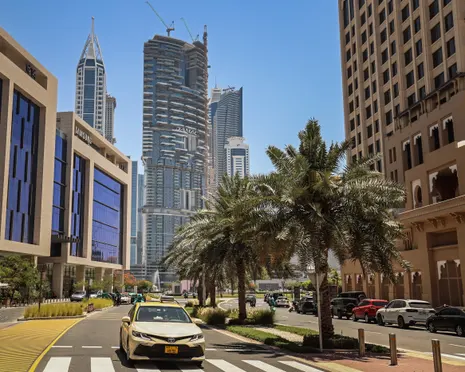
Wanderstayfinder.com – Dubai’s property market has experienced a dramatic downturn, with sales dropping “off a cliff” since the outbreak of hostilities in the Middle East, according to experts. The city, once a hotspot for luxury real estate transactions, now faces a significant slowdown that has shaken its previously robust industry. This decline follows a period of rapid growth driven by global demand and the city’s attractive tax policies, but the war has introduced new uncertainties, forcing a sharp correction in activity.
Sharp Decline in Sales Activity
A recent analysis by ValuStrat, a Dubai-based research firm, revealed that property sales in May saw a 19% drop compared to the prior month, marking a faster decline than the 4% decrease recorded in April. The report highlighted that current transaction volumes have fallen below half their level from the same period last year, an unprecedented drop in recent memory. Haider Tuaima, the head of real estate research at ValuStrat, noted that this level of annual decline has not been seen since the pandemic, emphasizing the severity of the current situation.
“The ready homes market has not recorded an annual decline of this magnitude since the pandemic,” Tuaima stated. “This is a major shift from the previous trend of rapid growth, which was fueled by a wave of high-net-worth individuals and strong international interest.”
Further data from Reidin, another Dubai-based research group, indicated that property valued at 22.5bn dirhams was sold in May, representing a 42% decrease from the previous month’s figure. This is roughly half the 46.6bn dirhams sold in the month preceding the conflict, as per the figures initially reported by Bloomberg. The war, which began in late February, has disrupted buyer confidence and slowed the pace of transactions, with many investors opting to hold back until the geopolitical situation stabilizes.
Geopolitical Impact on the Market
The war’s effects are felt across the region, with Dubai’s once-thriving property sector now showing signs of distress. The conflict escalated in late February, and the Iranian missile strike on a five-star hotel in the Palm Jumeirah area in March served as a catalyst for the market’s turmoil. This incident, coupled with broader fears of instability, has led to a flight of capital from the city, particularly among Western European buyers who were previously key to the market’s growth.
“We have sold to super-high-net-worth individuals in the last year and a half – every single one of them has now left Dubai,” said Yasin Valimulla, a buying agent specializing in properties priced at least $10m. “There was a lot of panic in March, and there is still not much clarity to this day.”
Sellers of luxury villas and flats are now offering discounts of up to 20%-25% on asking prices, as per property agents. Valimulla explained that the few transactions still occurring are being conducted at lower valuations, reflecting the market’s current volatility. The city’s reputation as a safe investment destination has been undermined, leading to a noticeable shift in buyer behavior. While some investors remain, others are waiting for a potential peace deal between the US and Iran, hoping to see clearer conditions before committing to new purchases.
Historical Context and Market Trends
Dubai’s property market was a global leader in luxury real estate in 2025, with Knight Frank reporting that the city surpassed London, New York, Los Angeles, and Hong Kong in the number of homes sold between $2.5m and $10m. In the $10m-plus category, Dubai recorded 9,050 sales, compared to 6,577 in New York and 3,089 in London. This success was largely due to the city’s zero income tax policy, which attracted high earners from around the world. However, the war has disrupted this momentum, creating a new era of caution for buyers and sellers alike.
“The numbers were so high to begin with, especially in the last two years,” Valimulla added. “The market at that level was not sustainable anyway. There is going to be a correction in pricing, but we just do not know the impact of that correction until we have [geopolitical] clarity.”
While the city continues to draw attention from the super-rich, its nomadic elite are increasingly shifting their focus to alternative hubs such as Milan, London, and Singapore. This transition reflects a broader trend of diversification in investment strategies, as buyers seek stability and predictability in uncertain times. Real estate agents in Dubai are also adapting to the new market conditions, with some anticipating a consolidation in the sector as smaller agencies struggle to maintain profitability.
Brokers Face Uncertain Future
Richard Waind of the real estate group Cencorp warned that the war has acted as a “black swan event” that has had a profound and swift impact on the market. He pointed out that the influx of brokers over the past decade—now numbering around 10,000—has created an oversaturated environment. As sales slow, many smaller agencies may be forced to close, particularly those that relied on the speculative fervor of the pre-war market.
“The slowdown in sales is putting pressure on those smaller agencies that set up in a frothy market,” Waind explained. “There were about 1,000 brokers in the market a decade ago – now it’s about 10,000. That is going to fall.”
Despite the current downturn, Dubai remains a critical player in the global real estate arena. Its unique position as a financial and cultural hub in the Middle East continues to attract attention, even as the market adjusts to new challenges. The path to recovery will depend on the resolution of the ongoing conflict, the reestablishment of investor confidence, and the ability of the city to maintain its appeal as a safe and dynamic place to invest. For now, the market is in a state of transition, with experts closely monitoring its trajectory as it moves toward a new equilibrium.