Asda returns to growth after more than two years

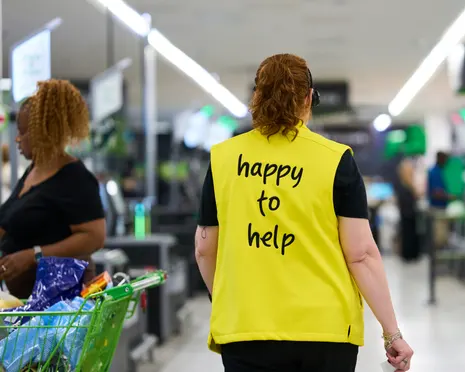
Table of Contents
Asda Breaks Two-Year Sales Slump as Grocery War Intensifies
Wanderstayfinder.com – For the first time since early 2024, Britain’s third-largest supermarket chain has posted a positive sales figure at existing stores. The 0.2% uptick recorded across the seven weeks ending 18 August marks a narrow but symbolically significant reversal for a retailer that has endured more than two years of consecutive declines. Executive chair Allan Leighton framed the result as a turning point, describing the modest gain as both a psychological reset and a validation of the company’s recent pricing and digital investments.
“A huge milestone” that was “psychologically important for the business,” Leighton said of the figure.
The improvement, however, must be read against a steep recent trajectory. In the three months immediately preceding the seven-week window, like-for-like sales had contracted by 2.3%, underscoring how fragile the recovery remains. Leighton attributed the swing to three converging factors: a sharpened price position that is drawing additional footfall, incremental traction in online grocery ordering, and greater reliability of the company’s back-end technology.
From Walmart Legacy to TDR Ownership
The technology issue is not incidental. When the billionaire Issa family and private-equity firm TDR Capital completed their £6.8 billion acquisition of Asda in 2020, they inherited a retail operation still running on Walmart-era systems. The subsequent migration to new infrastructure proved both traumatic and costly, consuming close to £1 billion in capital expenditure while simultaneously disrupting shelf availability and online fulfilment. TDR Capital now holds controlling stake in the business, and the debt load accumulated during the transition continues to weigh on the balance sheet.
Leighton, who had previously led the company before a two-decade absence, was recalled to the chair in November 2024 for a second stint. His mandate has centred on stabilising operations, closing the competitive gap with discount rivals, and restoring investor and staff confidence. The IT stabilisation he now credits as a tailwind represents the most expensive lesson of the post-acquisition period.
Aldi’s Closing Gap and the Ocado Play
The competitive landscape has shifted dramatically since the pandemic era. Aldi, which now trails Asda by less than one percentage point of UK grocery market share, continues to expand at a faster rate and has openly signalled its ambition to claim the number-three position. Lidl exerts parallel pressure from below, while incumbents Tesco and Sainsbury’s compete on scale and loyalty-programme depth.
Leighton rejects the notion that displacement by Aldi is foregone. Among the countermeasures he has outlined is a technology partnership with Ocado, the online grocery specialist, which will supply infrastructure to upgrade Asda’s website and home-delivery capability beginning next year. The move is designed to close the digital gap that discounters have exploited while larger rivals refine their own e-commerce propositions.
“There is some momentum in the business and it is upwards and that is important,” Leighton told the Guardian.
Food Leads, Non-Food Lags
Category-level detail reveals an uneven recovery. Food sales at established stores rose 0.7% during the seven-week period, outpacing the headline figure and confirming that the price-led strategy is resonating with core grocery shoppers. Clothing and other non-food lines, by contrast, posted declines. Leighton cited the broader consumer softness in discretionary categories and the timing of the late-August bank holiday, which pushed back-to-school purchasing into a later window.
On the supply side, the unusually hot and dry summer has introduced inflationary pressure in specific produce lines, notably tomatoes and cucumbers. Leighton acknowledged the squeeze but said the company was managing inventory and pricing on fuel effectively despite elevated petrol costs linked to the ongoing conflict in Iran.
“Produce is the pinch point,” he said.
Macro Uncertainty and the October Budget
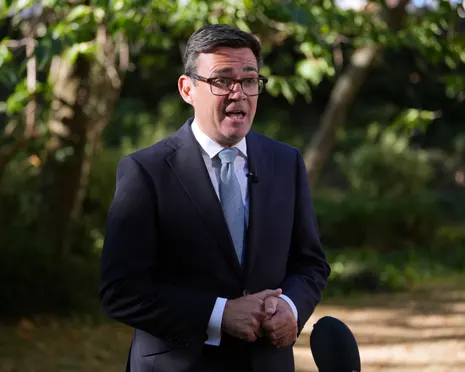
Consumer sentiment remains a wildcard. With Andy Burnham now serving as prime minister and the next fiscal statement scheduled for October, many households are adopting a wait-and-see posture on larger-ticket spending. Leighton noted that shoppers appear to be gauging how policy will unfold before committing discretionary outlays.
He offered a measured endorsement of the new chancellor, John Healey, calling him “very sensible and objective,” while stressing that clarity on the budget and the broader economic plan would be decisive for restoring both consumer and business confidence.
“The key economic policy of the [Labour] government so far has been to inhibit growth,” Leighton observed. “I think John Healey is a good choice as chancellor; he is very sensible and objective.”
Leighton’s policy ask is specific: he urged the government to consider carving retailers out of the additional business-rates surcharge applied to larger commercial buildings, arguing that layering further cost onto an already-fragile sector would undermine the nascent recovery. His stated minimum requirement is a fiscal stance that “doesn’t inhibit growth and [ideally] enhances growth,” achieved without pulling additional cost into business operations.
Whether the 0.2% uptick proves durable or merely a seasonal blip will become apparent in the coming quarters. What is clear is that Asda has exited the longest sales slide of its post-acquisition era, and that the competitive stakes—particularly against Aldi’s relentless share gains—make sustained execution a matter of corporate survival rather than mere ambition.
Related Reading
Frequently Asked Questions
What is Asda returns to growth after more?
Asda returns to growth after more is the main topic of this guide. The article explains the context, practical details, and next steps readers should understand.
Why does Asda returns to growth after more matter?
Asda returns to growth after more matters because readers are looking for a useful answer, not just a short summary. Good content should match search intent and help them decide what to do next.