Rollercoaster at LA’s Six Flags shut after two riders suffered brain injuries, inquiry finds

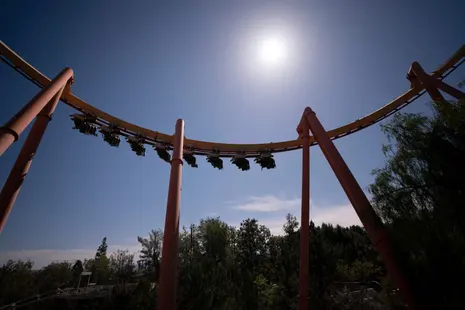
Table of Contents
X2 Rollercoaster at Six Flags Magic Mountain Remains Closed After Riders Suffered Brain Injuries
Wanderstayfinder.com – The X2 rollercoaster at Six Flags Magic Mountain in Valencia, California — a ride that hurls passengers through hundreds of feet of airtime at speeds approaching 76 miles per hour (roughly 122 km/h) while spinning seats a full 360 degrees — has been dark since July 12 following reports that two riders sustained serious brain injuries within days of one another. The attraction, long marketed on the park’s own website as a rite of passage for thrill-seekers, has now been shut for more than a month, leaving thousands of season-pass holders and tourists without one of the park’s signature coasters.
Two Riders, Two Brain Injuries, Days Apart
In early July, Pamela Guillen, a resident of Hawaii, boarded X2 after her daughter persuaded her to try the ride. During the course of the experience, Guillen said her head struck the seat’s headrest with enough force to knock her unconscious. She was transported to a hospital, where imaging revealed a severe subdural hematoma accompanied by brain compression. Guillen now manages chronic headaches and takes anticonvulsant medication to guard against seizures.
“I’m taking it a day at a time to not overwhelm myself and to not go into a dark hole of mourning who I was and what I was able to do before this.”
Just days after Guillen’s incident, Naomi Greer-Wilkinson, a Los Angeles-area resident, rode X2 and likewise lost consciousness. She was hospitalized with a traumatic brain injury and, as of the most recent reporting, remains in a coma. A park spokesperson confirmed the closure date of July 12 but declined to address the specifics of the two injuries.
A Two-Decade Pattern of Harm
The two recent cases are not isolated anomalies. Newly surfaced investigative findings indicate that over the past twenty years, multiple riders have reported injuries traceable to X2, including two fatalities. The recurrence of head trauma on a ride whose design subjects the body to extreme lateral and vertical forces raises questions about whether the coaster’s engineering tolerances, restraint systems, or maintenance schedules have kept pace with evolving safety expectations.
Compounding the concern is the way state inspectors have evaluated the ride. The testing data Six Flags provides to regulators is derived from safety standards set by an industry committee made up of theme-park operators and ride manufacturers — essentially a self-regulatory body. Critics of that arrangement argue it creates a circularity: the same entities that build and operate the coasters also help define the benchmarks against which their own products are judged. The California Division of Occupational Safety and Health did not immediately respond to requests for comment on how it handles X2 inspections.
Legal Fallout and the Hawley Settlement
Six Flags has also faced litigation tied to the coaster. Earlier this week, the company settled a wrongful-death lawsuit brought by the family of Christopher Hawley, a 22-year-old who died in 2022 from a brain injury allegedly sustained while riding X2. The financial terms of the settlement have not been made public, and the company had previously denied the allegations linking his death to the ride.
“We want to make sure that that ride isn’t going to kill somebody else,” William Hawley, Christopher’s father, told the Orange County Register earlier this year.
The settlement underscores a broader tension in the amusement-park industry: operators invest heavily in marketing rides as extreme experiences, yet the regulatory and inspection frameworks governing those experiences often rely on industry-generated data and voluntary compliance rather than independent, adversarial oversight.
What Riders and Regulators Should Watch
For visitors to Southern California theme parks, the X2 closure serves as a reminder that even coasters operating for years without a major incident can present latent risks, particularly when head-impact forces are involved. Riders with pre-existing conditions affecting balance, neck stability, or seizure thresholds may wish to consult a physician before attempting high-G, rotating coasters. Park operators, meanwhile, face mounting pressure to publish independent inspection reports and to separate the bodies that write safety standards from those that profit from the rides those standards govern.
Until regulators complete their review and Six Flags issues a public statement addressing the mechanism of injury, the X2 will remain closed. For the families of Guillen and Greer-Wilkinson, and for the memory of Christopher Hawley, the question is no longer whether the ride is thrilling enough — it is whether the system around it is safe enough.
Related Reading
Frequently Asked Questions
What is Rollercoaster at LA s Six Flags?
Rollercoaster at LA s Six Flags is the main topic of this guide. The article explains the context, practical details, and next steps readers should understand.
Why does Rollercoaster at LA s Six Flags matter?
Rollercoaster at LA s Six Flags matters because readers are looking for a useful answer, not just a short summary. Good content should match search intent and help them decide what to do next.