‘Confluence of errors’ led to Belgian tourist Celine Cremer’s death in Tasmanian wilderness, coroner finds

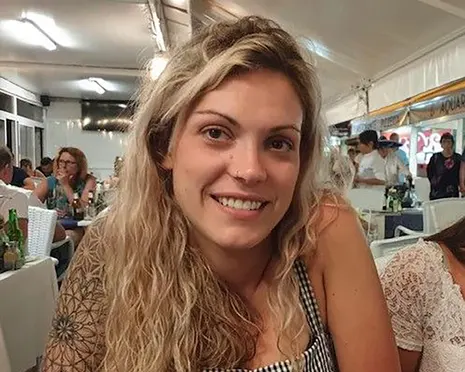
Table of Contents
Coroner Rules Belgian Tourist’s Wilderness Death Was an Accident Born of Compounding Mistakes
Wanderstayfinder.com – A Tasmanian coroner has concluded that the death of a 31-year-old Belgian woman on a remote wilderness track resulted from an accident, triggered by what she described as a “confluence of errors” spanning inadequate preparation, deteriorating weather, and the loss of her only means of communication. The findings, delivered by coroner Madeleine Wilson on Friday, close a case that consumed nearly three years of searching and investigation after Celine Cremer vanished during a walk in the state’s isolated north-west corner.
Cremer, who had arrived in Australia on a working holiday in 2022, set out on a day walk at Philosopher Falls on 17 June 2023. She was reported missing roughly ten days later. Despite an intensive initial police operation, no trace of her was located. It was not until January 2026 that private search teams organised by her friends and family located her remains near the Arthur River, a stretch of water in one of Tasmania’s most sparsely populated and weather-exposed regions.
The Walk and the Point of No Return
Wilson’s findings reconstruct the sequence of events on that June afternoon with considerable detail. After visiting the Philosopher Falls lookout, Cremer turned onto a walking track heading toward Magnet Dam. The coroner noted that this section of trail was poorly defined, and Cremer strayed from it, becoming lost.
“The track to Magnet Dam was not well defined and she wandered off track and became lost,” Wilson said. “The deviation from the track occurred late in the day, four days before the winter solstice, at which time the afternoon light was starting to fade.”
The timing proved critical. Tasmania’s north-west coast in mid-June sits at the nadir of winter daylight, with afternoon sun retreating rapidly. Overnight temperatures in the area hovered near freezing. Cremer had not packed waterproof clothing or sufficient thermal layers for conditions that could deteriorate within hours. Her mobile phone — her sole means of contacting anyone — was lost late in the afternoon of the day she departed, after intermittent reception had already made calls unreliable.
Data recovered from the phone, which a volunteer search party located in December 2025, showed she captured several photographs and short video clips between 2:21 pm and 2:42 pm. She then opened Google Maps multiple times, with the final recorded input timestamped at 4:18 pm. Wilson assessed that Cremer most likely became disoriented around 3:49 pm and, without her phone to guide her, inadvertently altered her heading. From that point onward, the coroner stated, the exact path to her final location could not be established.
“It is not possible to determine the route taken once Cremer lost her mobile phone, to her final resting place in the Arthur River,” Wilson said.
The coroner allowed that Cremer may have slipped and fallen, or attempted an unsuccessful crossing of the river. Water levels in the Arthur River in June 2023 were substantially higher than when her remains were recovered more than two years later, a factor that complicated both the search and the reconstruction of events.
A Three-Year Search
The initial police response to the missing-person report was judged appropriate, with search operations guided by what Wilson called “accepted methodologies.” Weather, however, constrained the scope of those efforts. The private search company and volunteer teams that ultimately located Cremer’s remains received specific praise from the coroner for their persistence and coordination.
Tasmania Police has since committed to an internal review examining how private search groups are deployed in missing-persons investigations, including whether formal protocols should govern their involvement. The review responds to questions raised by the Cremer case about the interface between official operations and independently organised search efforts in terrain where public infrastructure is minimal.
Safety Lessons and Council Recommendations
Wilson noted that Cremer had not followed widely publicised safety precautions for wilderness walking, including carrying appropriate equipment and informing others of her intended route. The coroner used the findings to issue broader guidance to walkers across Tasmania.
“Walkers should familiarise themselves with these standard safety messages before embarking on short walks, day walks or multi-day hikes,” she said. “Walkers should also be aware that mobile coverage is often intermittent or unavailable in remote areas of the Tasmanian wilderness and should plan accordingly.”
Wilson also recommended that the local council install signage at the entrance to the Philosopher Falls track, making clear that the route is not managed for recreational use and that its surface is degraded, uneven, and potentially hazardous. The recommendation underscores a recurring tension in Tasmania’s north-west: vast tracts of land offer spectacular natural scenery yet lack the infrastructure, wayfinding, and maintenance that walkers in more developed regions take for granted.
Cremer had been planning to return to the Australian mainland just four days after her Philosopher Falls walk. The working-holiday visa that brought her to the country in 2022 gave her the freedom to travel extensively, but the remoteness of the north-west coast meant that even a short deviation from a marked track could place a walker beyond the reach of any timely rescue. The coroner’s determination of accident, while legally straightforward, leaves a family and a community with questions about how many of those overlapping failures might have been intercepted earlier — by better signage, by more robust communication infrastructure, or by a walker who had packed for the worst that a Tasmanian winter afternoon could deliver.
Related Reading
Frequently Asked Questions
What is Confluence of errors led to Belgian?
Confluence of errors led to Belgian is the main topic of this guide. The article explains the context, practical details, and next steps readers should understand.
Why does Confluence of errors led to Belgian matter?
Confluence of errors led to Belgian matters because readers are looking for a useful answer, not just a short summary. Good content should match search intent and help them decide what to do next.