Australian police charge man accused of attempting to share Ukrainian military intel with Russian agents

Table of Contents
Australian Police Charge Man Accused of Sharing Ukraine Intel
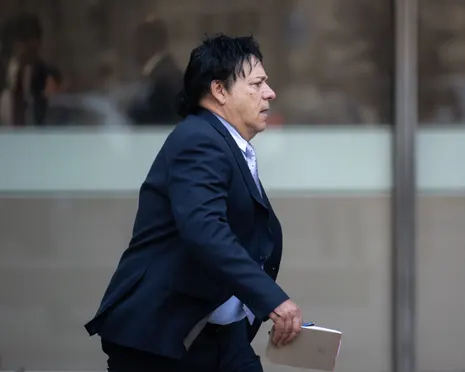
Wanderstayfinder.com – Australian police charge man accused of passing Ukrainian military secrets to suspected Russian intelligence contacts, in what marks the first application of the country’s foreign-interference statute to an alleged offender with ties to Moscow. Vladimir Teslov, a 27-year-old dual Russian-Australian citizen, appeared at a Brisbane magistrates court on Friday after the Australian Federal Police (AFP) laid the charge, which carries a maximum sentence of 20 years.
Internally dubbed Operation Woodcreeper, the matter is the eighth foreign-interference prosecution brought in Australia. What distinguishes it from earlier cases is its direct intersection with the ongoing war in Ukraine and the nation’s own security perimeter — a combination that has drawn close scrutiny from federal law-enforcement and intelligence leadership alike.
What Police Alleged Teslov Did
According to the AFP, Teslov flew to Russia in October 2024 to undertake military-style training. After returning to Australia later that year, he allegedly maintained contact with individuals he believed were connected to Russian intelligence services. In May 2025 he is said to have travelled to Ukraine and enlisted in its armed forces, where police allege he obtained details on Ukrainian military personnel, unit designations, and operational locations.
The AFP contends he then attempted to relay that information to his suspected Russian-linked contacts both while physically in Australia and while overseas. Commissioner Krissy Barrett said the attempts “created a risk to the safety and security of Ukrainian military personnel.”
Investigation, Arrest, and Court Outcome
The inquiry opened in June 2026. Barrett described it as complex, noting unresolved questions about whether Teslov had volunteered his services to the suspected intelligence officials or had been actively recruited. She confirmed the AFP coordinated with domestic and international partners throughout, while adding that any decision to prosecute on the Ukrainian side would rest with Kyiv.
Teslov was taken into custody on Thursday. Police searched several Brisbane properties and seized multiple electronic devices. He was understood to reside in Victoria and to be unemployed at the time of arrest. Barrett made clear there was no indication he had received military training on Australian soil, nor that he had worked for any government agency, and stated he was not suspected of posing a direct threat to Australia itself.
Asked whether Teslov formed part of a wider espionage network, Barrett said investigations were ongoing and further arrests remained possible. She drew a firm line between this matter and the separate 2024 espionage case involving Kira and Igor Korolev, a Russian-born Brisbane couple still awaiting a plea. Barrett confirmed no known connection existed between Teslov and the Korolevs, and stressed that Russia as a state had not been specifically targeted. “Our job is ensuring Australia does not become a safe haven for people who think they can conduct foreign interference on our shores,” she said.
Claire McGuinness, deputy director-general of the Australian Security and Intelligence Organisation (ASIO), issued a statement framing the prosecution within the wider national-security landscape:
“Foreign interference could represent both a threat to life and a threat to our way of life. This case should put regimes perpetrating foreign interference on notice: we have zero tolerance. ASIO’s resolve is firm, and we will continue to work with our close partners to detect and counter attacks on Australia’s sovereignty.”
McGuinness added: “This achievement demonstrates the rigour, perseverance and agility of Australian agencies. I am immensely proud of ASIO’s outstanding contribution to this case.”
Teslov was denied bail by Magistrate Lewis Shillito at the Brisbane magistrates court on Friday. His matter was adjourned to 2 October, at which point further procedural steps are expected. The Russian embassy in Canberra said it first learned of the case through media coverage.
Frequently Asked Questions
What offence was Teslov charged with? He faces a foreign-interference offence under Australian law, carrying a maximum penalty of 20 years. It is the first time this specific charge has been applied to an alleged offender with ties to Russia.
Where and when did the alleged conduct take place? Police allege the conduct spanned October 2024 through at least mid-2025, involving travel to Russia, service in Ukraine’s armed forces, and attempts to relay information while in Australia and overseas.
Is this connected to the Korolev espionage case? No. Commissioner Barrett confirmed there is no known link between Teslov and the Korolevs, whose separate 2024 espionage charges remain before the courts.
What happens next? Teslov’s matter was adjourned to 2 October at the Brisbane magistrates court. Further arrests are possible, and Barrett indicated investigations into a broader network are ongoing.