Iran’s economy in crisis as US launches new sanctions campaign

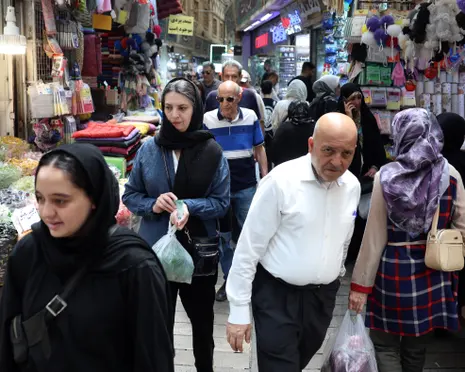
Table of Contents
Iran’s Economy Collapses Under the Weight of Sanctions and Scarcity
Wanderstayfinder.com – Shelves in Iranian supermarkets have grown visibly emptier over the past year, and the numbers behind that observation are staggering. Vegetable oil prices in August stood 383% above their level twelve months earlier. Eggs had climbed 294%, chicken 177%, and red meat 148%. For a population already stretched thin by years of isolation and mismanagement, these figures represent not an abstract macroeconomic trend but a daily reckoning at the kitchen table.
The backdrop to this deterioration is a fresh American sanctions initiative branded “Operation Economic Outcast,” launched under the Trump administration. For most ordinary Iranians, however, the new campaign feels less like a turning point than a confirmation of what they have already endured. The economic damage predates this latest round of pressure by years, and the country’s financial commanders have been fighting a losing battle on multiple fronts well before Washington added another layer of restriction.
A Currency in Free Fall
The most visceral indicator of Iran’s monetary unraveling is the rial’s trajectory. On 23 August, the US dollar traded at roughly two million rials on the open market — an all-time high. Just three days after that milestone, Iran’s statistical centre confirmed that year-on-year inflation for August had hit 84.4%, with the rolling twelve-month average sitting near 65%. Each month the currency slips further, the cost of imported inputs — from pharmaceuticals to industrial machinery — ratchets upward, feeding a self-reinforcing spiral of price increases and shrinking reserves.
The practical consequence is a contraction in household consumption. Families are purchasing fewer goods across the board. Diets are shifting toward cheaper staples; clothing is patched and repaired rather than replaced; medicines are scarce in official channels, available only through informal networks. The Mehr news agency reported that demand for red meat dropped by half in April 2026 relative to the same month a year earlier. Paradoxically, the surge in potato consumption has triggered its own shortages, illustrating how quickly a stressed economy cascades from one scarcity to another.
Voices from the Squeezed Middle
Golshan Fathi, an Iranian feminist commentator, put the human dimension into sharp relief:
“They don’t understand that people can no longer afford even a normal life.”
Mohsen Zavaar, a biomedical engineer, described a population for whom the question is no longer whether one can buy a house or a car:
“For part of the population, the issue is no longer buying a house or a car; the issue is cutting out meat, reducing food quality, postponing medical treatment, and scraping by until the end of the month.”
His frustration with official inaction carried a pointed edge:
“The people don’t want miracles – they want decisions.”
Fuel Lines and the Politics of the Pump
The crisis has spilled well beyond groceries and wardrobes. On Tuesday and Wednesday, queues of vehicles snaked through districts of Tehran and the north-eastern city of Mashhad, with some lines blocking entire streets. Numerous petrol stations — including several of the country’s largest facilities — were shuttered. Government officials attributed the chaos to isolated panic buying, triggered either by rumours of a planned fuel price hike or by Israeli strikes that reportedly destroyed two of Tehran’s three principal oil depots.
Inside the government, deliberations over raising petrol prices to shrink costly subsidies have run for weeks. Yet the political class carries the memory of November 2019, when a sudden overnight 50% jump in fuel prices ignited week-long violent protests across the country. That episode has made any comparable move politically radioactive.
Complicating matters further is an admission that entrenched interests within the state itself profit from fuel smuggling. Saqab Esfahani, a deputy to the presidency, made the point with characteristic bluntness:
“Both political factions in the country are involved in fuel smuggling, and if I were to shut down their operations, they would break my windows.”
President Masoud Pezeshkian has been urged to open an investigation into those remarks, though the political cost of acting on them remains uncertain.
Opacity as Policy
Transparency over the depth of the economic damage is itself under threat. Fatemeh Mohajerani, a spokesperson for the Iranian government, recently announced that future poverty statistics would be released only with the approval of the supreme national security council. In effect, the measurement of declining living standards has been reclassified as a matter of state security, insulating the public from the full scale of the hardship.
The War Frame
Iran’s leadership has increasingly recast the domestic economy as a theatre of war against the United States. Hojatoleslam Taeb, the newly appointed head of the Basij paramilitary force and a close ally of Supreme Leader Mojtaba Khamenei, delivered a speech framing market distortions under sanctions as an existential challenge requiring collective sacrifice. He called for a 10% reduction in petrol consumption to curb expensive imports and implied that avoiding unnecessary travel constitutes an act of patriotism.
Mohsen Rezaei, the new and more hardline secretary of the supreme national security council, extended the logic further:
“I advise young people to start producing the products they and society need in their homes, just as they gather in public spaces.”
Such appeals, once the language of wartime mobilization, now carry an unmistakable tone of desperation as the economic crisis deepens and the gap between official rhetoric and household reality widens. For millions of Iranians, the question is no longer whether sanctions will worsen their circumstances — it is whether the state can deliver even the most basic material security before social cohesion frays beyond repair.
Related Reading
Frequently Asked Questions
What is Iran s economy in crisis as US?
Iran s economy in crisis as US is the main topic of this guide. The article explains the context, practical details, and next steps readers should understand.
Why does Iran s economy in crisis as US matter?
Iran s economy in crisis as US matters because readers are looking for a useful answer, not just a short summary. Good content should match search intent and help them decide what to do next.