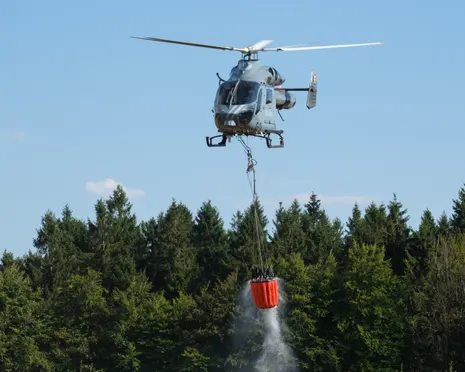
Border area between Nepal and China where 33 Australians are missing still almost entirely cut off

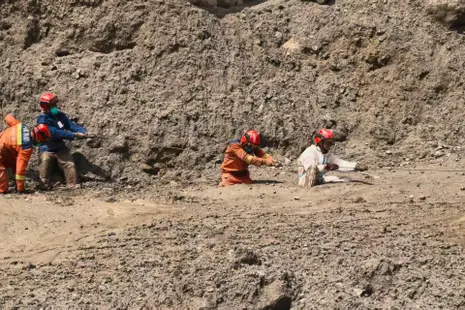
Table of Contents
Nepal-China Border Area Still Cut Off as Australians Missing
Wanderstayfinder.com – Nearly a week after a catastrophic floodwave obliterated the Nepal-China border area around Gyirong Port, the highway into the checkpoint town remains closed to all civilian vehicles. Gyirong, perched where the Trishuli River valley meets the Tibetan plateau, was the first settlement in the corridor to absorb the full force of the water. Rescue imagery recovered since then has shown the scale of the devastation, leaving the families of dozens of missing Australians in Kathmandu with little more than unanswered phone calls and mounting dread.
Rescue Access Remains Blocked
Chinese rescue crews — some flown in by helicopter, others trekking for as long as ten hours before rappelling down to the valley floor — brought back footage of a landscape stripped to mud and sediment. The immigration checkpoint, overhead power lines, and adjacent buildings have been flattened. What functioned as a working crossing point is now an unbroken sheet of debris.
News that cellular service had been partially restored to the Gyirong sector spread quickly through WhatsApp threads and Facebook pages on Monday. For the clusters of Australian relatives gathered in Kathmandu since the disaster, the restored signal offered a brief surge of hope — one that evaporated the moment calls went unanswered.
One relative, speaking on condition of anonymity, described spending an entire morning dialling her husband’s number after learning the line was live.
“The embassies aren’t helping,” she said.
Her frustration mirrors a wider sense among affected families that institutional assistance has lagged badly behind the shrinking window for rescue.
What Families Know About the Missing
The confirmed tally of Australians unaccounted for climbed to 43 by Monday. At least 33 of those were believed to have been within immediate sight of the checkpoint in the minutes before the wave arrived. The group breaks down as follows: 15 travellers with the Himalaya Glacier Company, 11 participants travelling with the Isha Foundation, six clients of Kailash Journeys, and one individual booked through Kathmandu Holiday Tours and Travel. Numerous members of these parties had reached the immigration building roughly ten minutes before the water struck.
Sujan Wasti, who leads Kailash Journeys’ Nepal operations, said his company’s last confirmed contact with its group came at 7:30 a.m., when a guide radioed back to confirm they were returning from a side excursion. The group had been scheduled to land in Kathmandu on Thursday, with most members planning onward flights home from the capital.
“In the area, the rescue has been done,” Wasti said. “Now, it will just be about collecting the bodies and bringing them [home].”
Since Wednesday, Wasti has dispatched search teams up the Trishuli River corridor, flown two helicopter overflights of the checkpoint zone, and canvassed local hospitals for any arrivals. No trace of the missing trekkers has surfaced.
“We are searching every place we can, but still we have not found anyone. There is still no sign of them. Along the border, it was only dead bodies. If they are alive, it will be a miracle.”
China Leads the Search; Road Reopening Inches Forward
Beijing has assumed the lead in coordinating search-and-rescue operations within the Gyirong sector. As of Monday morning, crews working to reopen the highway on the Tibetan side of the crossing had approximately 1.15 kilometres of road still to clear and reconstruct. Since Friday, no civilian traffic has reached the area; access is restricted to specialist rescue teams who either hike for many hours or are flown in when weather permits.
Expert Assessment: The Narrowing Survival Window
Akhilesh Surjan, a humanitarian and disaster-management specialist at Charles Darwin University in Australia, framed the central question facing both families and responders: how long to sustain the expectation of survival.
“The rescue experts consider the first 72 hours to be very critical. Because after the first 72 hours, that is three days, the chance of finding survivors drops sharply.”
Surjan cautioned, however, that survival beyond that threshold, while statistically unlikely, is not unheard of. He pointed to the 2011 Tōhoku earthquake in Japan, where two individuals were pulled alive from rubble after nine days. Key variables, he explained, include whether a trapped person can access residual air pockets, whether they are shielded from extreme cold or heat, and whether they have suffered catastrophic internal bleeding or crush injury to major organs.
Frequently Asked Questions
How many Australians are confirmed missing? As of Monday, 43 Australians have been confirmed missing. At least 33 were believed to have been in the immediate vicinity of the Gyirong checkpoint when the floodwave struck.
When was the last confirmed contact with the missing groups? Kailash Journeys’ last confirmed contact came at 7:30 a.m. on the day of the disaster, when a guide radioed back from a side excursion. Other groups had reached the immigration building roughly ten minutes before the water arrived.
Is the road to Gyirong open yet? No. Approximately 1.15 kilometres of highway on the Tibetan side still require clearing and reconstruction. No civilian traffic has been able to reach the area since Friday; only specialist rescue teams access the zone, either on foot or by helicopter.
What is the realistic survival window? Disaster-management experts regard the first 72 hours as the critical period. After that threshold, the probability of finding survivors drops sharply, though rare exceptions — such as two survivors rescued after nine days in the 2011 Tōhoku earthquake — show that survival beyond the window is not impossible.