Renee was at Gyirong Port minutes before flood struck, now her family want to travel from Australia to help search

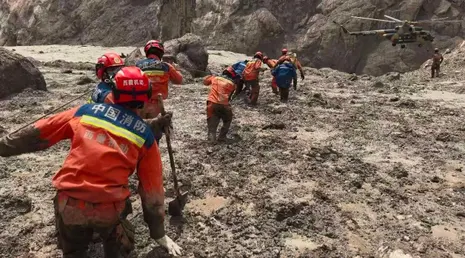
Table of Contents
Renee at Gyirong Port: Family Races to Nepal
Wanderstayfinder.com – A flash flood tore through the mountain corridor at Gyirong Port in western Nepal, and one Australian woman vanished in the torrent. Renee was at Gyirong Port roughly ten minutes before the water hit — she had just stepped off her transport into the port area when the surge obliterated the built environment around her. A disability support worker based on Queensland’s Sunshine Coast, she is now among the most agonising of the missing Australians caught in the disaster.
The port sits along the historic trade corridor linking Kathmandu to the Tibetan plateau and was among the hardest-hit zones. Footage released by Chinese rescue crews showed multi-storey buildings, overhead power lines, and entire stretches of infrastructure reduced to rubble within minutes. For families still waiting for word, that visual record made the scale of destruction impossible to ignore.
A Sister’s Plea: Look at the Displaced, Not the Missing
Clair Spry, Renee’s sister, has asked the public to redirect its gaze. Rather than centre the story on her sister’s disappearance, Spry insists the spotlight belongs to the thousands of Nepali residents uprooted, traumatised, and left without shelter or livelihood.
“Her focus right now would not be on her; it would be on the families. So many people, the Nepalese people, that have been horribly displaced and traumatised. She would want the attention on them and how we are going to help them.”
Spry also framed the event within a widening climate pattern. The inundation was not an isolated weather anomaly but part of intensifying extreme-precipitation trends across the Himalayan region, where glacial melt and shifting monsoon dynamics are raising flood risk for communities with the fewest resources to adapt.
“And global warming. This is something the poorest people of the world are affected by. It’s not the New Yorkers, it’s the people who are in these parts of the world. For Renee, that would be heartbreaking.”
Cross-Continental Logistics and a Thin Thread of Hope
Renee had been in a long-term partnership with Shaun, an emergency nurse, since the two were fifteen. They share two daughters, Lily and Ruby, both now in their twenties. Within days of the flood, Clair launched a crowdfunding campaign to cover travel costs for the three to reach Nepal. Shaun intends to enter the port area and look for any trace of his partner; his daughters have made clear they will not let him go alone.
“Their first reaction is, we have to go. The practicalities, and what can actually be done in the first few days, it hasn’t been possible [to enter the area], but they still want to go. And if they are able to find her, to bring her home.”
Access to the worst-affected zones remains severely restricted. Roads are washed out, communication lines are down, and rescue operations are still in their earliest phases. Families of the missing face a waiting period in which official updates are sparse and the terrain itself resists rapid assessment.
The Spry family is candid about the odds. They understand the force of the water, the proximity of the missing woman to the impact zone, and the slim likelihood of survival in that specific stretch of terrain. Yet they have chosen not to abandon the possibility entirely.
“Everyone’s very realistic. We know how bad this was and where she was. But until they find her, everyone’s got this little slither of hope that maybe she’s stuck somewhere and can’t get out, or she’s injured.”
“I’ve been looking through pictures trying to identify someone or see her. But we understand the reality of this situation.”
A Pilgrim’s Journey Interrupted
Like a significant number of the Australians swept up in the disaster, Renee had travelled to Nepal on a spiritual pilgrimage. Spry described her sister as deeply spiritual, driven by a desire to serve others rather than to seek personal recognition. Renee held two university degrees and ultimately chose a career in disability support — a vocation Spry characterised as entirely selfless.
“Her priority was always other people. Every person she touched, they knew her love and kindness. She would be so uncomfortable with all this.”
The pilgrimage tradition in Nepal draws visitors to sites of profound religious significance, including the sacred lake and mountain of Kailash near the Tibet-Nepal border. Many travellers combine such journeys with extended stays in western Nepal’s port towns, making the Gyirong corridor a familiar waypoint for spiritual seekers from around the world.
FAQ
Where exactly is Gyirong Port? Gyirong Port is a mountain town in western Nepal, situated along the historic trade route connecting Kathmandu to the Tibetan plateau. It sits at roughly 3,800 metres elevation and serves as a gateway for trekkers and pilgrims heading toward Kailash.
How many Australians are missing from the flood? Multiple Australians were caught in the disaster. Renee’s case has drawn particular attention because she entered the port area only minutes before the surge struck, placing her squarely in the impact zone.
Can families travel to Nepal to assist the search? Access to the worst-affected zones is currently restricted. Roads are washed out and communication lines are down, so rescue operations remain in early phases. Families are advised to coordinate with official channels before attempting travel.
What is the family doing to help? Clair Spry launched a crowdfunding campaign to cover travel costs for herself, Shaun, and their two daughters to reach Nepal. Shaun’s stated intention is to enter the port area and search for any trace of his partner.