‘He had magnetism’: Lula returns to site of political origins to launch fourth-term campaign

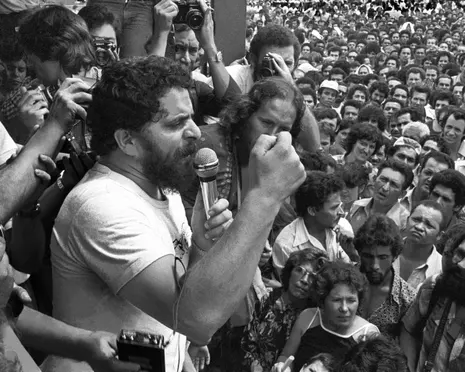
Table of Contents
Lula Returns to Birthplace of Brazilian Labor Movement for Final Presidential Bid
Wanderstayfinder.com – Nearly half a century after the metalworker strikes that transformed his life, Luiz Inácio Lula da Silva is preparing to return to the football pitch where his political journey began. At 80 years old, the former lathe operator will launch what will be his seventh and final presidential campaign at Vila Euclides stadium in São Bernardo do Campo, the industrial heartland of Brazil’s automotive sector. Thousands of Workers’ Party supporters are expected to gather on Sunday to witness Lula fire the starting gun for October’s closely contested election.
A Stadium That Symbolizes Democratic Hope
The invitation circulating among party activists describes Vila Euclides as more than a mere sports venue. It is characterized as a cradle of change and a symbol of democracy, the place where ordinary workers first challenged an authoritarian regime and won. The stadium’s significance stretches back to the late 1970s, when tens of thousands of laborers would pack onto its football pitch daily, demanding higher wages and better working conditions.
These strikes in São Bernardo do Campo represented a bold act of defiance against Brazil’s military dictatorship, which had ruled with an iron fist since 1964. Foot soldiers of the regime would surround the stadium wielding truncheons and guns, creating an atmosphere of tension and possibility. The workers’ collective action is widely credited with helping pave the way for Brazil’s return to democracy in 1985.
Documenting History Through a 24mm Lens
Jesus Carlos, a photographer who captured these historic moments, still remembers the palpable energy of those days. Now 75 years old, Carlos was not merely an observer but a participant in the political transformation unfolding before his camera. A former Communist party activist, he approached his work with both professional skill and ideological conviction.
“You weren’t just documenting a fact – you were documenting history,” Carlos reflected, recalling how his 24mm lens immortalized the legendary strikes of 1979 and 1980.
Carlos sensed the momentous nature of what he was witnessing. The downtrodden but tenacious laborers were challenging not just their employers but an entire political system. “I was a photographer – but before being a photographer I was a leftie,” he recalled. “So I was fully aware what all it meant … [and] that the whole situation would be really important for the future.”
The Rise of a Working-Class Hero
At the center of this labor movement stood a 33-year-old union chief with a bushy beard and a habit of heavy smoking. Luiz Inácio Lula da Silva quickly became a household name in Brazil and eventually a global icon. The New York Times hailed him as “the continent’s leading working-class hero” and drew comparisons to Poland’s Lech Walesa, the activist who became Europe’s first democratically elected president after communism’s fall.
In 1980, Lula helped establish what would become one of Latin America’s largest leftwing political movements, the Workers’ Party. His political journey was not without setbacks. After three unsuccessful presidential attempts, he was finally elected Brazil’s first working-class president in 2002. He secured re-election in 2006 and won a historic third term in 2022, helping to thwart an attempted coup led by his far-right opponent, outgoing president Jair Bolsonaro.
Magnetism That Moved a Nation
João de Deus Martinez, a metalworker who knew Lula during the São Bernardo strikes, recognized his leadership qualities early on. Now 85 years old with scraggly hair, Martinez is affectionately called “Cabeludo” (Shaggy) by Lula. He remembers watching Lula charm the crowds at Vila Euclides with an undeniable presence.
“There was no one who could beat him up there on the podium … He had this magnetism. People cried [when he spoke] – tears of hope,” Martinez recalled.
A Tight Race Ahead
As Lula prepares for this final campaign, the political landscape mirrors the intensity of 2022’s election, when he defeated Bolsonaro by a narrow margin. This year’s contest is expected to be equally competitive. Bolsonaro, unable to run after receiving a 27-year jail sentence for plotting to prevent Lula from taking power, will be represented by his senator son, Flávio Bolsonaro. Current polls give Lula a modest lead.
John D French, Lula’s American biographer who first visited the ABC Paulista region in 1980, does not anticipate an easy victory. “I don’t think it’s going to be a walkaway,” French observed, having tracked the leftist’s political trajectory for decades.
French described the factory strikes as “a unique effervescence” of discontent against worker exploitation and the “ignorant military men” who seized power in 1964 but suddenly found themselves on the defensive. “Nobody knew what was going to happen, which is what made it dramatic, because there were a number of moments when it could have turned into a massacre,” the academic noted.
The mobilization that began in São Bernardo do Campo drew famous musicians, intellectuals, film-makers, and politicians to the region, all championing the metalworkers and demanding democracy. Memories of that awakening remain vivid nearly five decades later, as Lula returns to the place where it all began to seek another term at the helm of Brazil’s largest democracy.
Related Reading
Frequently Asked Questions
What is He had magnetism?
He had magnetism is the main topic of this guide. The article explains the context, practical details, and next steps readers should understand.
Why does He had magnetism matter?
He had magnetism matters because readers are looking for a useful answer, not just a short summary. Good content should match search intent and help them decide what to do next.