At least 93,000 ‘in great need’ after Nepal-Tibet flash floods, says Red Cross

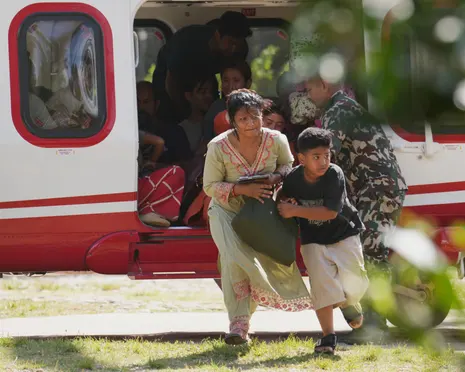
Table of Contents
Glacier Collapse on Nepal-Tibet Border Triggers Catastrophic Flash Floods, Killing Over 540
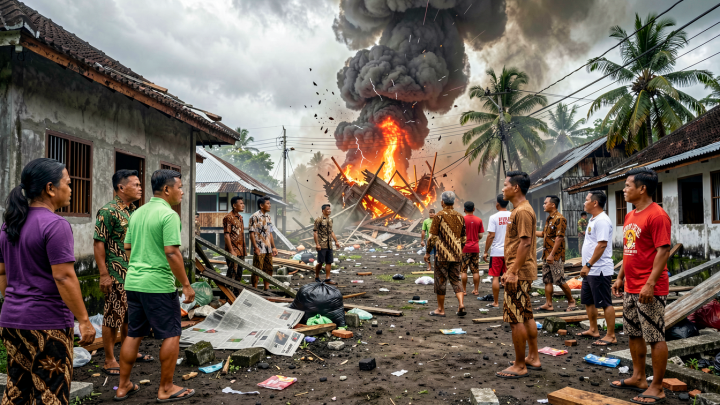
Wanderstayfinder.com – A massive section of Himalayan glacier sheared away from its anchor on Wednesday morning, plunging into the valley floor of Nepal’s Langtang national park and unleashing a torrent of water, ice, rock, and mud that swept through rivers and settlements along the Nepal-Tibet border. The International Federation of Red Cross and Red Crescent Societies (IFRC) has estimated that at least 93,000 people are now in critical need of assistance, while the confirmed death toll has climbed past 540 and more than 1,500 individuals remain unaccounted for.
The scale of destruction has overwhelmed local response capacity. Roads and bridges that once connected remote mountain communities to the outside world have been erased, leaving many of the worst-affected zones reachable only by helicopter. Rescue operations, already stretched thin, were forced to pause on Friday morning when a debris-dammed lake near the border began to overflow, sending a fresh surge of water toward areas where teams were actively working.
The Trigger: A Glacier Gives Way
Langtang, a national park straddling Nepal’s northern frontier with Tibet, sits beneath some of the highest peaks on Earth. On Wednesday morning, a colossal fragment of glacier calved from its face and crashed into the valley below. The impact generated a hyperpycnic flow — a dense mixture of meltwater, ice fragments, boulders, and sediment — that thundered down river channels at speeds no downstream community could outrun. Villages, power stations, and transportation infrastructure in the path of the surge were obliterated within minutes.
Nepal’s steep topography and densely vegetated valleys make the country inherently susceptible to flash flooding and landslides. In recent years, intensifying monsoon seasons and accelerating glacial melt driven by anthropogenic warming have made such extreme hydrological events more frequent and more violent, compounding risks that mountain communities have long managed through traditional knowledge and limited infrastructure.
Human Toll and Rescue Challenges
By Friday afternoon, authorities confirmed 543 fatalities: 538 within Nepal and five across the border in Tibet, China. More than 1,500 people were still listed as missing, including hundreds of foreign nationals who had been in the region for work, guided trekking, or pilgrimage. Rescue teams reported recovering bodies hundreds of miles downstream in Nepal’s Chitwan district, near the Tibetan frontier, underscoring the extraordinary reach of the debris flow.
Dozens of injured survivors were airlifted to Kathmandu for advanced medical treatment, while Nepali army personnel conducted helicopter extractions that saved more than 100 lives. At the Bidur army camp — the operational hub coordinating much of the relief effort — rescue and military helicopters cycled in and out roughly every five minutes, ferrying in dozens of traumatised victims. Many survivors described losing family members, homes, and all personal possessions within a matter of minutes.
On Friday morning, operations were suspended when a dam formed by accumulated debris overflowed, raising the river level and threatening a secondary surge. Residents in Rasuwa district, directly on the border with Tibet, were observed scrambling up hillsides to escape a potential river surge, witnesses said. Chinese state broadcaster CCTV confirmed that a debris lake had begun spilling water toward the direction rescue teams were advancing, forcing a brief but necessary halt.
Infrastructure in Ruins
Bidur, the administrative capital of Nuwakot district in Bagmati province, had been a lively riverside town along the Trishuli before Wednesday. Now most of its structures have been reduced to mud-caked rubble. Survivors recounted clinging to buildings and trees as the wall of water and debris swept over them. The twisted concrete shells of a bank branch, a government office, and an ATM kiosk stood among the few remaining structures, all buried in sediment. Officials confirmed bodies were trapped inside those buildings but deemed recovery too dangerous under current conditions.
Along the muddy roads nearby, residents gathered calling out for missing relatives and attempting to excavate what remained of household goods. The UN resident coordinator for Nepal, Lila Pieters Yahia, described the physical damage on Friday:
“The damage is just incredible,” Yahia said, adding that more than 40 bridges had been destroyed or badly damaged and “over 40km of road completely destroyed.”
Humanitarian Response and Climate Context
The IFRC, operating the world’s largest humanitarian network, deployed its Nepal delegation to coordinate relief alongside national authorities. David Fisher, the IFRC head of delegation for Nepal, addressed the scale of suffering on Friday:
“The trauma of this event is enormous,” Fisher said. “Thousands of homes have been destroyed or suffered significant damage. We believe that at least 93,000 people have been affected and are in great need. The death toll is very high and unfortunately likely to continue to rise.”
The organisation warned that inaccessible pockets of the disaster zone — cut off by destroyed crossings and washed-out roads — could harbour additional casualties yet to be counted. Nepal’s government stated it did not yet require foreign military or rescue assistance, as the domestic search-and-rescue operation, though complicated by terrain and weather, remained underway. Nevertheless, the international community has begun mobilising aid shipments for flood-stricken areas in both Nepal and Tibet.
The event underscores a growing pattern: as warming temperatures destabilise high-altitude glaciers and intensify monsoon rainfall, communities in the Himalayan corridor face increasingly severe and less predictable flood events. For the residents of Langtang, Bidur, and the surrounding valleys, the question is no longer whether such surges will recur, but how quickly infrastructure and early-warning systems can be rebuilt before the next monsoon season arrives.
Related Reading
Frequently Asked Questions
What is At least 93 000 in great?
At least 93 000 in great is the main topic of this guide. The article explains the context, practical details, and next steps readers should understand.
Why does At least 93 000 in great matter?
At least 93 000 in great matters because readers are looking for a useful answer, not just a short summary. Good content should match search intent and help them decide what to do next.