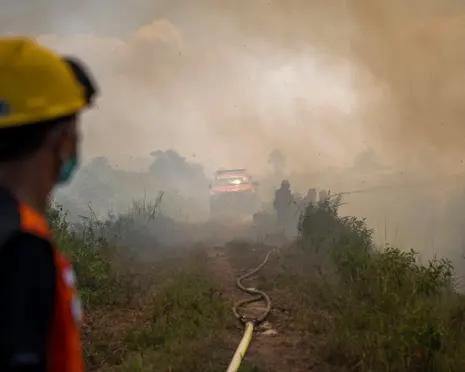
Flash floods on Nepal-Tibet border leave scores dead and hundreds missing

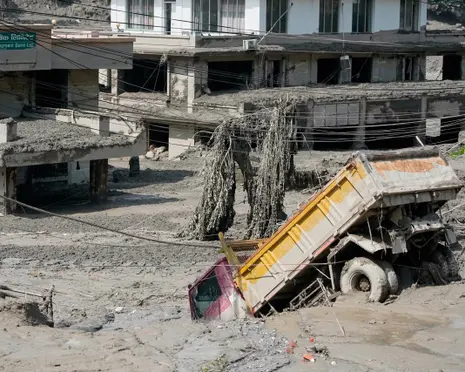
Table of Contents
Catastrophic Glacial Collapse Triggers Deadly Floods Along Nepal-Tibet Border
Wanderstayfinder.com – A massive release of glacial ice, mud, and debris from a river straddling the Nepal-China border has killed at least 157 people and left hundreds unaccounted for across three countries, in what officials describe as one of the worst natural disasters to strike the Himalayan corridor in recent memory. The torrent swept through settlements, infrastructure, and power facilities in Nepal’s mountainous districts while also threatening communities in Tibet and downstream areas of India.
The event unfolded when a river running between the two nations gave way to a wall of water, sediment, and rock. In Nepal, entire neighbourhoods, roadways, bridges, and hydroelectric installations were obliterated in minutes. On the Tibetan side, authorities confirmed at least three fatalities and 265 people missing, with state broadcaster CCTV reporting large-scale search-and-rescue operations underway in the Gyirong border zone. China’s Xinhua agency noted that the flood originated on the Nepali side of the divide and severed road, communications, and electricity links across the Shigatse region.
Initial Misidentification and the True Cause
In the chaotic first hours after the disaster, the US Geological Survey flagged the event as a 4.4-magnitude earthquake. Subsequent seismic analysis, however, revealed a different mechanism: the recorded energy signature was produced not by tectonic shifting but by a glacial collapse feeding a debris flow. This distinction matters for future preparedness, because glacial outburst events can strike without the gradual seismic precursors that standard earthquake-early-warning systems are designed to detect.
Authorities in Nepal issued urgent alerts instructing residents across several districts to stay clear of the Bhote Koshi, Trishuli, and Narayani rivers. Flood warnings were simultaneously extended to the Indian states of Bihar and Uttar Pradesh, both of which sit downstream of the affected waterways and border Nepal directly.
Scale of the Missing
Nepali officials tallied 403 people missing within the country, of whom 341 were foreign nationals hailing from India, the United States, the United Kingdom, Australia, South Korea, and Malaysia. The tourism board broke down the foreign tally further: 47 Americans, 34 Australians, 33 British citizens, and 24 Canadians were among those unaccounted for. More than 100 of the missing were identified as Hindu pilgrims from India and the Indian diaspora en route to Mount Kailash in Tibet, a site of profound religious significance. At least 62 Nepali citizens were reported missing from Rasuwa district, where hundreds of local trekkers had been in the field when the waters rose.
Rescue operations faced severe logistical obstacles. Helicopters were unable to set down at Syapru Besi and Timure, two mountainous localities in Rasuwa, until river levels dropped sufficiently. Persistent monsoon rainfall compounded the difficulty, keeping water levels elevated and visibility poor. Nepali police acknowledged they remained unable to gauge the full extent of structural damage.
Voices from the Affected Areas
Narendra Pariyar, the district administrator overseeing the worst-hit zone, urged residents along the Bhote Koshi to relocate immediately to higher ground.
“There could be heavy casualties or loss of property,” Pariyar warned.
Tula Bahadur BK, a health worker stationed in Rasuwa, described scenes of total obliteration near the riverbanks.
“There is devastation everywhere we look. The settlements next to the river have been completely swept away. Five of my own relatives are missing,” he said.
Nepali television channels aired images of homes reduced to rubble in churning water, vehicles floating downstream, a metal bridge torn free of its anchors, and villages buried beneath layers of mud and debris.
Government and International Response
Nepal’s prime minister, Balendra Shah, confirmed that police and military personnel had been folded into the rescue effort. He stated that instructions had been issued to evacuate residents from low-lying areas to safer locations and that people along the river were advised to exercise heightened vigilance.
India’s prime minister, Narendra Modi, said he had spoken directly with Shah and extended Nepal “all possible types of humanitarian assistance.” UN Secretary-General António Guterres announced that UN teams and partner organisations were mobilising supplies and personnel to support affected communities in Nepal.
In Beijing, President Xi Jinping called for “all-out” search operations for the missing and pressed for improved monitoring and early-warning infrastructure to guard against secondary disasters. Officials on the Tibetan side cautioned that conditions could deteriorate further because sections of the river remained choked with ice fragments and debris, creating a dammed-backwater effect that could release additional surges.
Energy Infrastructure Struck
Nepal’s energy ministry reported that the country’s electricity supply had been significantly disrupted, primarily owing to the destruction of hydroelectric plants in the flood path. For a nation whose grid depends heavily on run-of-river hydropower, the loss of generation capacity in a single event represents both an immediate blackout risk and a longer-term reconstruction challenge.
A Warming Himalaya and the Question of Preparedness
The broader context makes this disaster less of an anomaly than it might otherwise appear. The Himalayan region, spanning Nepal, India, China, and Bhutan, is warming at a rate that outpaces the global average, a dynamic that accelerates glacial melt, destabilises moraines, and increases the frequency of extreme precipitation events. United Nations assessments published in 2023 indicated that Nepal’s snow-capped peaks had lost close to one-third of their ice cover in just over three decades. Research consistently shows that heatwaves and torrential rain episodes have grown more frequent across the range.
Experts have repeatedly called for expanded surveillance networks and early-warning systems tailored to glacial outburst hazards across the Himalayan corridor. The fact that this event was initially misread as an earthquake underscores how little dedicated instrumentation exists to distinguish glacial-collapse seismicity from tectonic activity in real time. For communities living within the floodplains of the Bhote Koshi, Trishuli, and Narayani systems, the gap between detection and evacuation remains measured in minutes — and, as this disaster demonstrates, those minutes can determine whether a village survives or vanishes.
Related Reading
Frequently Asked Questions
What is Flash floods on Nepal Tibet border?
Flash floods on Nepal Tibet border is the main topic of this guide. The article explains the context, practical details, and next steps readers should understand.
Why does Flash floods on Nepal Tibet border matter?
Flash floods on Nepal Tibet border matters because readers are looking for a useful answer, not just a short summary. Good content should match search intent and help them decide what to do next.