
Italy condemns Spain’s ‘unacceptable’ border controls as Ceuta fallout intensifies

Italy Condemns Spain’s Border Controls as Ceuta Crisis Deepens
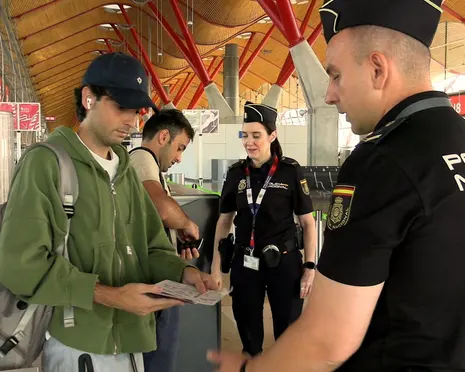
Wanderstayfinder.com – Italy condemns Spain s unacceptable border measures in a growing diplomatic dispute that has strained relations between the two Mediterranean nations. The conflict erupted after Madrid implemented retaliatory controls on Italian travelers, responding to Rome’s earlier checks on Spanish visitors. Antonio Tajani, Italy’s foreign minister, labeled Spain’s actions as both incomprehensible and unacceptable, signaling what could become a prolonged period of tension between the countries.
How the Border Dispute Unfolded
The crisis began in early August when Rome started conducting spot checks on travelers arriving from Spain. This decision came after approximately 72,000 people entered Ceuta, a Spanish territory on Africa’s northern coast. The timing was particularly delicate, as Spanish authorities had only recently begun stabilizing the situation in the enclave.
Spain responded at midnight on Saturday by implementing similar controls on Italian visitors. This reciprocal approach has created confusion for travelers, with many facing additional scrutiny despite the relatively minor nature of the original incident.
Why Ceuta Matters to European Migration
Ceuta’s unique position within European migration frameworks lies at the heart of this dispute. Madrid maintains that the territory remains outside the Schengen free-movement zone, which significantly limits onward travel to continental Europe for those entering through this territory. This geographical reality means most individuals arriving in Ceuta face restricted options for continuing their journey northward without EU citizenship or residency status.
By the time Rome implemented its checks on August 1, Spanish officials noted that the situation in Ceuta had largely stabilized. The vast majority of the 72,000 individuals who had entered the territory were subsequently returned to Morocco, suggesting that the crisis was already subsiding when Italy decided to act.
Spain’s Strong Response to Italian Measures
Spain’s reaction has been particularly forceful, with foreign minister José Manuel Albares describing the Italian measures as creating intolerable conditions at Italian airports. In statements to reporters, Albares framed the issue in broader terms, calling the Italian checks an attack on the dignity of the Spanish people while simultaneously characterizing them as a torpedo fired at the hull of European unity.
“This measure is, first and foremost, an attack on the dignity of the Spanish people, but, secondly, it is a torpedo fired at the hull of European unity,” Albares told reporters.
Rome Defends Its Border Actions
Italian officials have pushed back against criticism, with Tajani defending Rome’s actions in an interview published in La Stampa on Sunday. The foreign minister emphasized that Italy’s measures were driven by genuine security concerns rather than political posturing.
“Some order needs to be brought in: we’re not against Spain, but we have a duty to protect our borders,” Tajani stated, voicing concerns about potential jihadist influences among some of the migrants.
Tajani further challenged the notion that Italy’s response was merely symbolic, pointing out that Italy’s geographic position makes it particularly vulnerable. “Where do they go after arriving in Spain? Italy, as a destination, is the country most at risk. We’re not Germany or Norway,” he explained, highlighting Italy’s role as a primary entry point for migrants seeking to reach northern Europe.
The Regularisation Debate Continues
A significant underlying tension concerns migration policy, particularly Spain’s recent regularisation programme. Tajani linked the Ceuta influx directly to Madrid’s efforts to provide working migrants with legal documentation, describing the approach as a negative message that puts everyone’s safety at risk. This criticism came despite the European Union’s earlier dismissal of any direct connection between the Ceuta influx and Spain’s regularisation efforts.
The irony of Italy’s position has not been lost on observers. While publicly criticizing Spain’s approach, Rome has been quietly developing similar plans to issue nearly 1.1 million work permits to foreign workers by 2028. One researcher described these Italian efforts as a disguised amnesty, noting that both nations have extensive histories of regularisation programmes.
Looking Ahead: What Comes Next?
As diplomatic tensions continue to build, both nations face pressure to find a resolution that addresses their respective concerns. The dispute highlights broader challenges within European migration policy and the delicate balance between national sovereignty and continental cooperation.
Travelers between Italy and Spain should expect continued border controls in the coming weeks, while diplomats work to ease the growing friction between the two countries.
Frequently Asked Questions
What is Ceuta and why is it important?
Ceuta is a Spanish enclave located on the northern coast of Africa. It holds strategic importance as a gateway between Africa and Europe, and its status outside the Schengen zone makes it a key point for migration flows into continental Europe.
Why did Italy implement border controls on Spanish travelers?
Italy introduced spot checks on Spanish visitors in response to the influx of approximately 72,000 people into Ceuta. Italian officials expressed concerns about security and the potential for onward migration to Italy.
How has Spain responded to Italy’s actions?
Spain retaliated by implementing similar checks on Italian visitors and has strongly criticized Italy’s measures. Foreign minister José Manuel Albares described the Italian controls as an attack on Spanish dignity and European unity.
What is the regularisation programme mentioned in this dispute?
The regularisation programme refers to efforts by both Spain and Italy to provide legal documentation to working migrants. Spain’s programme has been criticized by Italian officials, though Rome is developing similar plans to issue nearly 1.1 million work permits by 2028.
When did this border dispute begin?
The dispute began in early August 2026 when Rome initiated spot checks on travelers arriving from Spain, following the significant influx into Ceuta.


