Colombia’s new president Abelardo de la Espriella announces immigration crackdown

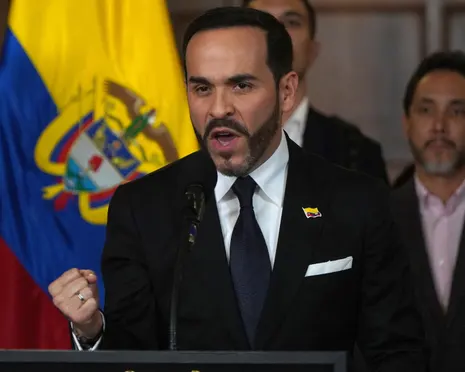
Table of Contents
Colombia’s New President Abelardo Cracks Down on Migration
Wanderstayfinder.com – Just over two weeks into his presidency, Colombia’s new president Abelardo de la Espriella has turned his attention to what he calls the nation’s most pressing domestic challenge after the early-August earthquake. On Sunday, the former millionaire and lawyer ordered government agencies to begin detaining and deporting individuals present in Colombia without valid documentation, as well as foreign nationals convicted of criminal offenses. The directive arrived while the country was still recovering from a 7.4-magnitude quake on August 10 that killed more than 300 people and destroyed over 30,000 homes.
Barranquilla, a Caribbean port city, had effectively become a temporary seat of government during the post-quake emergency. It was there that de la Espriella convened his cabinet to deliver the immigration order, signaling how swiftly his administration is shifting from disaster response to enforcement priorities.
Coordinated Enforcement and the “Colombians First” Doctrine
“Let the coordinated operations begin to track down illegal immigrants: first, those committing crimes; second, those who have not regularised their status and who will have to be deported immediately,” Colombia’s new president Abelardo de la Espriella told ministers during the Sunday cabinet session.
He stated that initial joint operations between the national police and the migration authority were expected to launch “this very week.” The rhetoric deliberately echoed the “Americans first” language favored by his political ally, US president Donald Trump. De la Espriella declared that the guiding principle going forward would be “Colombians first, Colombians second and Colombians third,” a formulation that leaves no ambiguity about where foreign residents sit in his hierarchy of national priority.
Regional Alignment and Opposition Pushback
The move places the new president alongside other right-wing leaders in Latin America tightening migration rules under Trump’s influence. Argentina’s Javier Milei and Chile’s José Antonio Kast have similarly restricted entry and residency requirements in their countries. Colombia thus joins a broader hemispheric pattern of border restriction that has accelerated since Trump’s return to the White House, reaching the heart of South America’s most populous Spanish-speaking nation.
Critics from opposition benches and civil-society groups have pushed back sharply, arguing the decree dismantles a migration framework that survived more than a decade of alternating administrations. That framework was designed primarily to accommodate the massive influx of Venezuelans fleeing a humanitarian catastrophe, and its collapse would leave hundreds of thousands without legal standing.
Leftwing senator María José Pizarro Rodríguez shared the announcement on social media and questioned whether the president was “proposing a Colombian ICE against fellow Latin Americans,” invoking the US Immigration and Customs Enforcement agency. She called the deportation order “pure xenophobia and aporophobia.”
“Instead of persecuting people fleeing poverty and violence, regularise their status. There are thousands of migrants who work hard and contribute to the economies of the countries that receive them,” Pizarro Rodríguez wrote.
Legal Ambiguity and Operational Shortfalls
Practical obstacles loom large. According to El Tiempo, officials inside the migration department believe the agency lacks sufficient personnel to execute the scale of operations promised. Legal scholars have also noted that Colombian statute does not recognize a category called “illegal immigrant.” The correct legal terminology is “irregular” status, because residing without proper paperwork constitutes an administrative infraction rather than a criminal offense. That distinction determines which legal instruments can be deployed and what due-process protections apply to those targeted for removal.
Although de la Espriella did not name Venezuelans explicitly, the demographics make the intended target unmistakable. Roughly 90 percent of all migrants in Colombia are Venezuelan nationals. Of the approximately 2.8 million Venezuelans residing in the country, an estimated 848,000 hold irregular status, including 193,000 children and adolescents whose schooling, healthcare access, and legal protections could be disrupted by a sudden enforcement push. The Venezuelan migration wave began in earnest during the early 2010s as economic collapse and political instability drove millions southward, and the current crackdown threatens to reverse a decade of gradual integration.
Frequently Asked Questions
When did Colombia’s new president Abelardo announce the immigration crackdown? The directive was issued during a Sunday cabinet session held in Barranquilla, just over two weeks after his inauguration. Joint police-and-migration operations were expected to begin within days of the announcement.
Who is most affected by the deportation order? Approximately 848,000 Venezuelan nationals in irregular status are the primary target group. Among them are 193,000 children and adolescents. Colombians and other nationalities with valid documentation are not subject to the order.
Is “illegal immigrant” the correct legal term under Colombian law? No. Colombian statute uses the term “irregular” status. Residing without proper paperwork is classified as an administrative infraction, not a criminal offense, which affects the legal instruments available for enforcement and the due-process rights of those targeted.
How does this policy compare with other Latin American governments? Argentina under Javier Milei and Chile under José Antonio Kast have adopted similar restrictions on entry and residency. The broader trend aligns with the migration-tightening posture of the Trump administration in the United States.