Prince Harry quits board of wildlife charity after rangers’ human rights abuses

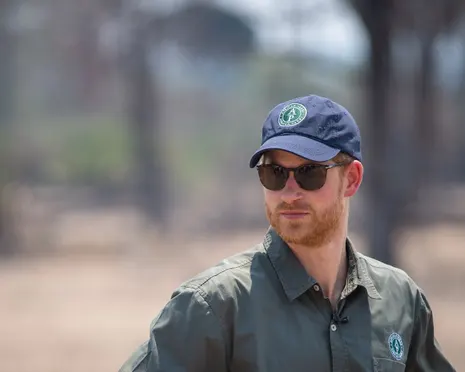
Table of Contents
Harry Exits African Parks Board After Abuse Inquiry
Wanderstayfinder.com – Prince Harry quits board of wildlife conservation governance at African Parks, ending a decade-long formal role after an independent review confirmed that park rangers committed human rights abuses against Indigenous residents in the Republic of the Congo. A spokesperson confirmed the departure, closing an association that began in 2016 when the Duke of Sussex first engaged with the organisation.
The Abuse Findings and Independent Review
The decision follows a painful institutional reckoning. Last year, African Parks formally acknowledged that its field staff had carried out abuses within Odzala-Kokoua national park, a protected zone in the Congo where the Baka community — an Indigenous group whose ancestral forests now sit inside the park boundary — lodged formal complaints. A commissioned independent review examined those allegations, and a 2024 report carried by the Mail on Sunday detailed accounts of beatings, waterboarding, and sexual assault inflicted on residents who were trying to keep access to forests their families had inhabited for generations.
Following the review’s conclusions, the charity issued a public statement accepting that human rights violations had taken place. It said it had since strengthened safeguarding procedures at both the operational level inside the park and across its institutional governance structures.
Pressure from Advocacy Groups
External pressure accelerated the departure. Survival International, a global organisation dedicated to defending Indigenous rights, had publicly called on Harry to resign from the board. Caroline Pearce, African Parks’ executive director, framed the issue in blunt terms.
“It is outrageous that for 10 years Prince Harry has served African Parks” while people working for it had “been responsible for abuse and we violence against Indigenous people. His departure doesn’t undo that record — African Parks itself must now be held accountable, and must abandon this model of fortress conservation for good,” Pearce said.
Pearce’s phrase “fortress conservation” points to a long-running critique in conservation circles: the practice of establishing large protected areas where local and Indigenous populations are excluded or marginalised in favour of wildlife management. Critics argue such models, however well-intentioned, can reproduce colonial-era patterns of dispossession under the banner of environmental protection. The Baka case has become a high-profile illustration of those tensions.
A Decade of Involvement and the Organisation’s Scale
Harry’s connection to African Parks stretches further than most observers realise. He served as president of the organisation for six years before transitioning to a seat on its board of directors in 2023. His spokesperson emphasised that the duke remains “an active and avid supporter” of the charity’s work even as his formal governance role concludes.
“The duke is proud of his 10 years with African Parks and fully supports the ongoing strengthening of its board,” the spokesperson stated. “His commitment to conservation in Africa continues, and he remains a supporter of African Parks’ mission.”
The charity’s own response echoed a tone of gratitude. African Parks described its relationship with the duke as dating back to July 2016, when he supported what it called one of the largest elephant translocation operations in history, carried out in Malawi. The organisation noted that over the years Harry had drawn international attention to biodiversity protection and contributed significantly to philanthropy directed at conservation across the continent.
Founded 26 years ago, African Parks now manages more than 20 million hectares — roughly 50 million acres — in partnership with 13 African governments and hundreds of local communities. That scale makes its governance choices consequential not only for individual parks but for the broader credibility of international conservation partnerships on the continent. The organisation’s willingness to commission an independent review and publicly accept findings of abuse is notable, even as advocates insist that accountability must extend beyond a single departure from a boardroom.
Frequently Asked Questions
When did Prince Harry first become involved with African Parks? His association began in July 2016, when he supported a large-scale elephant translocation operation in Malawi. He later served as president of the organisation for six years before moving to a board-of-directors seat in 2023.
What did the independent review find? The review confirmed that rangers operating within Odzala-Kokoua national park in the Republic of the Congo committed human rights abuses against members of the Baka Indigenous community, including beatings, waterboarding, and sexual assault.
Does Harry’s departure end his relationship with the charity? No. Both his spokesperson and African Parks stated that he remains an active supporter of the organisation’s conservation mission, even though his formal governance role has concluded.
What is “fortress conservation”? It is a term used by critics to describe a model of wildlife protection in which large protected areas are established while local and Indigenous populations are excluded or marginalised. Advocates such as Caroline Pearce argue the model must be abandoned in favour of approaches that centre community rights alongside conservation goals.